
There’s increased friction happening inside security teams right now. It’s not a new vulnerability or an active breach. It’s the weight of context-switching, the hours spent translating raw logs, JSON payloads, detection logic, and technical alert data into something a human can actually act on.
Leaders already know this problem. The answer isn’t more dashboards or more data. It’s intelligence that does the heavy lifting before your team ever opens a ticket.
That’s exactly what new Choppy AI summaries deliver.
The Real Cost of Complexity
Cloud environments generate more security data than most teams can reasonably process.
A single investigation can require digging through cloud activity logs, identity behavior, resource context, vulnerability data, and configuration details just to answer a basic question: Is this something we need to act on right now?
The consequence is real and measurable:
- Investigations that should take minutes stretch into hours
- Critical signals get buried under low-priority noise
- Practitioners lose confidence in the information
- And CISOs get escalations that should have been caught at the first review
This is especially painful in cloud security, where speed matters and context changes fast. A finding that looks critical in isolation may not matter in production. A dense activity log may contain the key clue, but only if someone has the time to decode it.
Upwind’s runtime-first approach already helps teams focus on what is actually happening in production, rather than what could theoretically happen. AI Summaries extend that same principle into the user experience by helping teams understand complex runtime and security data the moment they open it.
Move from Investigation to Action Faster
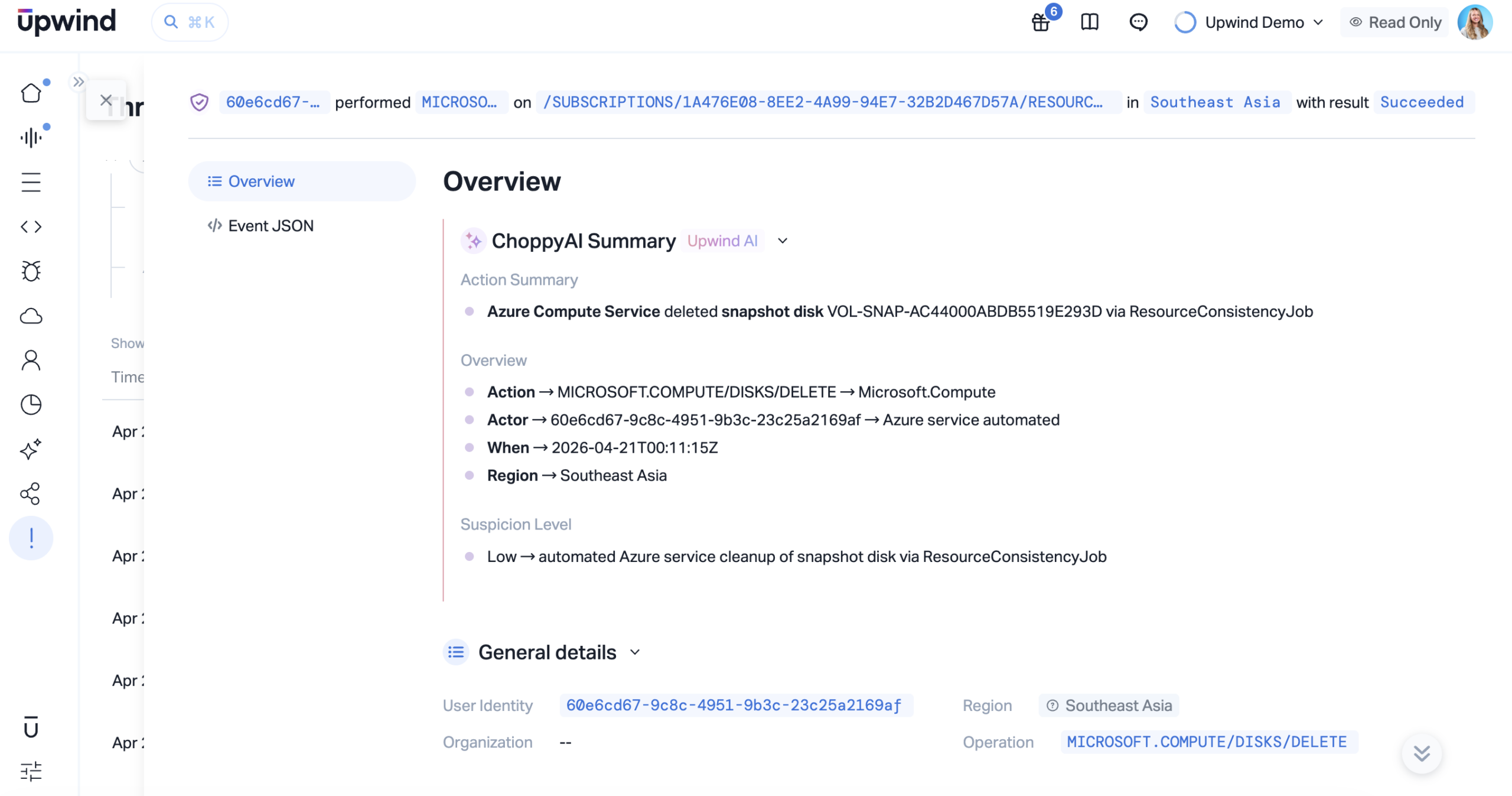
Choppy AI is a native intelligence layer across the platform. It analyzes the data already in view and generates a summary tailored to that specific page and use case. Whether you’re looking at a complex asset inventory, a raw cloud activity log, a vulnerability finding, or an admission controller rule, the platform surfaces a short, high-signal summary that tells your team what matters most about what they’re looking at.
Under the hood, the service uses centralized prompt execution across multiple models, streams responses in real time, and applies output controls for consistency and reliability. That technical foundation matters because enterprise security teams do not need generic AI output. They need summaries that are relevant to the data in front of them, consistent across workflows, and trustworthy enough to use in real investigations.
How AI Summaries Turn Data Into Context
The value of this release is simple: it helps teams get to the next steps faster.
That means less time spent decoding raw inputs and more time making decisions. An analyst reviewing a finding can quickly understand the issue. An engineer looking at a baseline can grasp what changed without scanning every field. A responder investigating cloud activity can spot the important behavior without reading line by line through raw events.
For security leaders, the value is broader. Faster understanding improves triage speed, reduces team fatigue, and helps teams stay focused on the risks that deserve attention. It also makes the platform more accessible across roles. Not every stakeholder needs to parse a raw CloudTrail event or complex policy query, but they do need to understand what it means.
This is where AI becomes useful in security. Not when it adds more noise. Not when it invents actionability. But when it helps teams move from complexity to informed judgment faster.
Upwind AI Summaries are built around that principle. The system:
- Runs on proven infrastructure: A unified prompt execution service with versioned, reusable prompts and a centralized API means the AI isn’t improvising. Every summary comes from a deliberate, auditable process.
- Enforces guardrails: Schema validation and output guardrails ensure the summaries stay accurate and don’t hallucinate context that doesn’t exist in the underlying data.
- Supports streaming and caching: Real-time responses mean your team doesn’t wait. Intelligent caching means performance stays consistent even at scale.
- Is additive, not prescriptive: The AI surfaces what’s relevant. Your team makes the calls. The full data is always one click away.
What This Looks Like in Practice
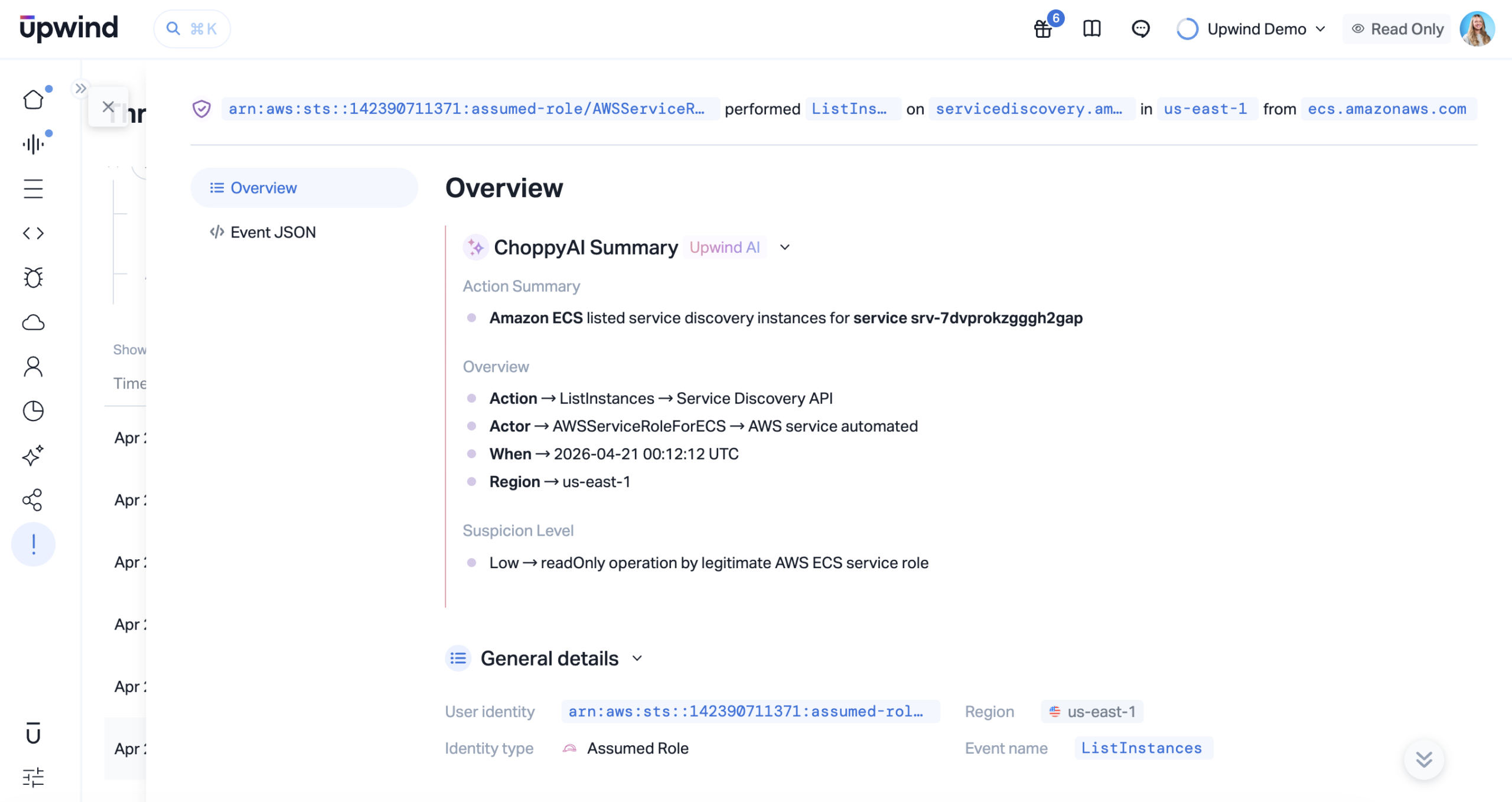
AI Summaries now appear across the Inventory, Code, Vulnerabilities, and Threat experiences. Here are a few examples of how they can make an immediate difference:
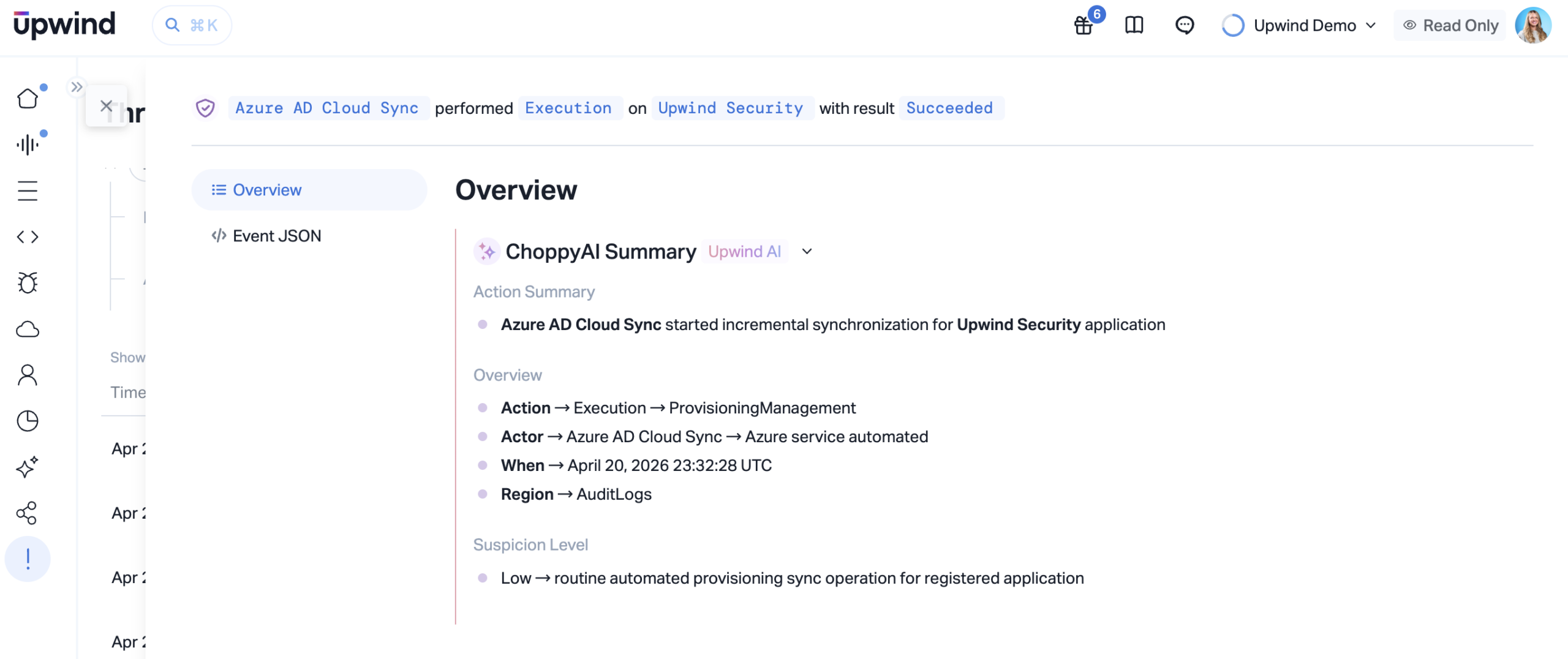
Threat investigation
An analyst opens a suspicious cloud activity trail. Instead of starting with dozens of low-level event details, they get a concise explanation of the behavior, what stands out, and why it may matter. That helps them decide whether to escalate, continue investigating, or close it out faster.
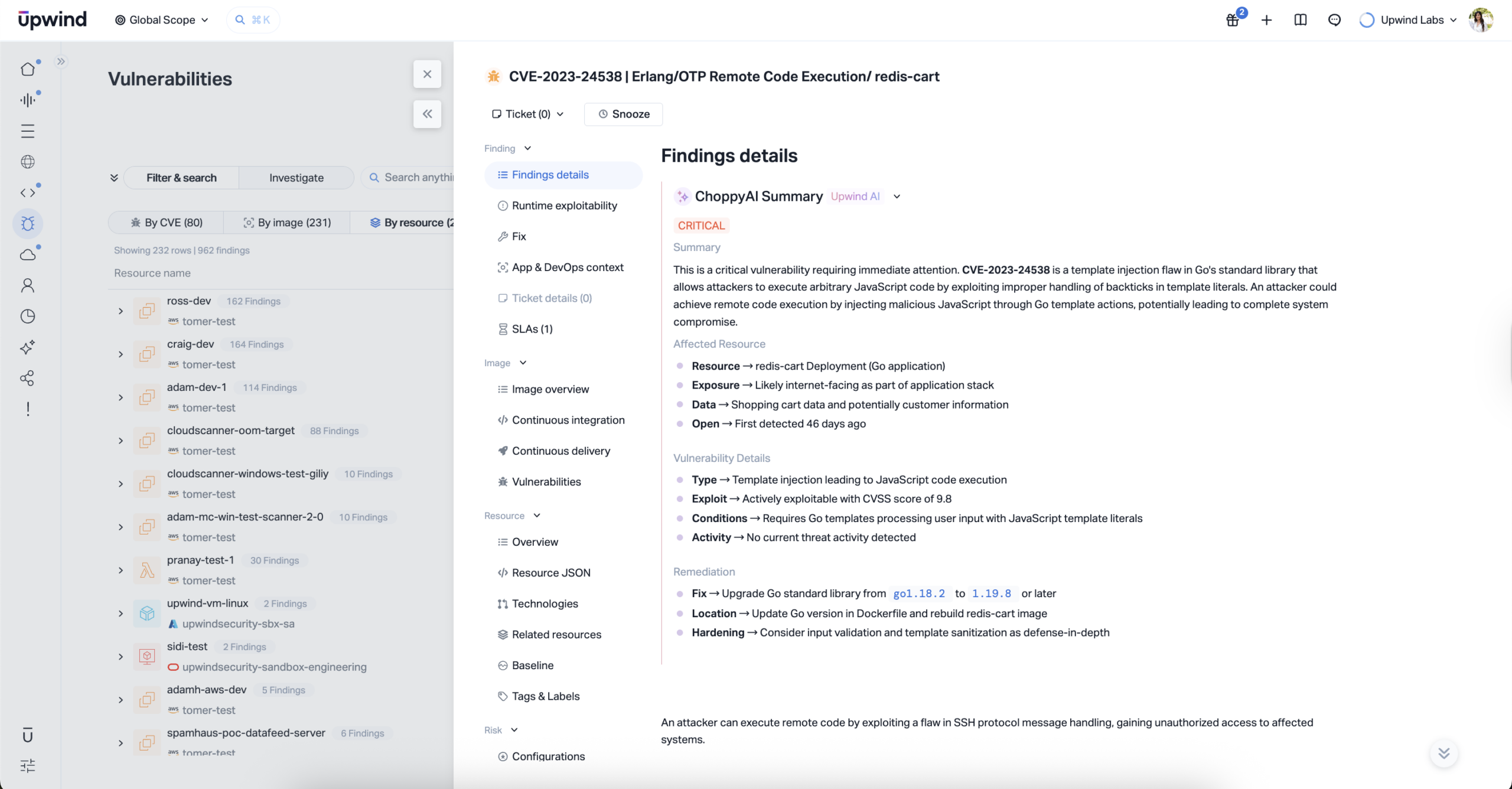
Vulnerability triage
A practitioner reviews a finding tied to a running workload. Rather than reading through raw metadata and technical details first, they get a quick explanation of the issue in context. That makes it easier to prioritize and communicate urgency.
Inventory review
A team member looks at the inventory page with a large amount of structured configuration data. The summary highlights the meaningful behavior or configuration patterns without forcing the user to manually interpret every field.
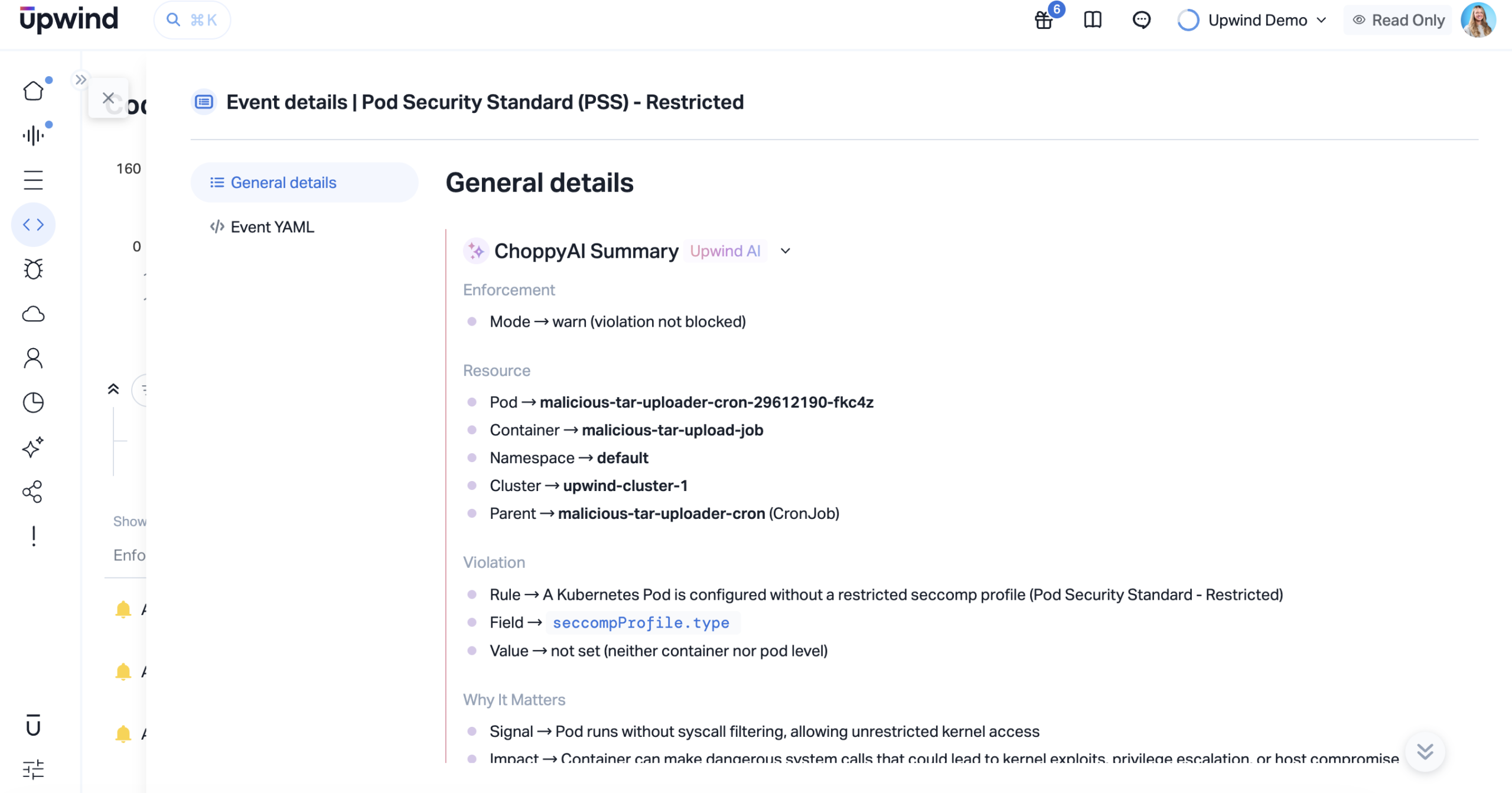
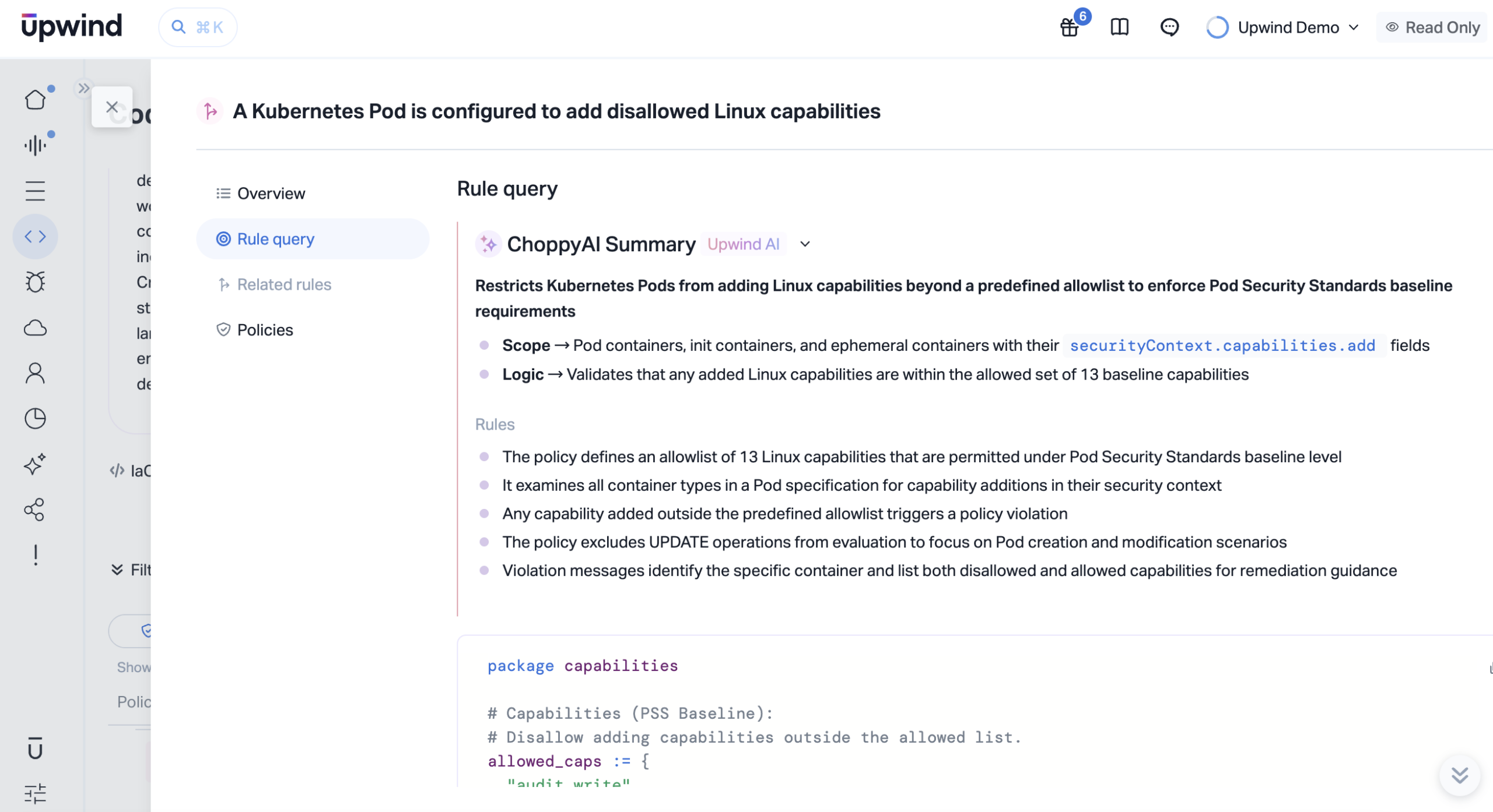
Policy and code review
A developer or security engineer opens an Admission Controller rule query or event detail. Instead of deciphering dense logic on their own, they get a summary that makes the purpose and implications easier to understand.
These are small moments, but they add up. In cloud security, shaving minutes off interpretation time across hundreds of decisions has a measurable operational impact.
Looking Ahead
AI Summaries are useful today because they solve an immediate problem: helping users understand what they are seeing faster.
But they also lay the groundwork for something bigger. As summaries become richer and more connected across the platform, they can help teams move from isolated understanding to broader decision support across investigations, risk prioritization, and remediation workflows.
That is the real opportunity. Not just summarizing what happened, but helping teams move faster through the decisions that follow.
See It In Action
Security teams should not have to fight the product to understand their risk. A better cloud security experience helps teams cut through complexity, make sense of what matters faster, and move from investigation to action without getting buried in raw detail.
That is the difference between more data and better security outcomes. Schedule a personalized demo to see how Upwind helps your team work faster, stay focused on real risk, and turn cloud security insight into action.