Morgan Pearson

Protect Windows Workloads Wherever They Run


Windows workloads remain a critical part of modern cloud environments. From business applications and identity services to databases and internal tooling, Windows Server hosts often support some of the most important pieces of the enterprise stack. Upwind is extending runtime protection and visibility to Windows Server hosts running in private cloud and on-premises environments, including…
Realtime Data Security, Across Every Cloud

If you asked most security leaders where all of their data is flowing, which workloads and AI services are accessing it, and whether it's exposed, only a few could answer with confidence, and almost none would have the answer in real time.Not because that data is not available, but because it's scattered across multiple cloud…

Choppy AI Agent, A Security Team’s Best Friend
Cloud security teams do not have a visibility problem anymore. They have a context problem. Modern cloud environments generate endless findings across vulnerabilities, identities, APIs, data, configurations, threats, workloads, and exposure. The challenge is not just knowing what exists. It is understanding what matters, why it matters, and what to do next. That is where…

Introducing Upwind Attack Surface Management: Find the Exposures That Matter Before Attackers Do


We’re excited to announce Upwind Attack Surface Management (ASM), a new way for security teams to discover unknown attack surfaces, understand risk exposure, and prioritize the issues that matter most. Security teams have spent years improving visibility across their environments. They use scanners, asset inventories, vulnerability management platforms, CSPM tools, and attack surface management solutions…
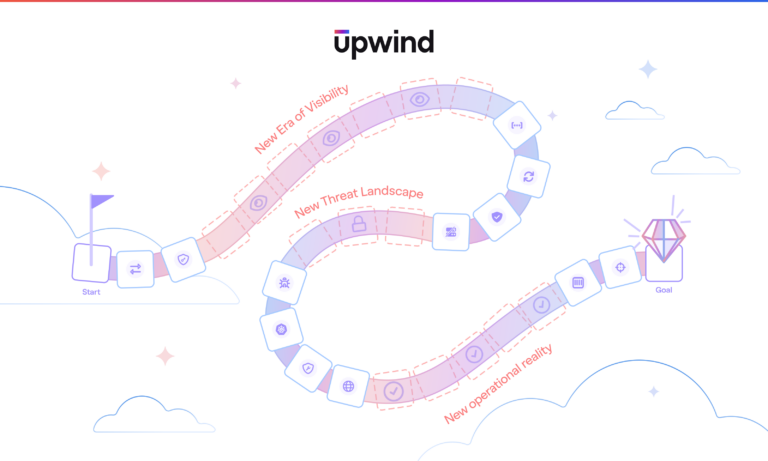
Scale AI Adoption Securely With Upwind AI Security

AI is entering production faster than many security teams can keep up. As teams embed AI into applications, developer workflows, and cloud operations, security teams need to know where AI runs, what it can access, and which risks need action. Upwind AI Security connects AI usage to realtime cloud context, giving teams a practical way…

Introducing the Upwind MCP Server: Realtime Context for Stronger Cloud Security
Security teams already have enough findings to sort through. Vulnerabilities, misconfigurations, and alerts pile up every day, but only a limited number create real risk in production. The harder problem is knowing which issues are exposed, active, and worth fixing first. The Upwind MCP Server connects MCP-compatible clients to selected Upwind context and capabilities, helping…

Prioritize Reachable Cloud Risk With Upwind Cloud Security Context
Cloud security teams are under pressure to move faster, but the volume of cloud risk keeps growing. Verizon’s 2025 DBIR found that vulnerability exploitation as an initial access vector increased 34% year over year, while IBM reported the global average cost of a data breach at $4.4 million. The issue is not that teams lack…
Upwind Inventory Graph: Improve Kubernetes Visibility Across Clouds
Security teams need a reliable way to understand what exists in their cloud environment, how assets connect, and where to investigate when risk appears. That gets harder when container clusters and Kubernetes workloads show up differently across cloud providers, services, and data sources. Upwind normalizes container clusters and Kubernetes workloads in the Inventory graph, giving…
Know What’s Protected With Upwind Coverage Dashboard
Security teams need confidence that the cloud environments they rely on are covered. In fast-moving organizations, that confidence can be difficult to maintain as new accounts are added, workloads shift, and infrastructure changes across teams, regions, and providers. The Upwind Coverage Dashboard helps teams validate cloud security coverage across connected accounts, sensors, and environments, so…
Scope and Prioritize Cloud Risk With Business and Asset Context
Cloud security teams are expected to move fast. They need to investigate issues quickly, answer leadership questions clearly, and stay ahead of risk across environments that keep growing more complex. But in many organizations, too much time is still spent on work that does not reduce risk. Before a team can investigate an issue, they…