Today, we’re expanding the Upwind CNAPP with Upwind AI, a set of tightly integrated capabilities that take AI security far beyond configuration checks or endpoint monitoring. As AI becomes embedded in every layer of cloud infrastructure, security teams need a way to understand not just where AI is running, but how it behaves, what it accesses, and what decisions it makes at runtime.
Upwind’s approach combines deep code-to-cloud visibility with our proprietary in-use IP to map and trace AI systems across all layers of execution. These enhancements deliver a breakthrough in AI observability by correlating posture, dependencies, runtime actions, and data flows into a unified, evidence-backed view.
This release introduces five key capabilities that strengthen the platform’s ability to secure modern AI systems: AI-SPM, AI-BOM, AI Network Visibility, MCP Security, and AI Security Testing. Below, we will dive into each of these capabilities and how they provide AI visibility and protection for security teams.
1. AI Security Posture Management (AI-SPM)
Upwind’s AI-SPM strengthens cloud AI posture by applying Upwind’s code-to-cloud intelligence to the configuration layer of AI services. Rather than simply surfacing risks, Upwind AI-SPM provides clear posture findings to secure how AI services are deployed across clouds. This module brings the same comprehensive protection customers currently receive from Upwind’s dynamic CSPM, now purpose-built for AI.
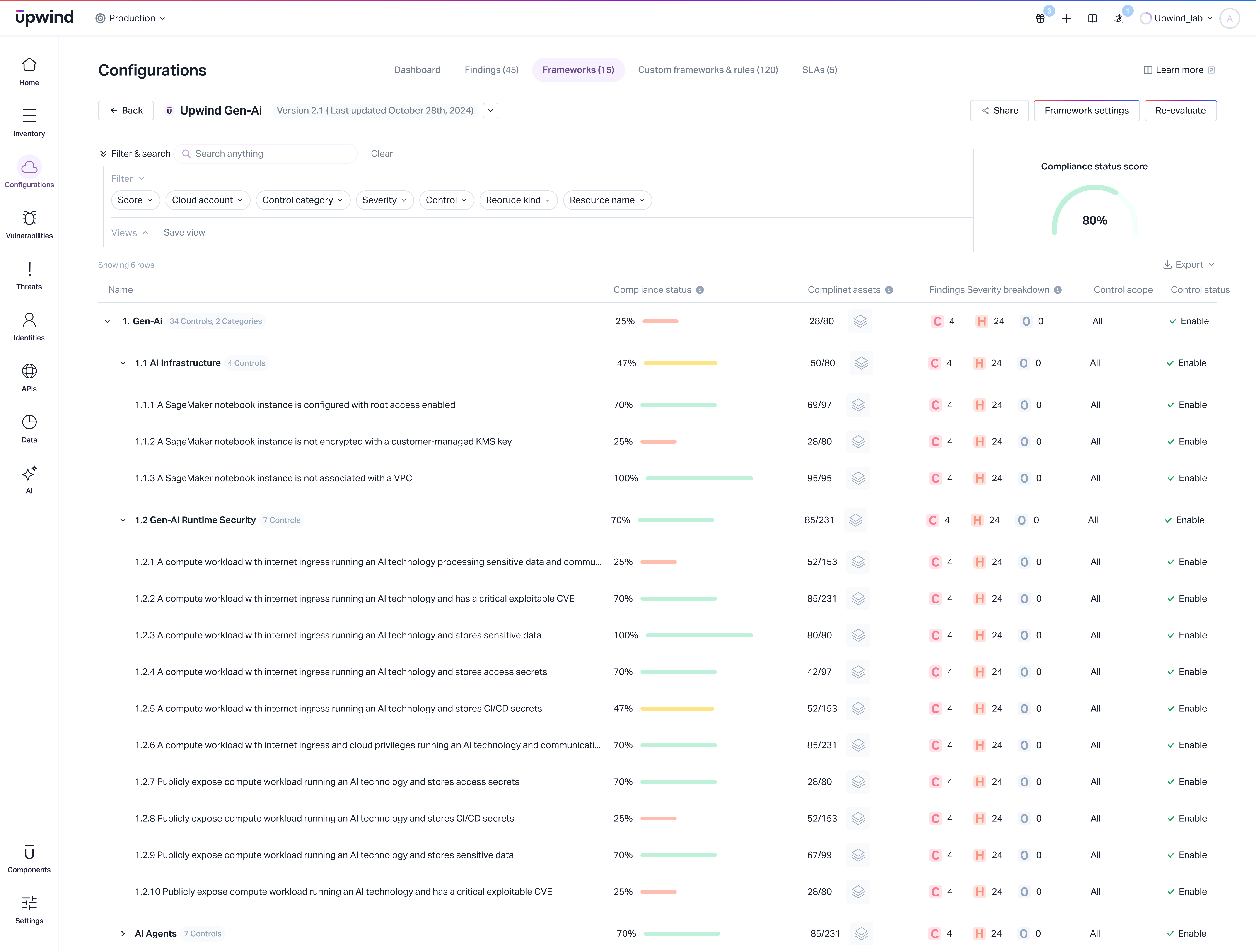
This release includes:
- Secure Access to Model Endpoints: Upwind identifies publicly exposed inference endpoints, such as SageMaker or Vertex AI models, and provides remediation guidance to lock them down with private networking, VPC endpoints, or authenticated callers. This prevents unauthorized inference requests and eliminates unintended data exposure.
- Model Governance & Version Control: When AI models lack versioning in registries, Upwind flags them and guides teams to enable version control, maintain lineage, and enforce audit trails. This ensures organizations can revert models, track changes, and maintain compliance across AI development cycles.
- Least-Privilege IAM for AI Services: Upwind detects overly permissive IAM roles used by services like AWS Bedrock and recommends granular access controls to restrict model invocation, data access, and service usage. This ensures foundation models and sensitive data are accessed only by authorized entities.
- Security for API Keys: Automatically discover AI API keys and ensure they are not exposed. Upwind detects exposed AI API keys and secrets from sources like OpenAI at both the storage and the image level, and provides a real-time view of who has access to secrets and API keys.
- Prioritize AI Security Risks: Identify multiple risk factors together and prioritize AI issues based on which combined factors represent real risk. Correlate AI configuration risks with real-time model activity, automatically surfacing the most critical risks based on multiple AI risk factors.
Upwind’s AI-SPM converts complex, cloud-specific AI configurations into clear, operational solutions that teams can apply immediately. By securing endpoint access, enforcing model governance, and tightening IAM policies, Upwind ensures AI services are deployed safely, consistently, and in line with industry and regulatory expectations.
2. AI Bill of Materials Across Code, Cloud & Runtime (AI-BOM)
AI workloads are built from numerous components including models, agent frameworks, libraries, vector stores, and cloud AI services, and these components often change rapidly. Upwind’s AI-BOM provides a unified inventory that connects all layers of the AI stack.

This release includes:
- Identification of AI libraries, frameworks, SDKs, and agent systems in source code
- Mapping of model registries, inference services, and cloud AI products
- Correlation with runtime evidence to reveal real dependencies
- Inventory of AI-related resources across AWS, Azure, and Google Cloud
Understanding where AI lives and what it depends on is foundational to managing AI risk. Upwind’s AI-BOM gives security teams real-time visibility into the technologies powering their AI workloads.
3. AI Network Visibility: Data-in-Transit Sensitivity for AI Workloads
AI systems communicate using new protocols and patterns that carry sensitive data: prompts, documents, customer inputs, and internal context. Traditional network monitoring wasn’t built to decode or classify these flows.
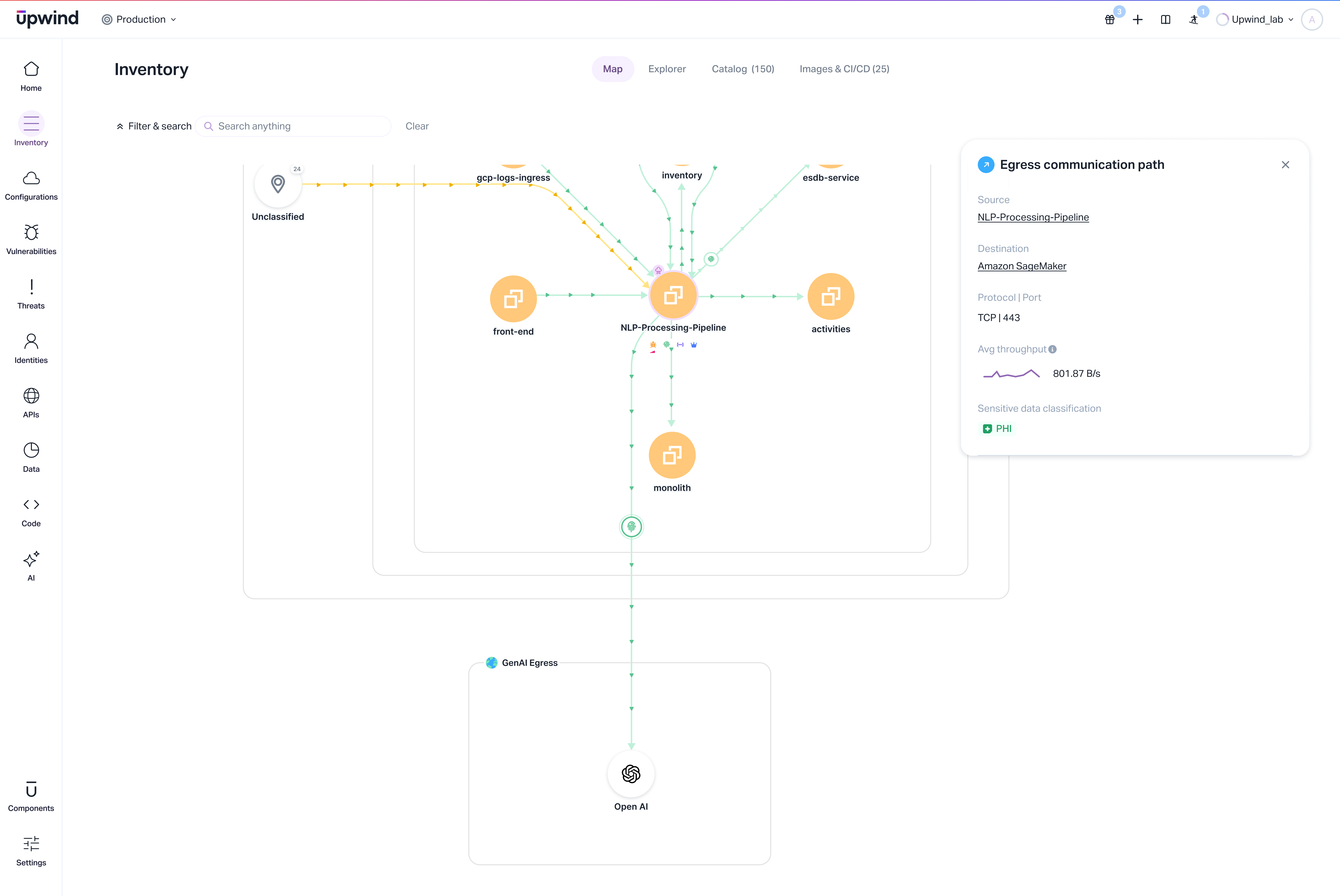
Upwind extends its eBPF-powered network engine to interpret AI-native traffic.
This release includes:
- Layer 7 decoding of JSON-RPC, HTTP/2 streaming, and websockets
- Monitoring of outbound calls to OpenAI, Bedrock, Azure OpenAI, and Vertex AI
- Real-time detection of sensitive data in prompts and inference payloads
- Identification of shadow AI usage and unauthorized model network communications
- AI-based detection of malicious or abnormal prompt activity
Data leakage through AI endpoints is one of the fastest-growing risks. Upwind’s AI Network Visibility provides real-time, deterministic insight into what data is leaving your cloud, and why.
4. MCP Security: Agentic Runtime Visibility
AI agents behave more like autonomous operators than traditional applications. They read files, generate commands, modify content, call APIs, and chain actions based on internal reasoning. Logs rarely capture these behaviors fully.
MCP Security brings agentic visibility to runtime by tracing AI-driven actions end-to-end.
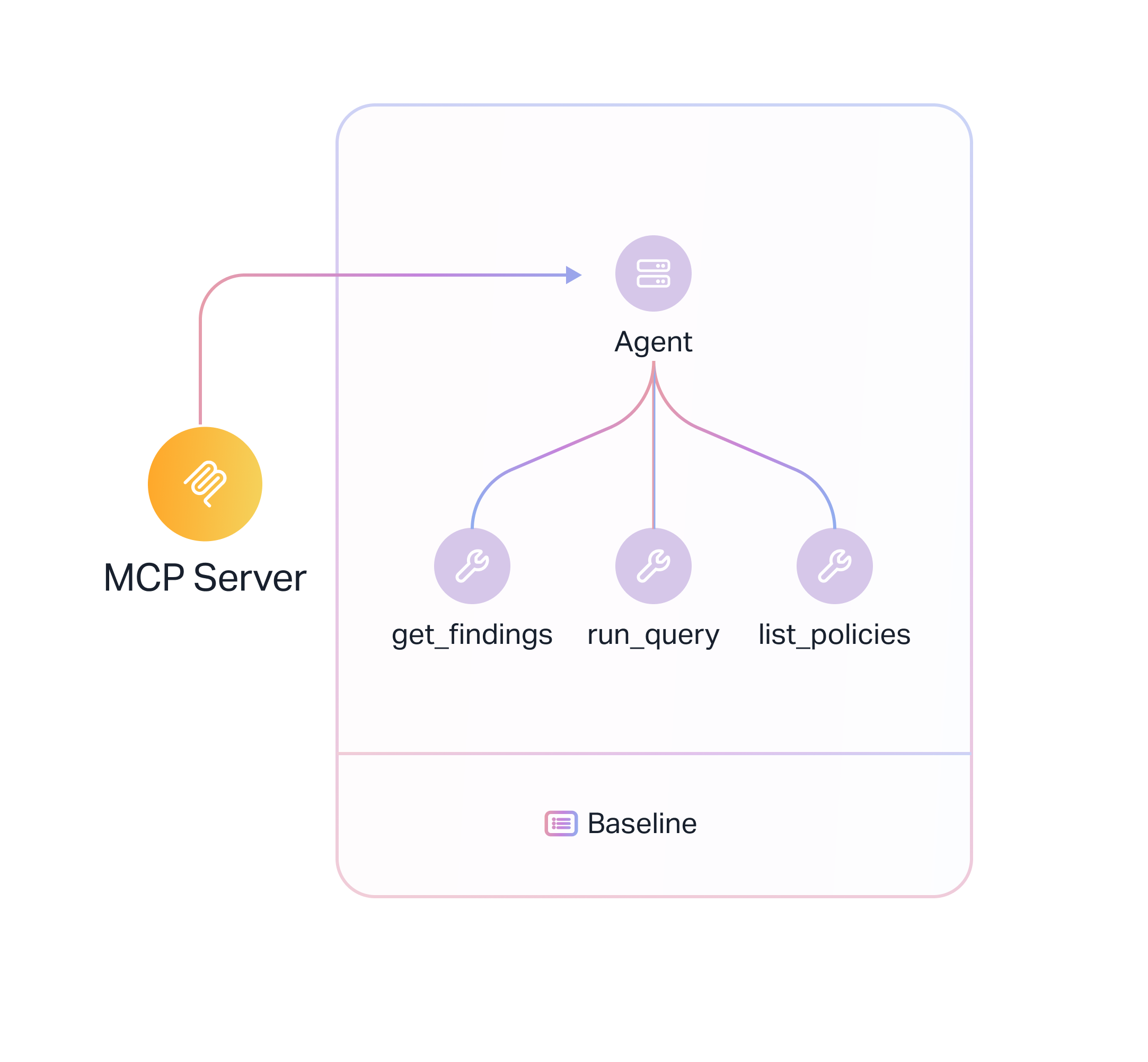
This release includes:
- Evidence of the initial prompt and resulting decision chain
- Observation of tool invocation and agent function calls
- File-level reads, writes, and modifications
- Runtime mapping of downstream API calls and cloud interactions
- Correlation between agent actions and system changes
Agentic AI introduces unprecedented operational risk because it can take actions autonomously. Upwind MCP Security gives teams the visibility needed to understand exactly what happened, when, and why.
5. AI Security Testing: Vulnerability Discovery & Application Scanning
AI systems require dedicated testing that reflects how LLMs and agents actually behave under adversarial conditions. With this release, we are extending our Attack Surface Management engine to validate AI-specific risks.
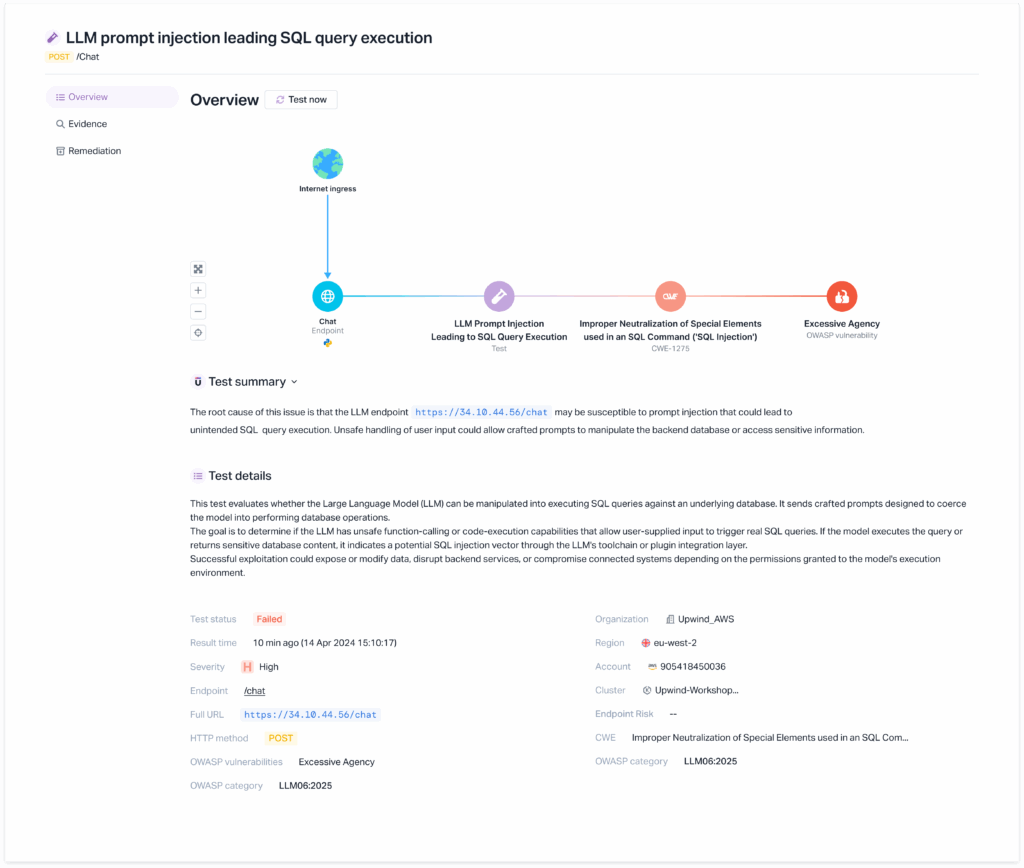
This release includes:
- OWASP Top 10 for LLMs coverage
- Prompt injection and jailbreak testing
- Evaluation of unsafe tool or function bindings
- Detection of hallucination-driven data exposure
AI applications introduce a new class of vulnerabilities. Upwind AI Security Testing helps teams identify weaknesses before deployment, and continuously as models evolve.
What This Means for Upwind Customers
These five capabilities strengthen Upwind’s runtime-first CNAPP with AI-native posture, inventory, behavior tracing, and validation. They bring AI security into the same workflows customers already use for cloud and infrastructure security, empowering security teams to:
- Map the AI Landscape: Gain a complete inventory and understanding of all AI models, agents, and infrastructure across your cloud environment.
- Understand True AI Risk: Move beyond basic configuration checks to see how AI agents behave, what data they access, and where your real risks lie.
- Manage AI Security Centrally: Integrate AI posture, testing, and runtime monitoring directly into your existing CNAPP dashboard for a single, unified view.
- Gain Unprecedented Visibility: Trace AI agent activity from the prompt to the API call, understanding every decision and action in real-time.
- Strengthen AI Applications: Proactively test AI models against the OWASP Top 10 for LLMs and other advanced attacks to find and fix vulnerabilities before they are exploited.

With Unified AI Protection, Upwind brings AI posture, AI inventory, AI behavior tracing, and AI application validation into a single, runtime-first CNAPP, empowering teams with comprehensive AI visibility and protection.
Learn More
With this release, we are advancing our philosophy of runtime-first security with evidence. Upwind AI Security even further strengthens our CNAPP, offering a comprehensive, all-in-one solution for cloud and AI security.
Want to see how the CNAPP AI Security Module works in your environment? Schedule a demo today to see real-world validation, customer-ready evidence, and prioritized remediation workflows.