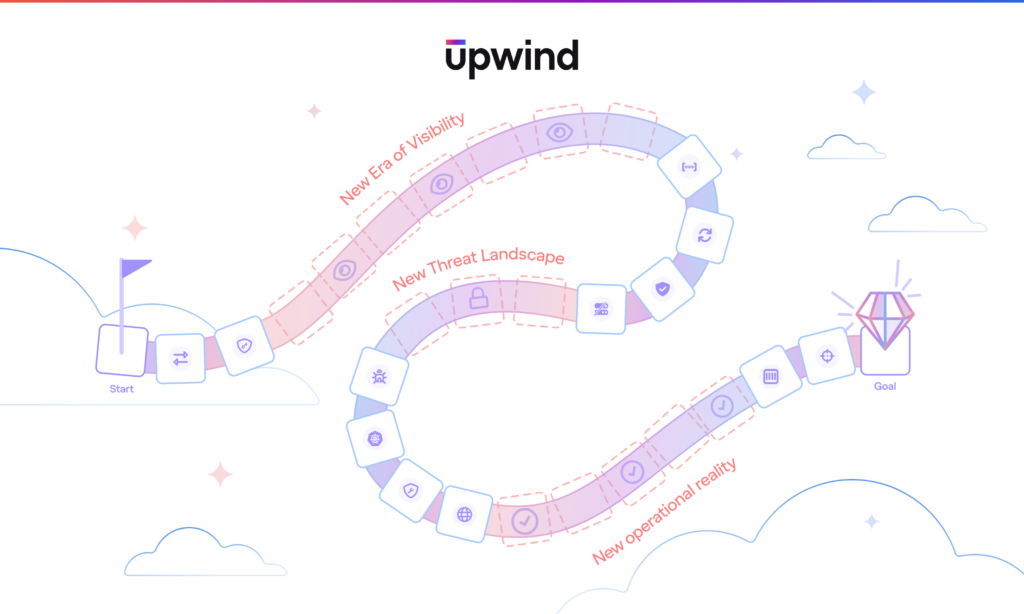


AI is entering production faster than many security teams can keep up. As teams embed AI into applications, developer workflows, and cloud operations, security teams need to know where AI runs, what it can access, and which risks need action.
Upwind AI Security connects AI usage to realtime cloud context, giving teams a practical way to scale AI adoption securely. Teams can understand how AI connects to workloads, identities, APIs, data, and exposure paths, then prioritize risk based on what is active, exposed, reachable, and owned.
AI Expands the Attack Surface
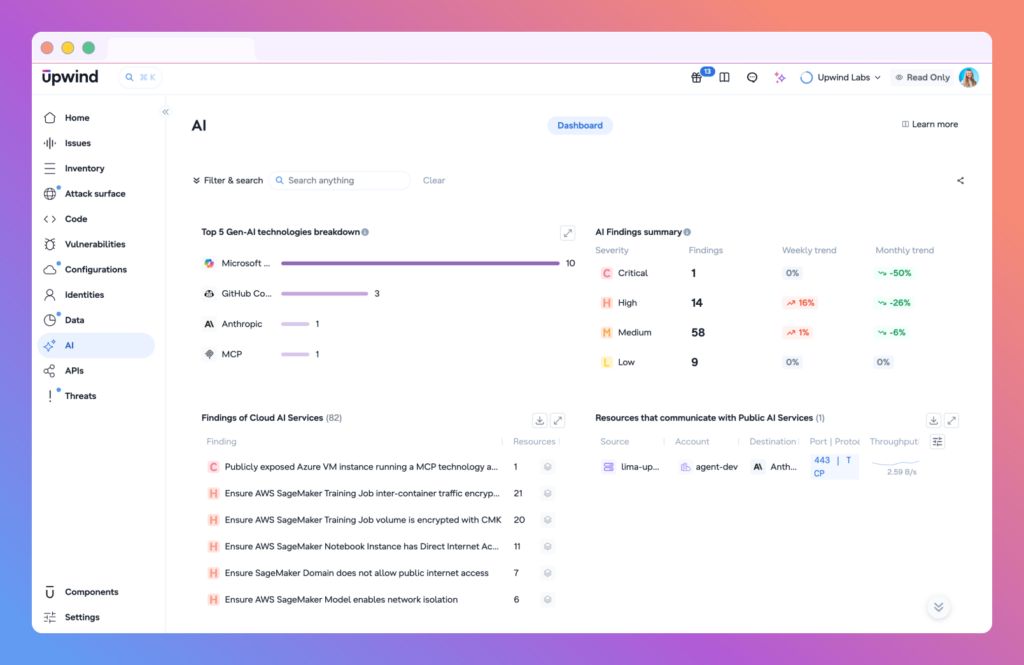
AI services connect across cloud infrastructure, applications, APIs, identities, data stores, and third-party providers. As those connections grow, static inventory can show where AI exists, but it cannot explain whether that usage creates real exposure or a path to impact.
That leaves teams with more findings, more noise, and less confidence in what to fix first. Upwind helps teams understand what is actually happening in production and prioritize the risks that matter.
Three AI Security Challenges Teams Need to Manage
As AI adoption scales, security teams need repeatable ways to manage new visibility gaps, new threat patterns, and constant change.
Build Connected AI Inventory
AI creates blind spots that extend beyond models or services. Teams need to understand where AI runs, how it connects into the environment, and whether those connections introduce exposure, sensitive data access, or unclear ownership.
The Upwind platform brings AI usage into view and connects it to the surrounding cloud context. Teams can move from a basic inventory question like “Where is AI being used?” to the operational questions that drive action: what it can reach, whether exposure exists, whether sensitive data is involved, and who owns the affected resource.
Evaluate AI Threats in Production
AI introduces threat patterns that static posture checks cannot fully explain on their own. Prompt attacks, agent interactions, tool use, API calls, and shifting workflows all depend on how AI-connected systems behave in production.
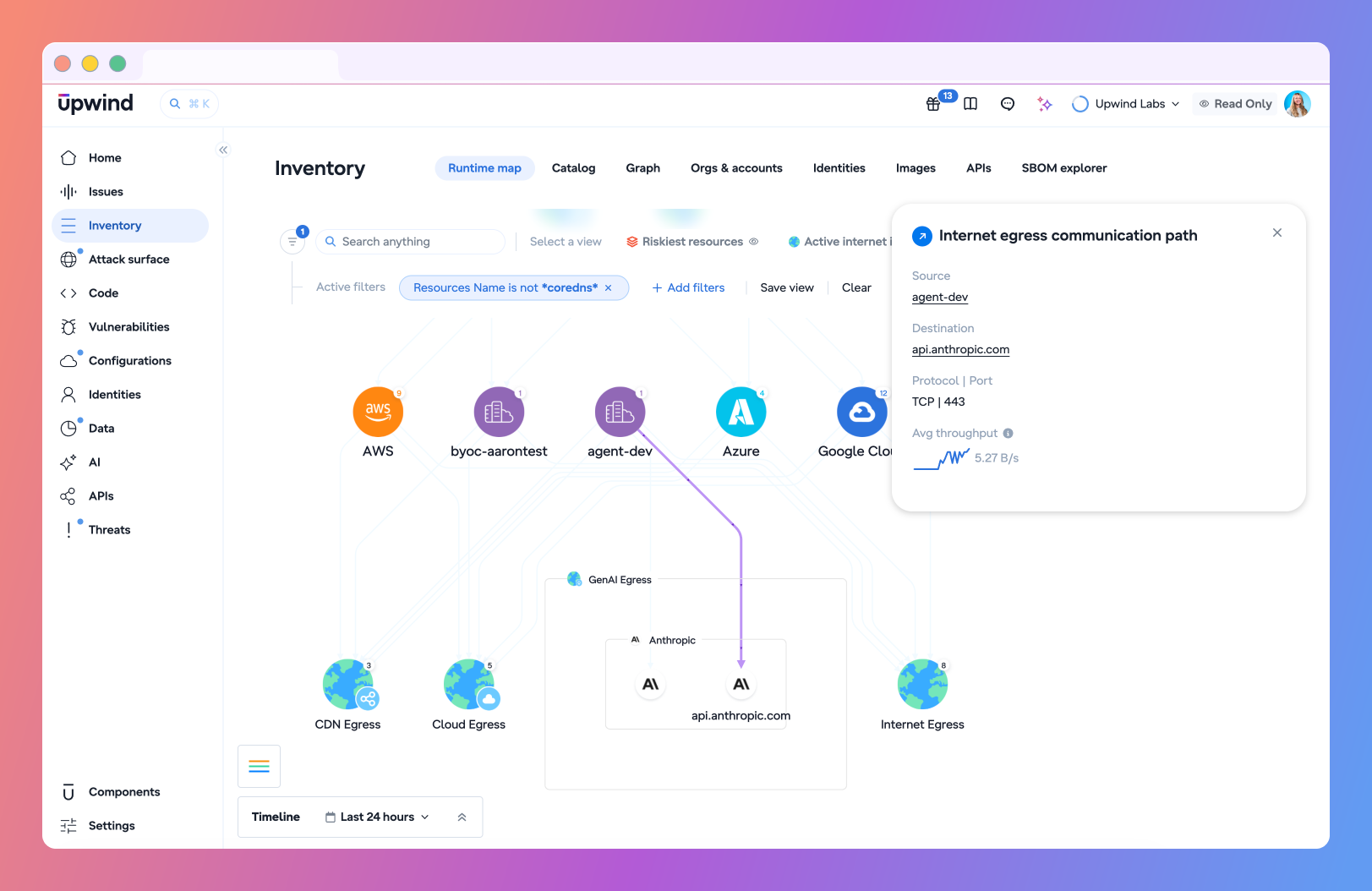
Upwind connects AI activity with runtime context across workloads, identities, APIs, network activity, and application behavior. This helps teams understand whether an AI-related risk only exists in theory or connects to real activity, active exposure, suspicious behavior, or a reachable attack path.
For example, an AI-connected application running in production, exposed to the internet, using a privileged identity, and connected to sensitive data carries a different threat profile than an isolated AI service with no active traffic or meaningful exposure.
Turn AI Signals Into Action
AI adoption changes quickly. A team may approve a model today, then change the application using it tomorrow. A new agent may gain tool access, a data flow may shift, or an integration may open a new exposure path.
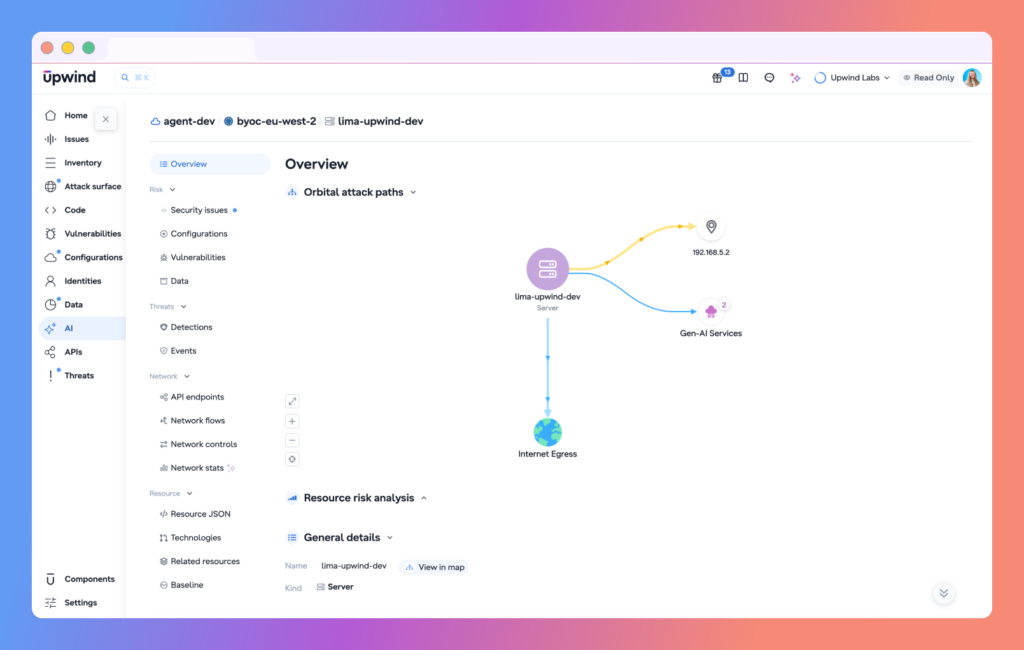
Security teams need to connect those changes to action. Upwind brings discovery, posture, exposure, runtime behavior, and investigation into one workflow so teams can spot risky changes, validate what needs attention, and respond with evidence.
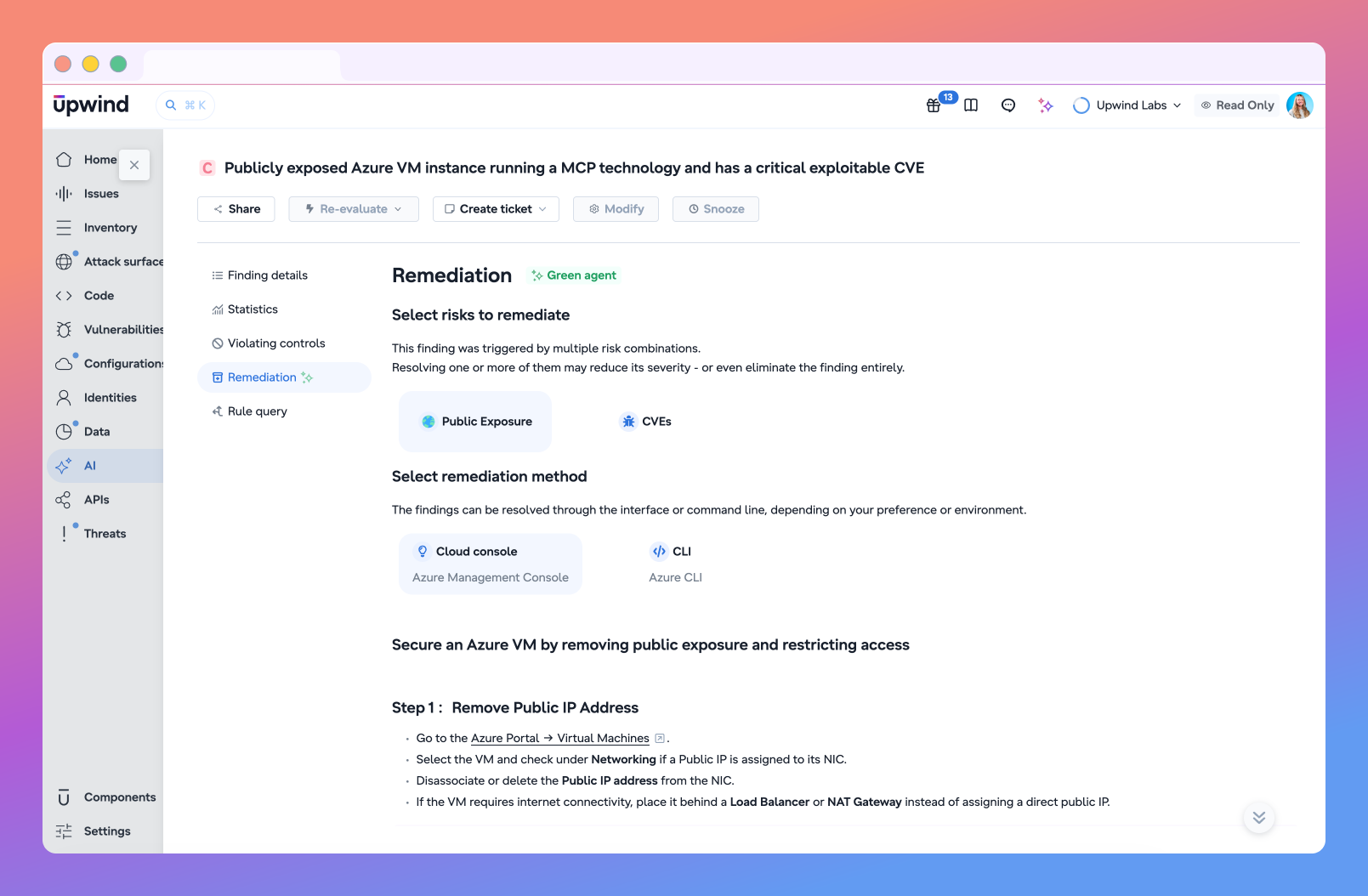
For example, a publicly exposed Azure VM running an MCP server with a critical CVE should not be treated as just another vulnerability. Teams need to understand why it matters in production, how exposure changes the risk, whether it connects to attack paths, and which remediation steps can reduce the risk fastest.
Secure AI Adoption Without Slowing Innovation
Upwind AI Security gives teams a practical way to move from AI discovery to action. Teams can find AI usage across their cloud environment, understand what it connects to, identify exposed or reachable services, and investigate suspicious activity with cloud context.
The result is less noise, stronger governance, clearer ownership, and faster action as AI adoption scales.
Learn how Upwind AI Security helps teams scale AI adoption securely.