
Cloud security teams are expected to move fast. They need to investigate issues quickly, answer leadership questions clearly, and stay ahead of risk across environments that keep growing more complex.
But in many organizations, too much time is still spent on work that does not reduce risk.
Before a team can investigate an issue, they have to determine which accounts and assets are in scope. Before an audit, they have to piece together a current view of encryption coverage. Before a leader gets an answer, someone has to manually build the information behind it.
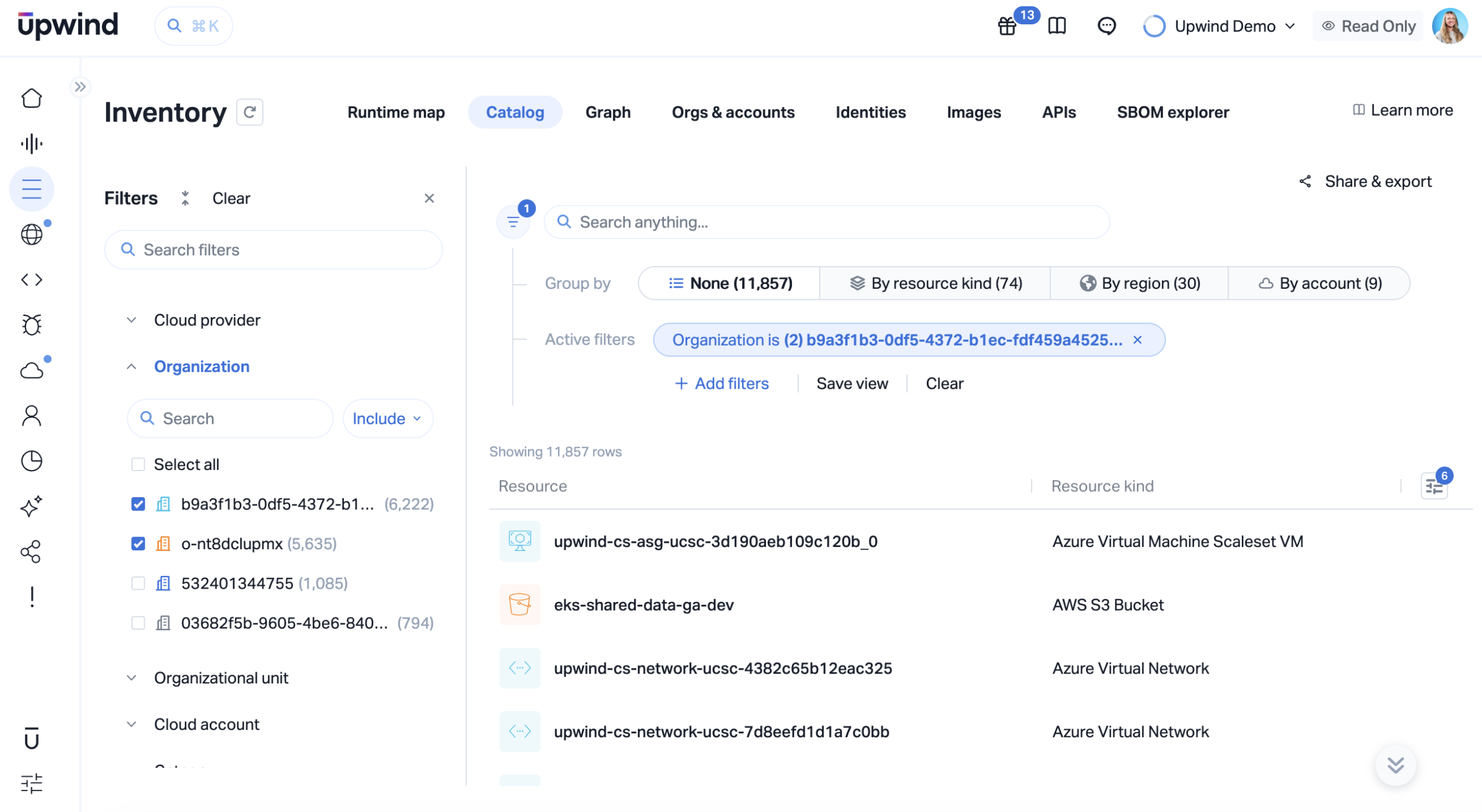
Upwind is adding new ways to use asset context in the Inventory Catalog to scope and prioritize cloud risk. Organization filtering helps teams narrow assets by business context, while Unencrypted risk indicators help identify assets that may need attention based on exposure and runtime context.
Prioritization Starts With Scoping the Full Environment
Large cloud environments are rarely organized simply. They are structured around business units, product lines, geographies, and teams. That is how the business operates. Security workflows should reflect that reality.
Too often, they do not.
A straightforward question such as, “What is the posture of this team’s infrastructure?” can become a manual exercise in pulling account lists, cross-checking tags, and narrowing scope before the real investigation even begins.
That overhead adds up quickly. It affects investigations, internal reviews, audit requests, and executive reporting. It turns simple questions into slow workflows.
With Organization filtering in the Upwind Catalog, security teams can immediately focus on the part of the environment they need to assess. That means faster investigations, quicker answers for stakeholders, and less time spent navigating the environment.
Once You Have the Right Scope, You Need to Know What Actually Matters
Scoping alone is not enough. Teams also need to quickly identify the issues worth acting on.
Take unencrypted assets. They are a common issue across cloud environments, but not every encryption gap carries the same urgency. Without context, teams are left with another static list to review. With runtime context, they can see which assets are active, exposed, and relevant to production risk.
That is the difference between noise and prioritization.
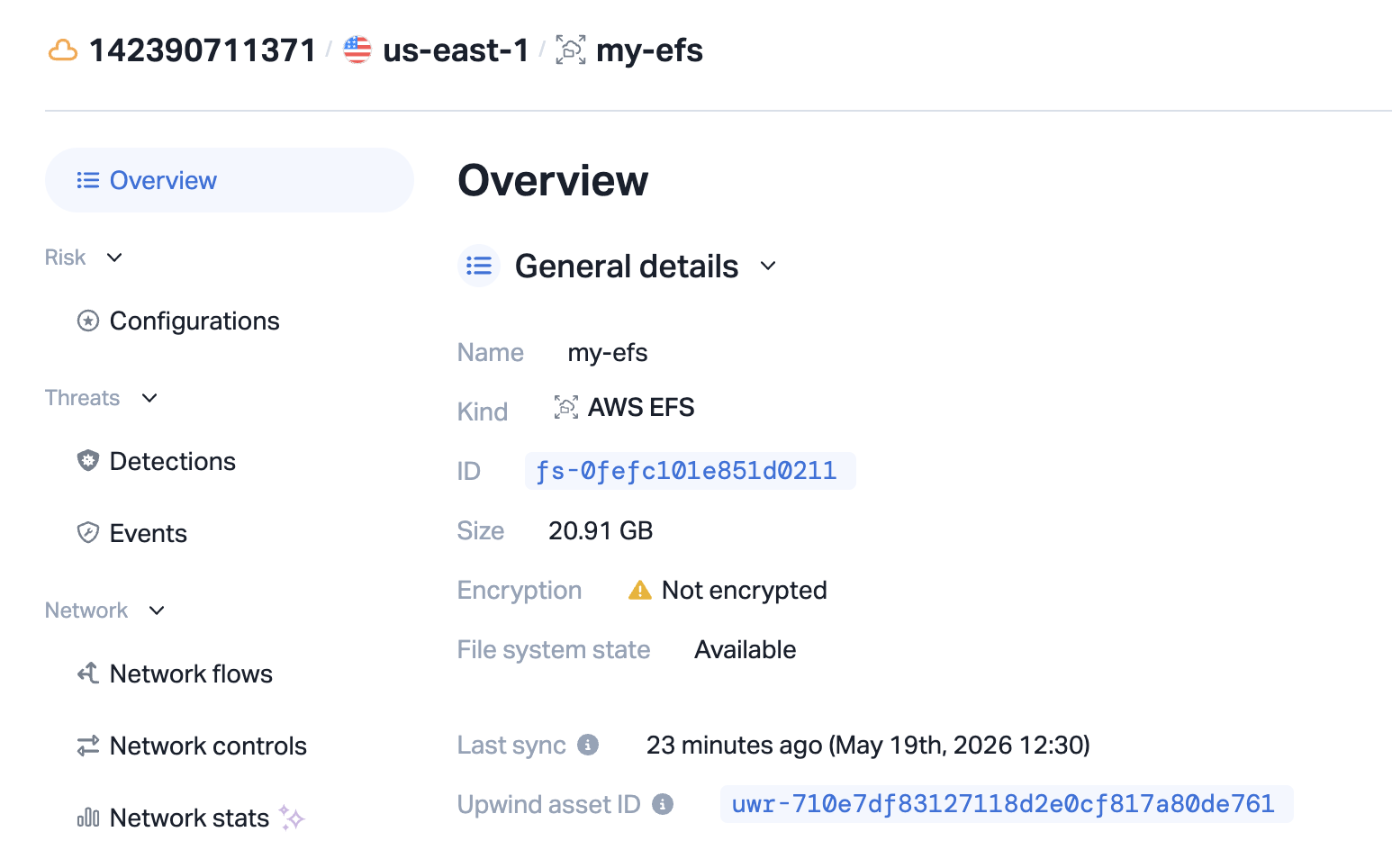
With Upwind’s Unencrypted risk indicator, teams can quickly identify assets that are not encrypted and evaluate them in the context of real runtime activity. Instead of treating encryption coverage as a periodic audit exercise, they can treat it as a continuous signal and focus on the gaps that matter most.
This is where runtime context becomes even more valuable in practice. It helps teams move beyond broad visibility and toward informed action. Rather than asking security teams to chase every issue equally, it helps them understand what deserves attention first.
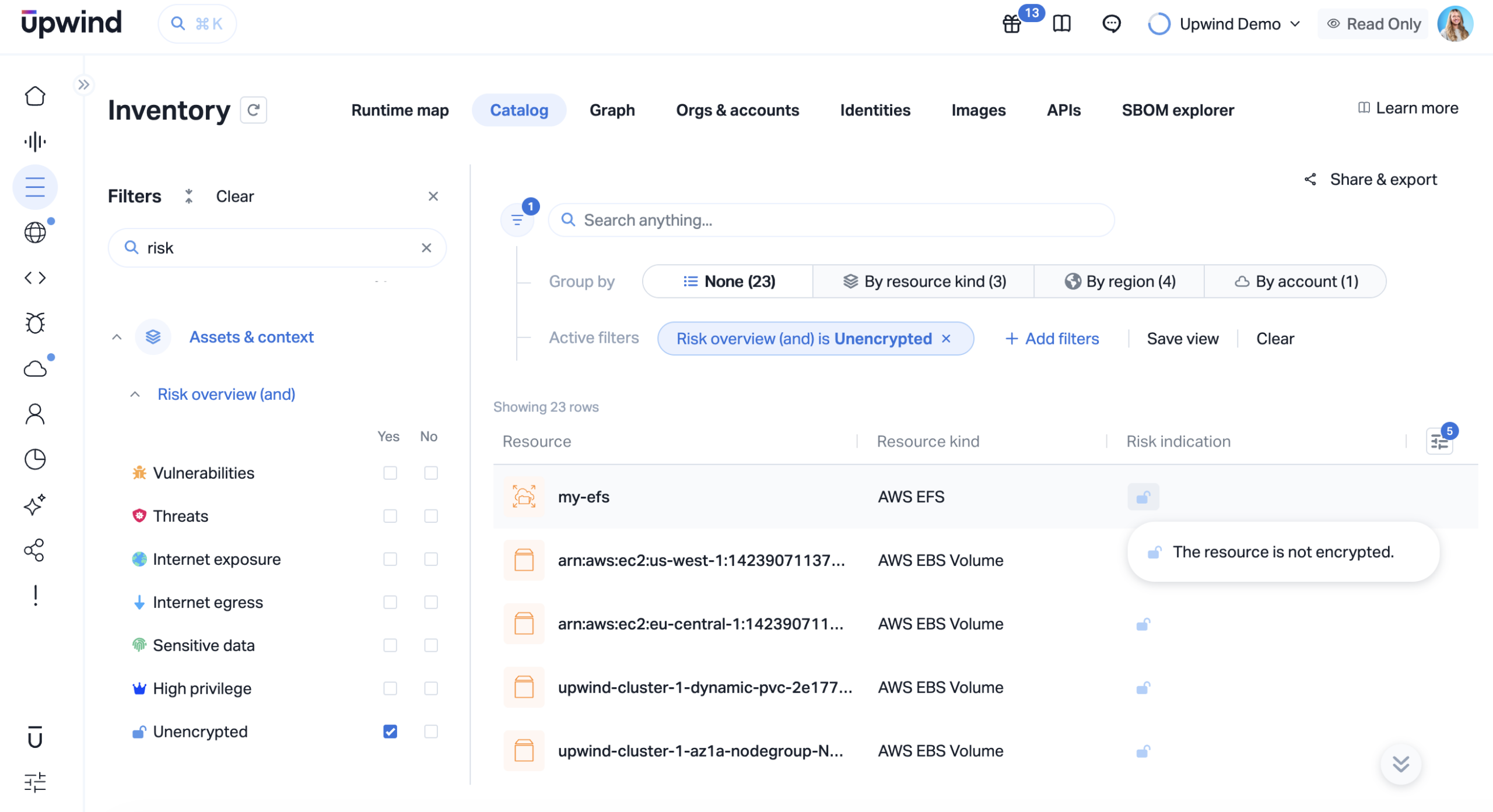
The result is stronger prioritization, less manual review, and faster remediation of the issues most likely to introduce meaningful risk.
Runtime Context Is What Turns Visibility Into Action
The market does not need more tools that create more findings without helping teams decide what to do next. It needs platforms that provide the context to prioritize clearly and act faster.
That is why runtime context matters. Not as a buzzword, but as the layer that makes visibility useful.
When teams can scope to the right part of the environment immediately, they spend less time reconstructing context. When they can evaluate issues like unencrypted assets based on what is actually running and exposed, they spend less time chasing noise. When they have both, they can move faster from investigation to decision to remediation.
That is the next evolution of cloud security.
See It in Action
Upwind helps cloud security teams cut through noise, focus on what matters, and move faster on real risk.
If your team is spending too much time sorting through findings, manually scoping investigations, or trying to determine which issues actually matter, Upwind can help you prioritize with the runtime context needed to take action with confidence. Schedule a demo to learn more.