
Who’s watching the code AI writes?

It’s probably no shocker that most of the code shipping into production this year wasn’t written by a person. The real question isn’t whether it’s any good, but who’s watching what it does once it’s running, because no human ever…

Introducing Upwind Attack Surface Management: Find the Exposures That Matter Before Attackers Do


We’re excited to announce Upwind Attack Surface Management (ASM), a new way for security teams to discover unknown attack surfaces, understand risk exposure, and prioritize the issues that matter most. Security teams have spent years improving visibility across their environments….
Investigate Faster, Detect Smarter: The Next Wave of Upwind AI Threat Detection

The moment an attacker initiates access to your network, evidence starts to appear, and in that moment, detections start to fire. That’s the moment you just start the hard part of investigating and discovering the true attack chain. Our goal…
Mastra Supply Chain Compromise: easy-day-js Dropper Pulls a Cross-Platform RAT Into @mastra Installs

Executive Summary On June 17 2026, a coordinated supply chain attack pushed a malicious easy-day-js package into the dependency tree of the entire @mastra/* npm organization. Any npm install for a compromised @mastra/* package pulls [email protected], which runs a postinstall…
The Lineup: Where Partnerships Become Real Value

In surfing, the lineup is where it all starts. It’s the place where surfers seize the next big wave, together! It’s where experience meets timing. Where trust, respect, and awareness matter as much as skill. That idea is exactly what…
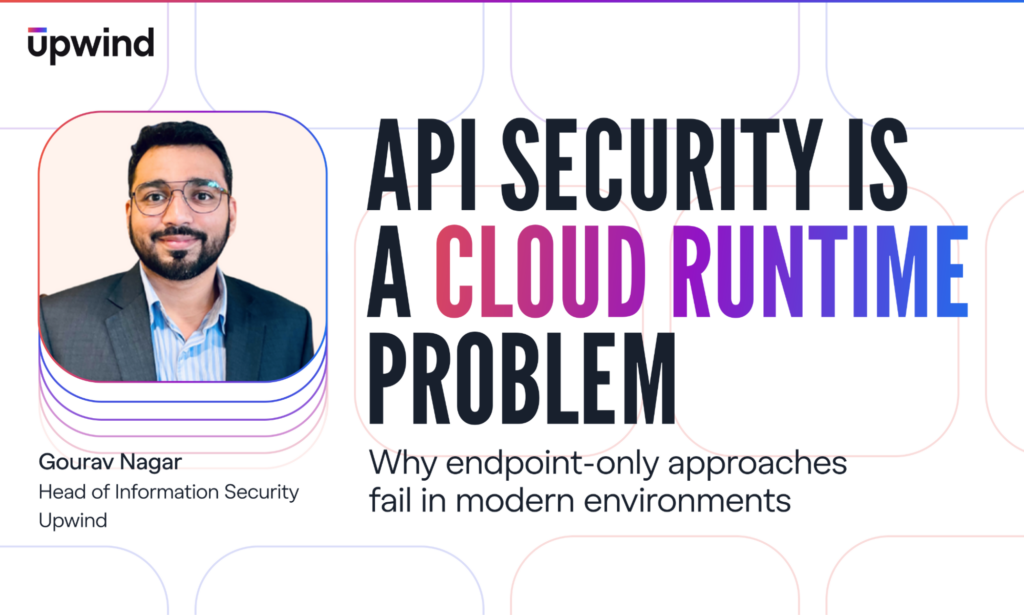
API Security Is a Cloud Runtime Problem: Why Endpoint-Only Approaches Fail in Modern Environments

TL;DR: API security was designed for a world where APIs were stable, documented endpoints sitting in front of monolithic applications. In cloud-native environments, APIs are dynamic connective tissue between workloads, identities, and data stores and securing them requires runtime visibility…
AWS Well-Architected Framework Available in Upwind

Continuous Compliance for Cloud Security Teams The AWS Well-Architected Framework is now available in Upwind. The framework helps organizations evaluate architectural decisions and align workloads with AWS best practices across 6 pillars: Operational Excellence, Security, Reliability, Performance Efficiency, Cost Optimization,…
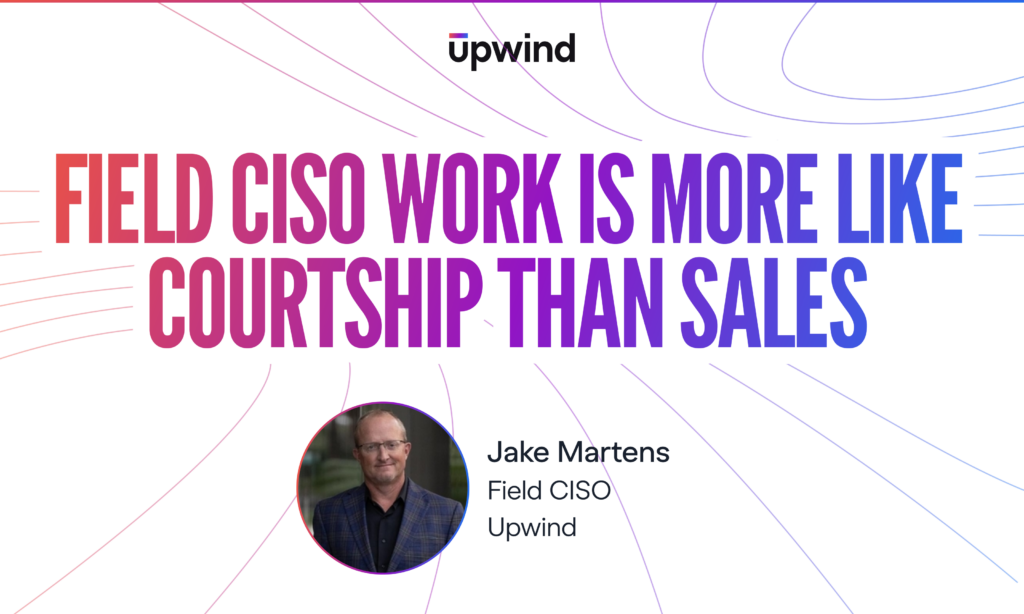
Field CISO Work is More like Courtship than Sales

Field CISO work is closer to courtship than sales. And what I mean by that is, by the time a CISO has an urgent project, the field of trusted vendors has already been chosen, which means the year before the…

Upwind Now Detects Novel Supply Chain Attacks in Real Time


Software supply chain attacks are no longer rare events that make headlines once a quarter. In 2026, significant attacks are landing every few days, and the pace is accelerating. AI-assisted code generation is lowering the barrier for attackers to craft…
From “Encrypt Everything” to “Encrypt for the Quantum Era”: The Upwind Cloud Cryptography Framework

For most of the last decade, cloud security teams have lived by a simple slogan: encrypt everything. Encrypt at rest. Encrypt in transit. Use customer-managed keys. Rotate them. Pass the audit. Move on. That slogan just expired. In August 2024,…