
We are excited to share the latest improvements to our eBPF-powered sensor, the foundation of our runtime security platform. By continuously enhancing how the sensor observes and protects Kubernetes environments, we’re making security both more effective and more efficient for our customers.
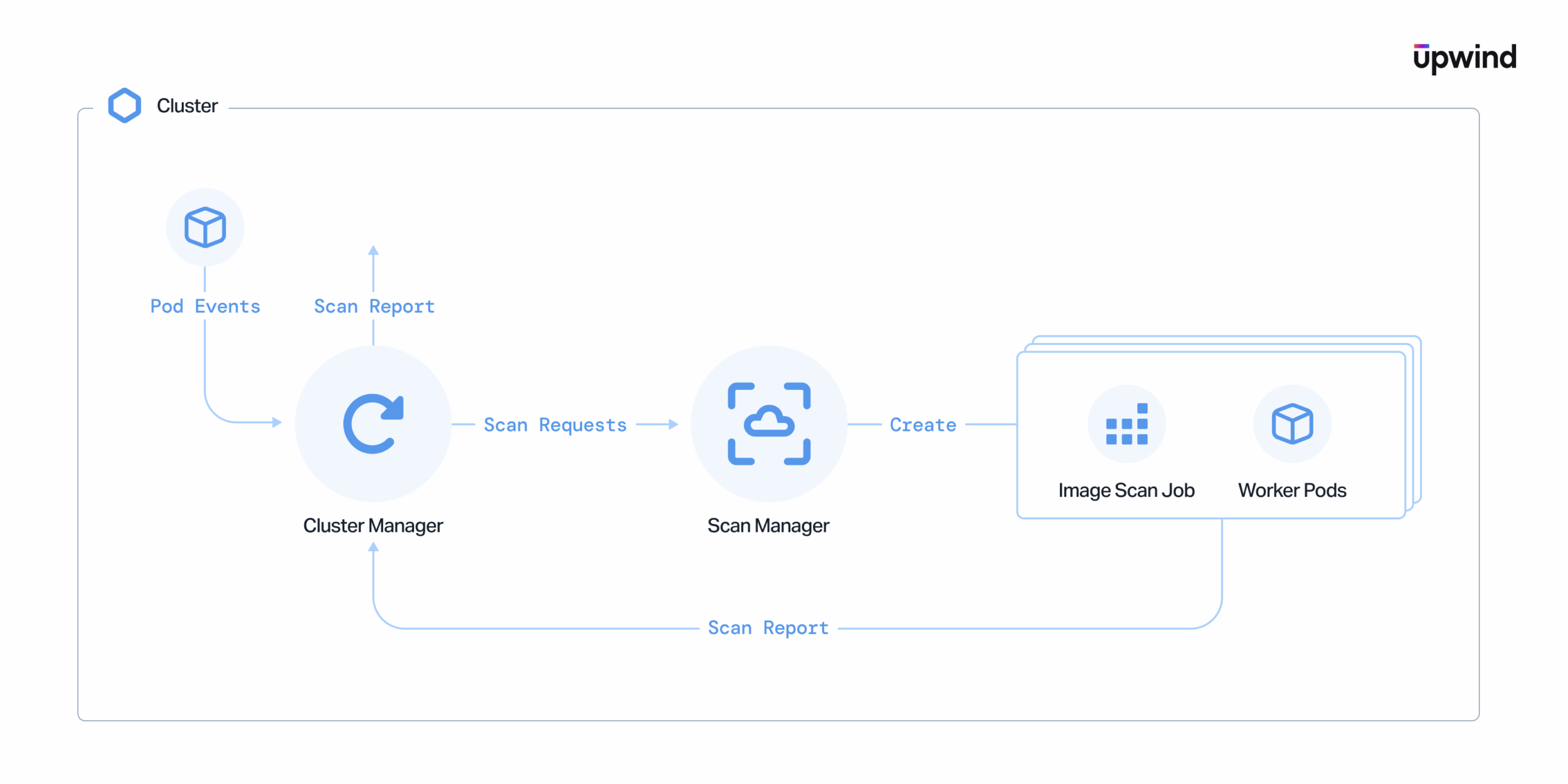
As part of this advancement, we are introducing container image scan jobs, a capability that makes Kubernetes image security faster, more reliable, and significantly more resource-efficient. Unlike static scanning tools that only run during build or registry stages, these scan jobs operate directly in the cluster, providing adaptive coverage of every running image. Orchestrated intelligently by the cluster manager, they ensure customers gain complete visibility with lower costs and faster results.
Securing Cloud-Native Environments at Scale
Cloud-native infrastructure gives organizations the speed and flexibility they need, but it also creates constant change: containers appear and disappear in seconds, microservices communicate dynamically, and clusters scale up and down on demand. These dynamics make visibility and security especially challenging for traditional tools.
Upwind was built to address this reality. By operating directly in the Linux kernel with eBPF, our platform provides real-time insight and runtime protection that keeps pace with the speed of Kubernetes. And with the addition of on-demand scan jobs, organizations can now achieve complete image coverage across their environments, without wasted resources.
The Power of the Upwind Sensor
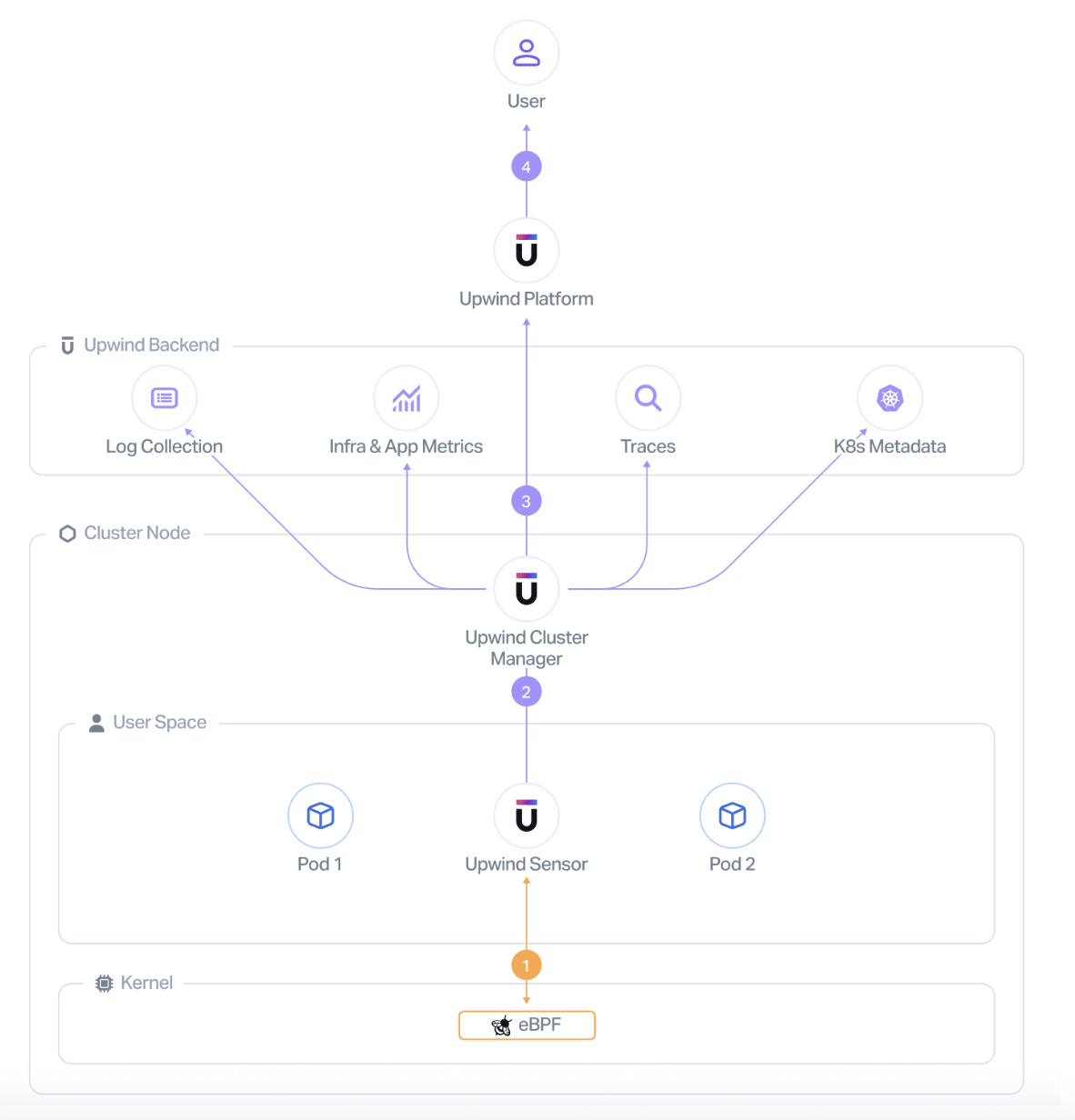
At the core of this capability is the Upwind eBPF sensor. Running inside the Linux kernel, it captures system calls, process activity, and network behavior at the source, then enriches that data with Kubernetes and cloud provider metadata. The result is security intelligence that is both highly efficient and deeply contextual, translating raw kernel events into actionable insights tied to specific workloads and services.
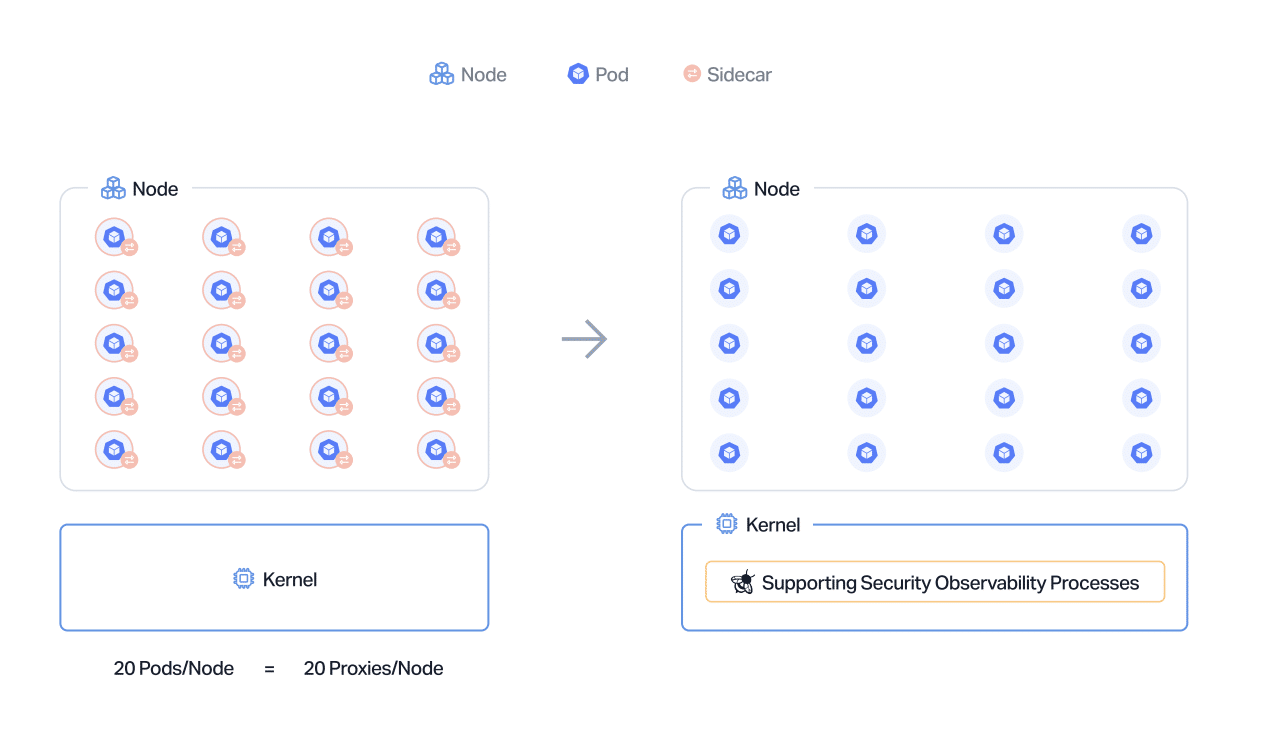
Because the sensor attaches directly to kernel-level activity, there is no need for sidecars or heavy agents. This design scales naturally across clusters of any size, delivering reliable protection with minimal overhead.
Smarter Image Scans with Adaptive Jobs
Our new scan jobs are designed specifically for the dynamic nature of Kubernetes. Unlike static scanning, these jobs are runtime-aware and orchestrated directly within the cluster. Scan jobs run only when needed, consuming resources on-demand rather than continuously. Each job automatically requests the right amount of compute for the image it is scanning, retrying with higher allocations if necessary. The cluster manager orchestrates jobs at a steady, predictable pace, ensuring every image in the environment is covered quickly and reliably.
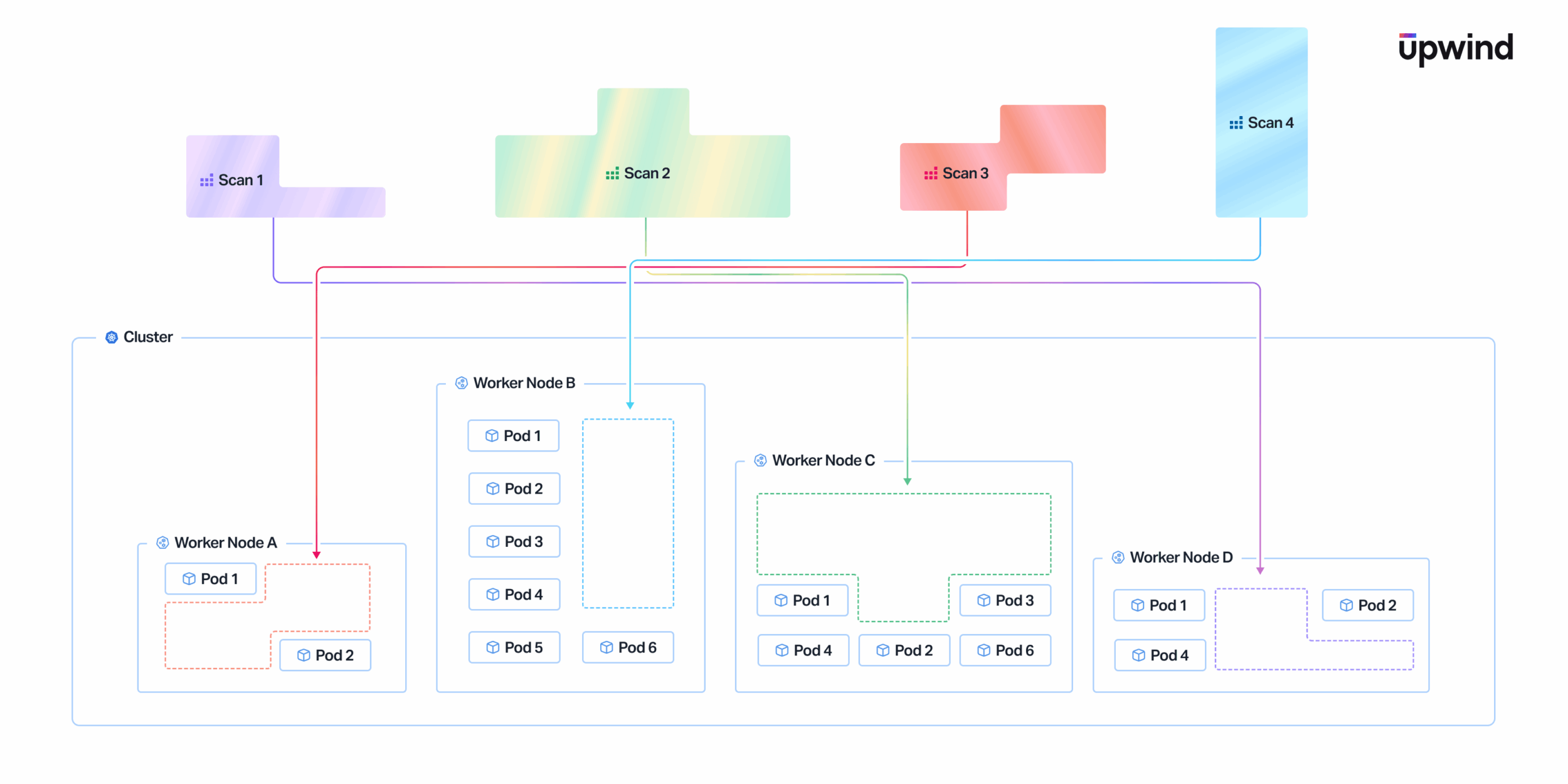
If a scan encounters an issue, the job is rescheduled without manual intervention, maintaining seamless coverage. This adaptive approach ensures consistent performance, rapid results, and a security posture that aligns with the fluidity of Kubernetes environments.
From Technology to Tangible Value
For our customers, the benefits to our sensor improvements are immediate:
- Lower costs by avoiding idle resource consumption
- Complete coverage with every running image scanned successfully
- Faster detection of risks, reducing the window of exposure
- Simpler operations through intelligent orchestration and automation
These improvements deliver stronger, more predictable security while aligning with the agility of cloud-native infrastructure.
Final Thoughts
With the latest improvements to our eBPF-powered sensor, Upwind continues to raise the standard for runtime security in Kubernetes. The introduction of adaptive scan jobs makes image scanning faster, more reliable, and more cost-efficient, ensuring complete coverage without wasted resources.
The result is a stronger security posture that combines deep kernel-level visibility with intelligent orchestration. Customers gain the clarity, speed, and efficiency they need to protect dynamic cloud-native environments at scale.
See it in Action
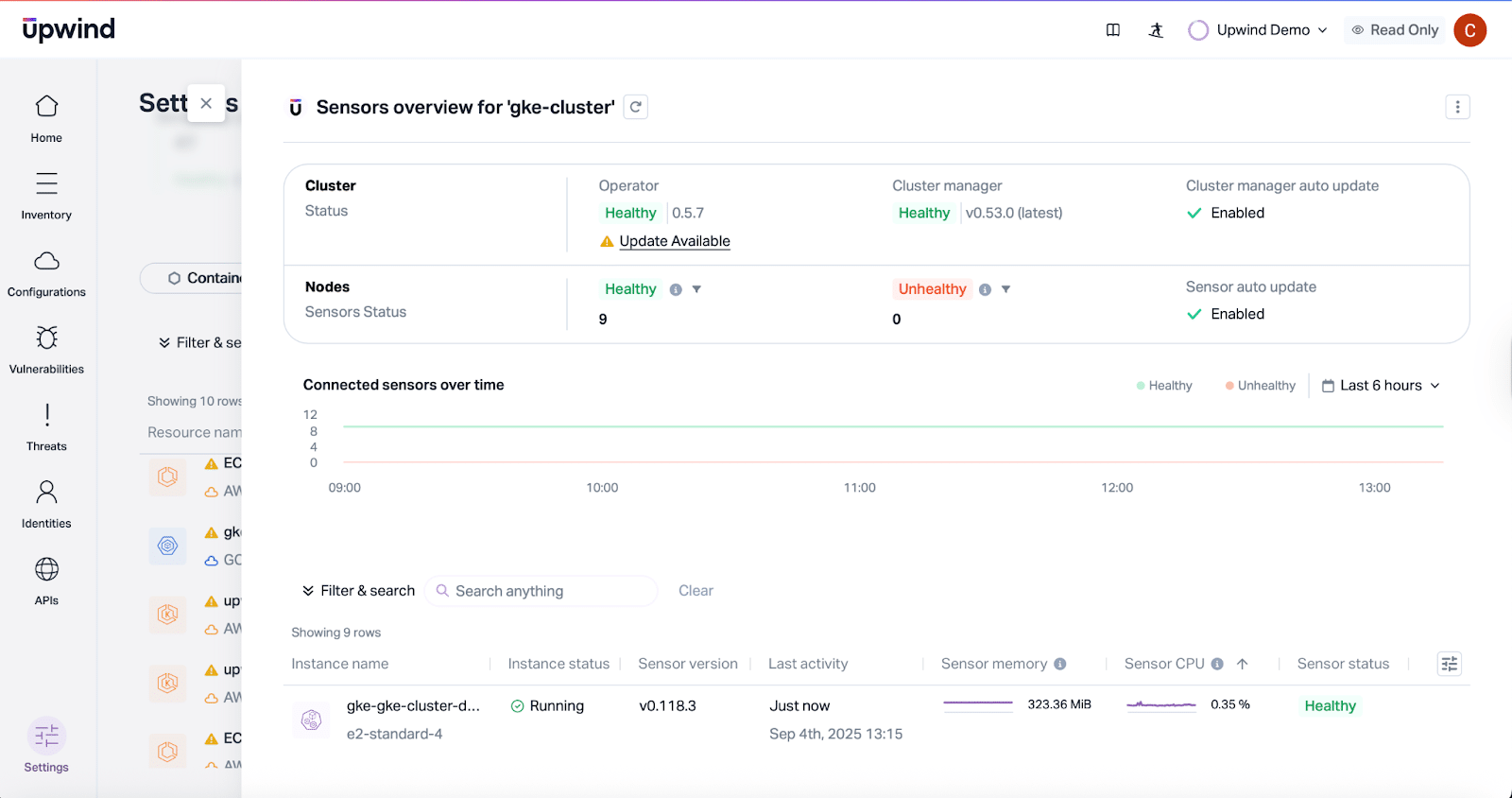
The best way to understand these improvements is to see them for yourself. Upwind’s eBPF-powered sensor and adaptive scan jobs deliver real-time visibility, reliable image scanning, and cost efficiency that scales with Kubernetes.Schedule a demo with our team to see how Upwind can strengthen your security posture and simplify runtime protection.