
Upwind’s runtime vulnerability management leverages real-time, runtime insights and correlates them with CI/CD and DevOps context, giving you end-to-end visibility and protection for Kubernetes and associated workloads.
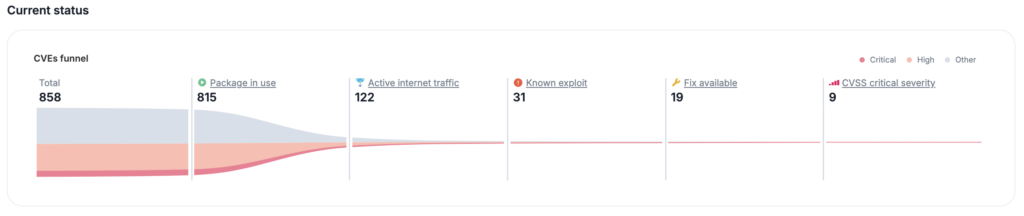
Upwind’s vulnerability management intelligently prioritizes your most critical vulnerabilities based on real environmental factors, cutting out around 95% of alert noise to focus on the risks that pose a real risk to your business.
Our vulnerability management capabilities protect Kubernetes with deep prioritization for vulnerabilities across resources including:
ReplicaSets: Used to maintain a stable set of replica Pods running at any given time.Jobs: Create one or more Pods and will continue to retry execution of the Pods until a specified number of them successfully terminate.CronJobs: Perform regularly scheduled actions such as backups, report generation, and so on.StatefulSets: The workload API objects used to manage stateful applications. They manage the deployment and scaling of a set of Pods, and provide guarantees about the ordering and uniqueness of these Pods.DaemonSets: Ensure that all (or some) Nodes run a copy of a Pod.Pods: A group of one or more containers that share storage and network resources.Deployments: Act as the manager for your pods, ensuring they run according to your specifications.Nodes: Individual machines (physical or virtual) that make up a Kubernetes cluster.
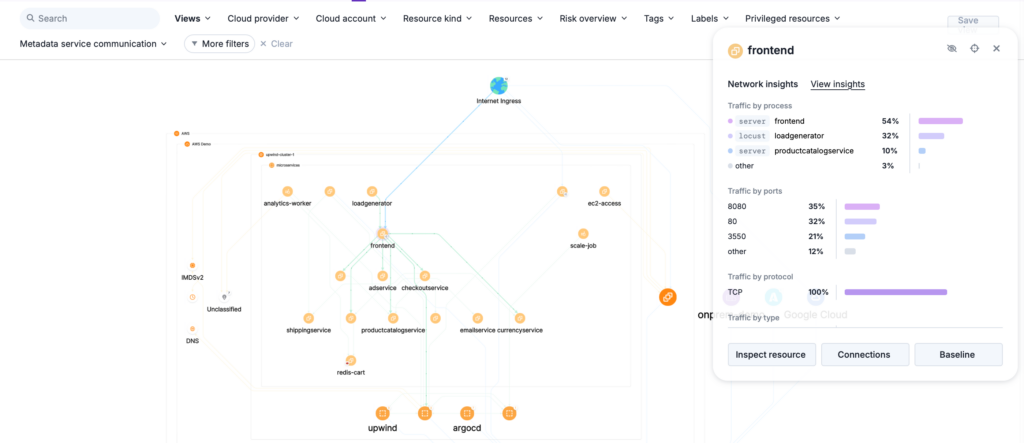
Upwind leverages runtime insights to give you real-time visibility into resource communication and behavior. This comprehensive protection and visibility for Kubernetes at runtime enables you to not only prioritize Kubernetes risks, but to also proactively protect against common Kubernetes attacks.
Upwind’s vulnerability management for Kubernetes empowers you to:
- Prioritize Real Risk: Upwind leverages runtime insights to identify which packages are in use, internet-facing and exploitable, helping you focus on real risk.
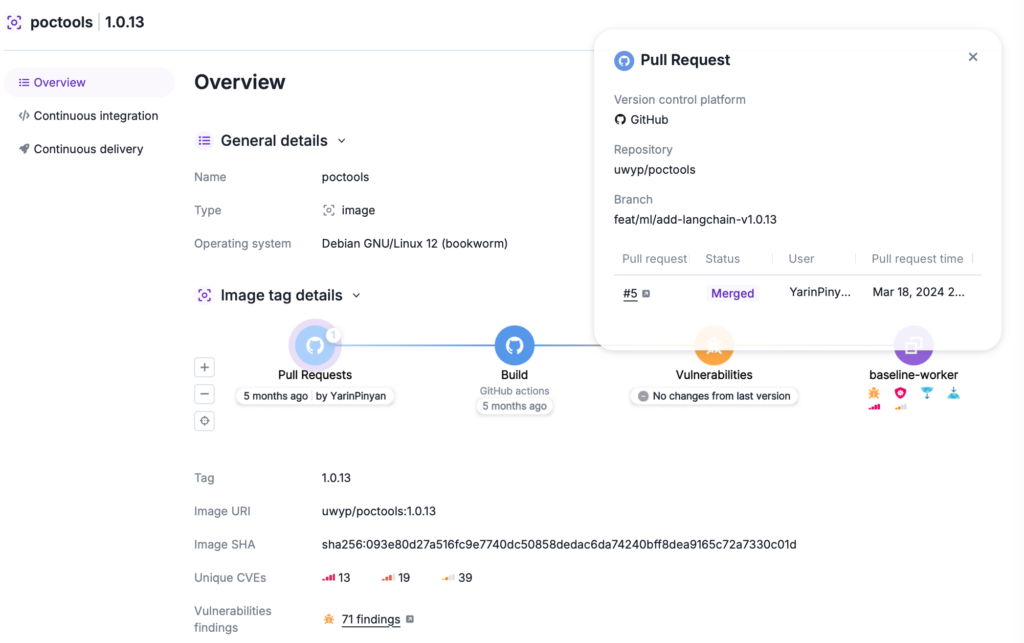
- Unify DevSecOps: Receive built-in DevOps context with every finding, including image version details and insights into CVE diffs.
- Reduce Time to Remediation: Identify packages within your environment and their dependencies with our runtime software bill of materials (SBOM). Streamline remediation efforts and easily search for packages by framework, package manager and how many resources use each package.
- Streamline Investigations: Integrates with your CI/CD to automatically receive information on developer actions that led to code changes and resulting vulnerabilities. Streamline your investigations and identify the root cause of problems with every finding.
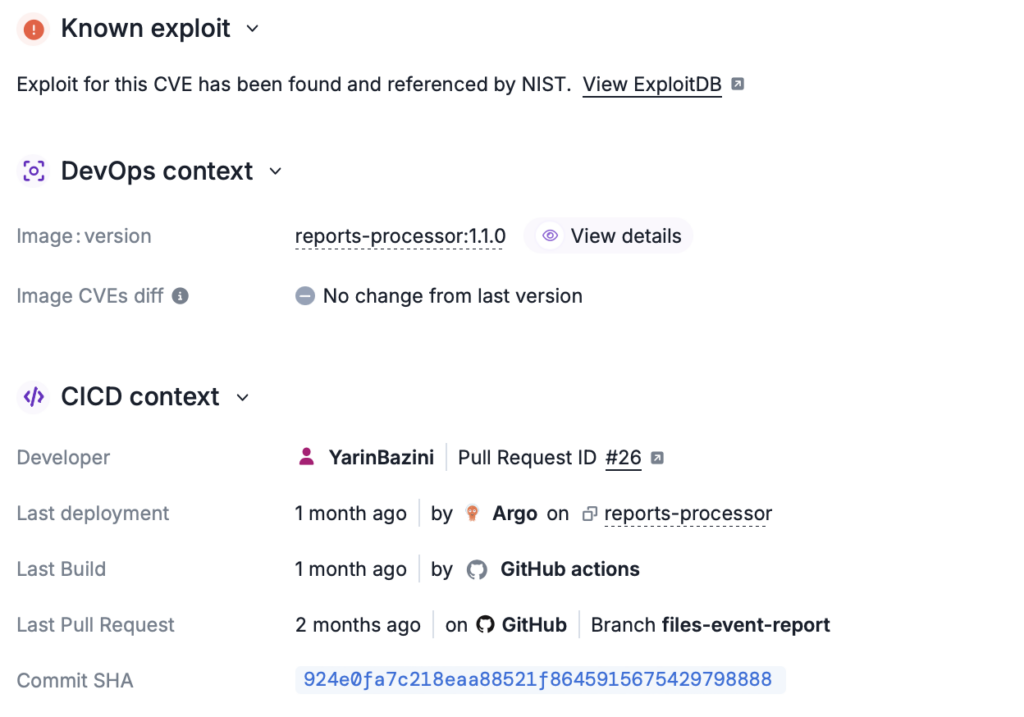
Use Upwind’s vulnerability management to identify critical Kubernetes risks in real time, prioritize risks based on real environmental factors, and streamline remediation efforts to fix them faster.
For more information on Upwind’s vulnerability management, visit the Upwind Documentation Center (login required) or schedule a demo.