
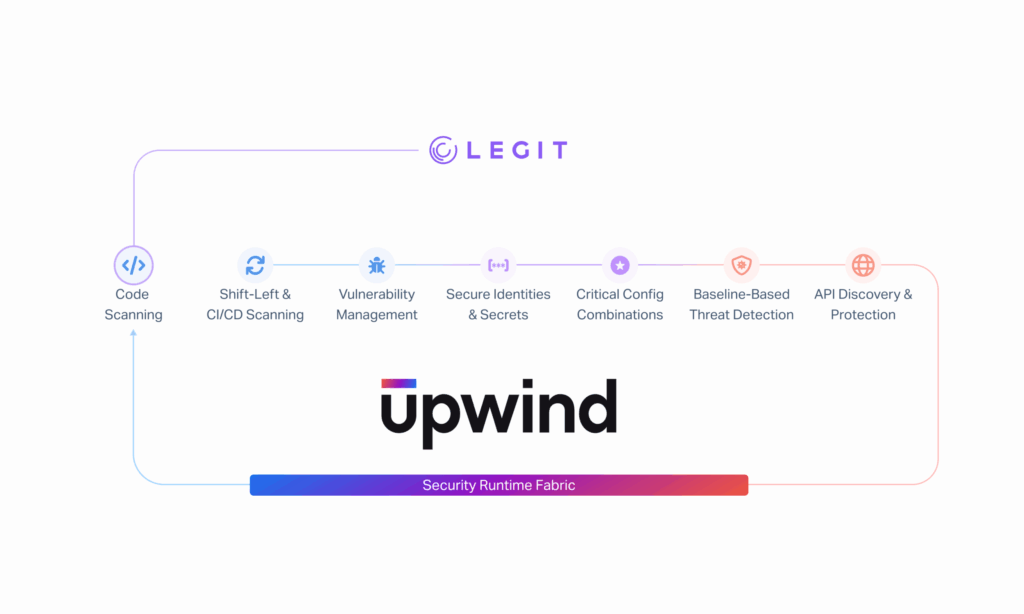
As software delivery accelerates with cloud-native architectures and AI-driven development, security must evolve to match the speed and complexity of modern engineering. That’s why Upwind, the runtime-first CNAPP, and Legit Security, a leader in Application Security Posture Management (ASPM), are partnering to provide end-to-end, code-to-cloud protection that combines deep runtime context with secure software development. This combines code scanning with API Security and real production context. This means tying shift-left scanning to runtime signals, API usage, and cloud execution patterns – giving teams the clarity to fix what matters most.
Bridging the Gap: From Code to Runtime
AppSec and cloud security teams are often siloed – operating on different signals, tools, and timelines. The result is missed vulnerabilities, delayed remediation, and security friction that slows development.
This partnership changes that by integrating:
- Legit Security’s ASPM platform, which secures software supply chains, development pipelines, and code
- Upwind’s CNAPP, which provides real-time protection and prioritization based on live runtime behavior, identity, and exploitability
Together, we enable unified application security that is context-aware, developer-friendly, and built for scale.
What This Integration Delivers
The Upwind + Legit integration brings together two complementary capabilities, application-layer security posture and real-time cloud risk insight, in a unified integration that aligns teams, accelerates remediation, and improves security ROI.
By connecting code-level activity with runtime impact, this partnership gives security leaders the visibility and control needed to manage risk proactively across the entire software lifecycle, including:
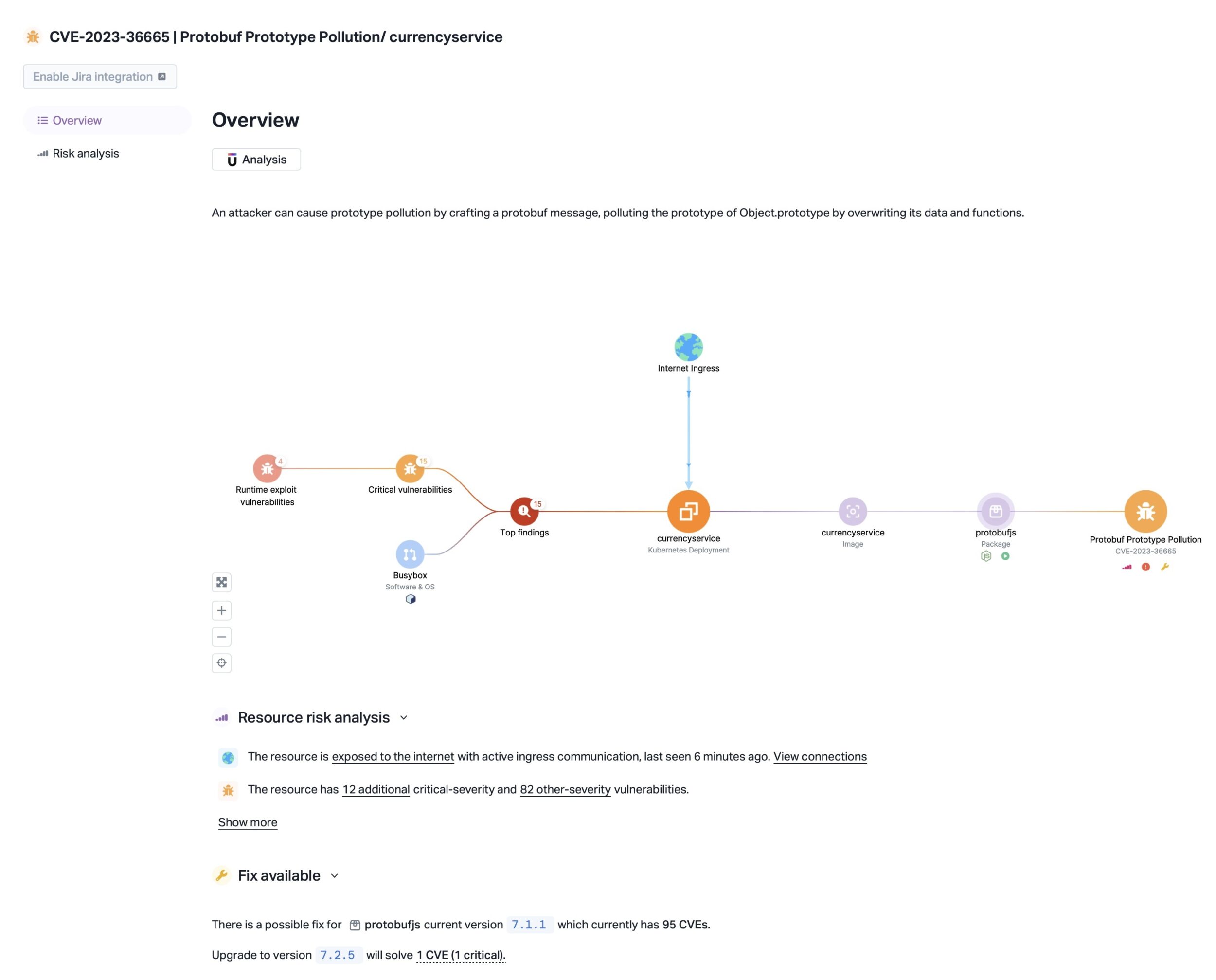
- Code-to-Cloud Traceability: Legit correlates software assets and ownership across the SDLC, while Upwind ties vulnerabilities to runtime risk. Together, they deliver full traceability, from a vulnerable code commit to an exploitable issue in production, enabling fast triage and ownership-based remediation.
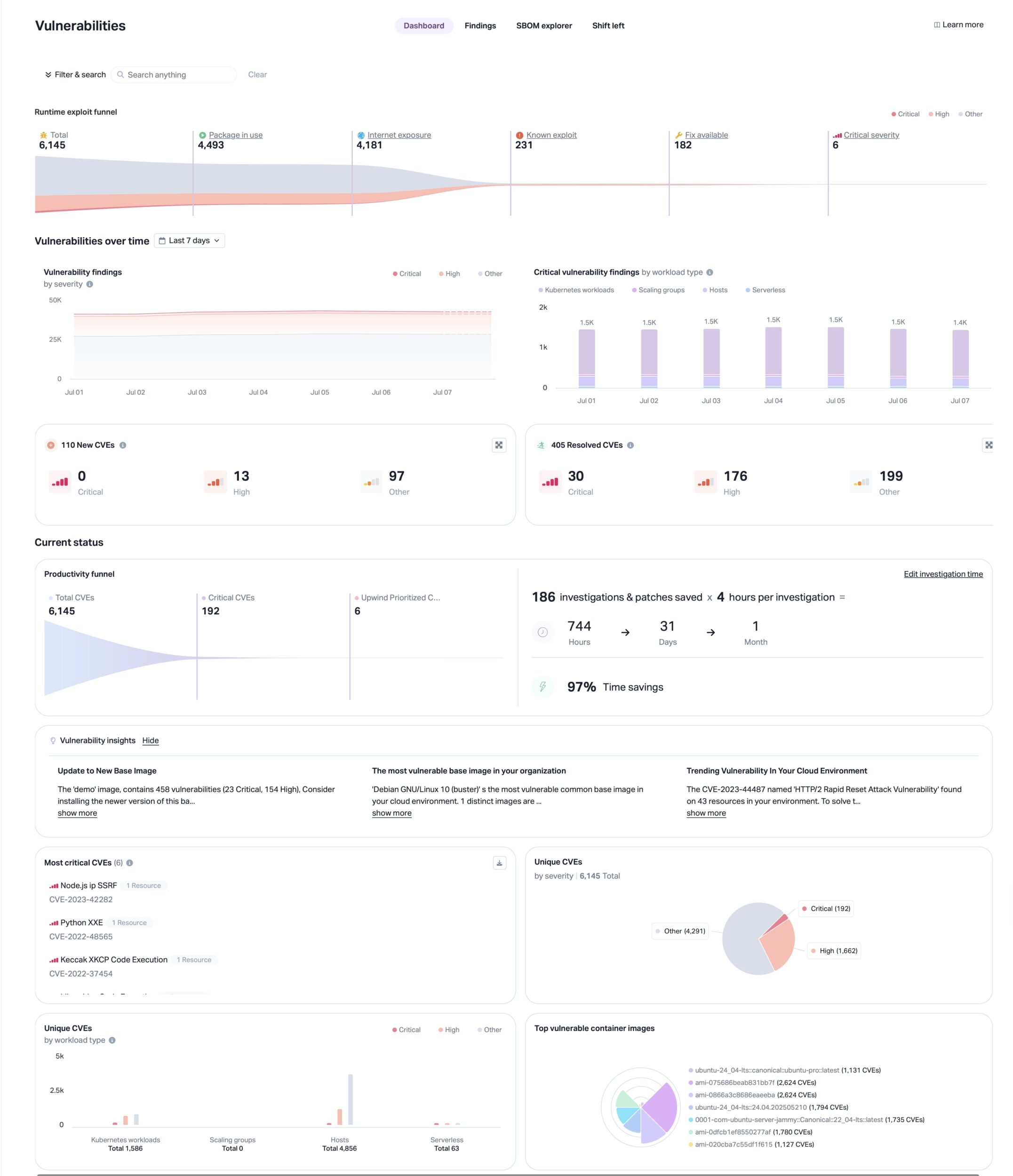
- Exploit-Aware Prioritization: Upwind filters out noise with real-time exploitability analysis, so AppSec teams using Legit can focus only on code that introduces real risk – reducing time spent on false positives and low-priority findings.
- Developer-Driven Remediation: Legit reads Upwind’s runtime findings to pinpoint the exact source, owner, and optimal code fix location. Whether through GitHub, GitLab, or IDE integrations, developers receive precise, contextual remediation guidance.
- Proactive Guardrails Based on Runtime Risk: Legit’s code guardrails can now incorporate runtime telemetry from Upwind to enforce policies that block only critical issues – preserving development velocity while reducing exposure.
Business Impact for Security Leaders
This partnership isn’t just about improving security posture and reducing the attack surface – it’s about enabling the business to move faster, with greater confidence. By embedding runtime context into the development lifecycle and unifying visibility across engineering and cloud environments, security leaders gain strategic leverage across key business drivers:
- Reduced Risk Exposure: By prioritizing only exploitable vulnerabilities and mapping them directly to responsible teams, organizations can shorten the window of exposure and prevent critical risks from reaching production.
- Accelerated Software Delivery: With clear ownership and accurate remediation paths, security becomes an enabler of faster, more secure deployments.
- Operational Efficiency at Scale: Security teams spend less time chasing non-issues and more time focusing on high-impact vulnerabilities. Developers receive only the fixes that matter, reducing rework and alert fatigue.
- Improved Audit Readiness and Compliance: Code-to-cloud traceability provides a transparent, defensible path for demonstrating secure development practices, streamlining compliance efforts across frameworks like SOC 2, ISO 27001, and NIST.
- Stronger Cross-Team Collaboration: With aligned signals and shared context, security, DevOps, and engineering teams operate from a single source of truth—improving trust, accountability, and execution across the organization.
Built for How Modern Teams Work
This partnership combines two purpose-built platforms to deliver security that matches the speed and complexity of modern software development. With Legit + Upwind, teams gain complete visibility from code to cloud, and the context needed to act confidently and quickly.
To learn more or see the integration in action, contact us to schedule a demo.