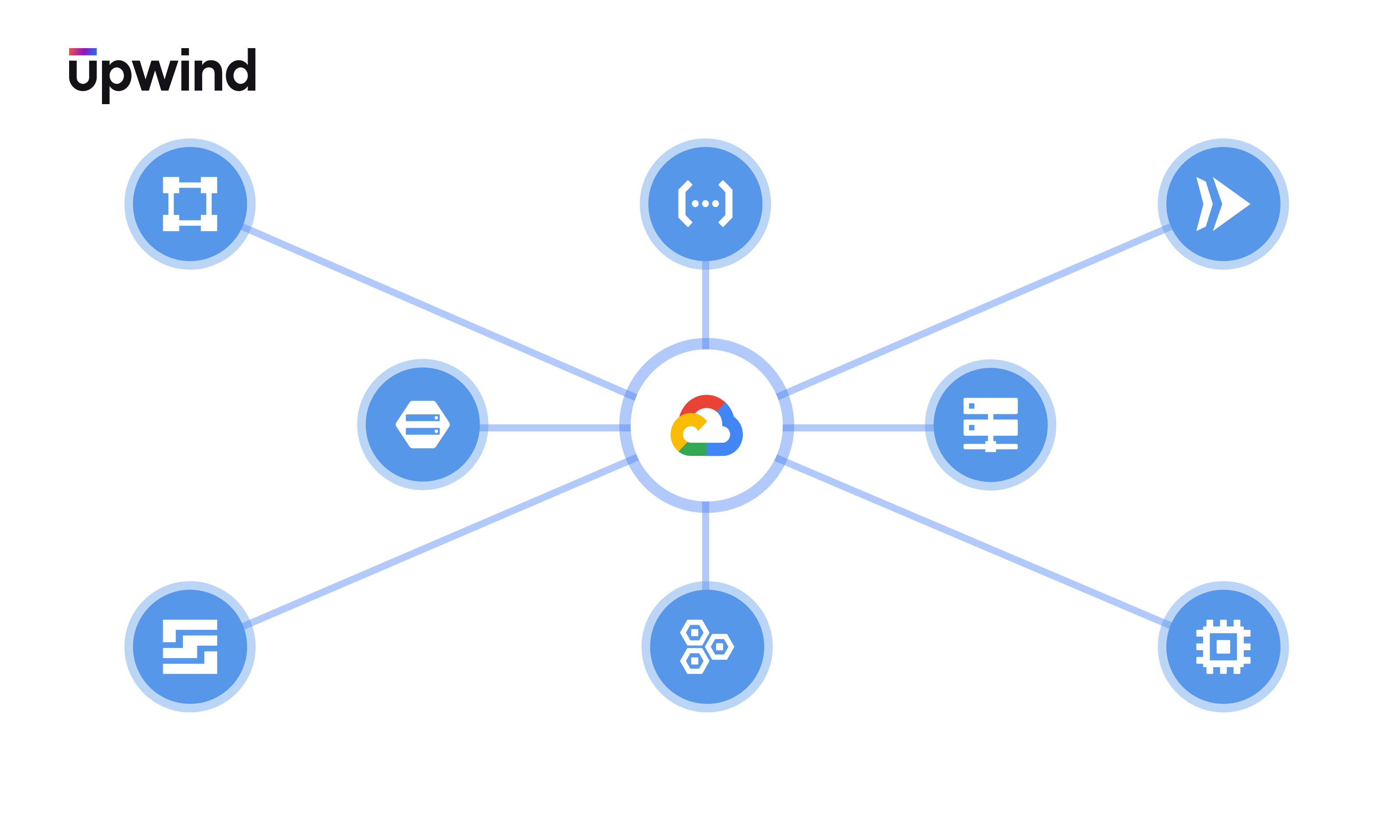
Upwind provides deep runtime visibility into resource communication and behavior, including destination domain awareness. This is crucial for identifying potential threats, preventing data exfiltration, and ensuring compliance with security policies. The Upwind platform allows you to easily view the specific destination domains that Google Cloud resources communicate with, providing even deeper context for risk assessments and threat detection.
Destination Domain Awareness
Upwind allows organizations to monitor resource communication with DNS destinations, including egress domain traffic. It also provides visibility into internal DNS destinations such as databases and internal domains. Upwind provides this visibility by translating service communication to Google Cloud and enriching all Google Cloud service context based on the destination domains that services reach out to.
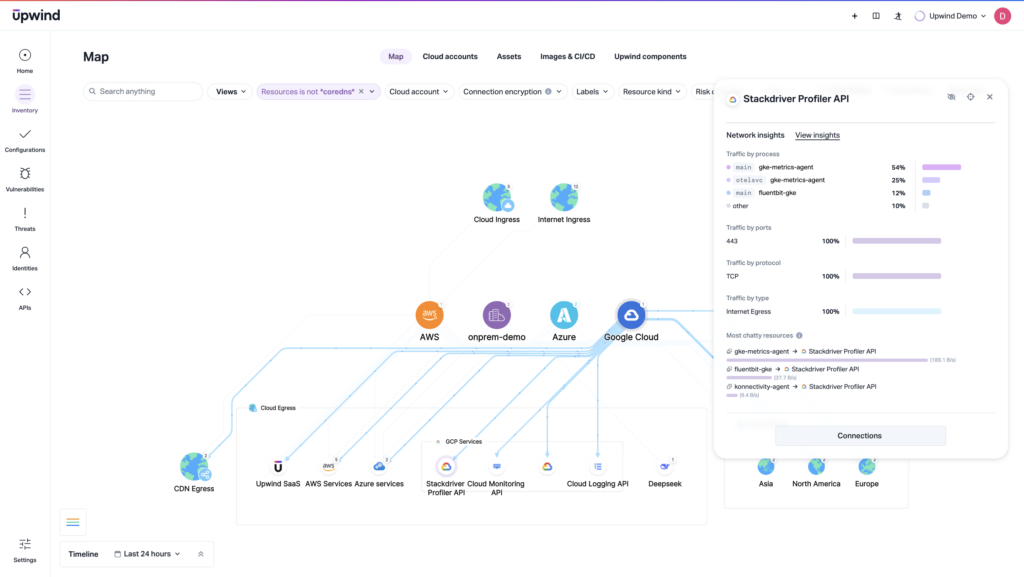
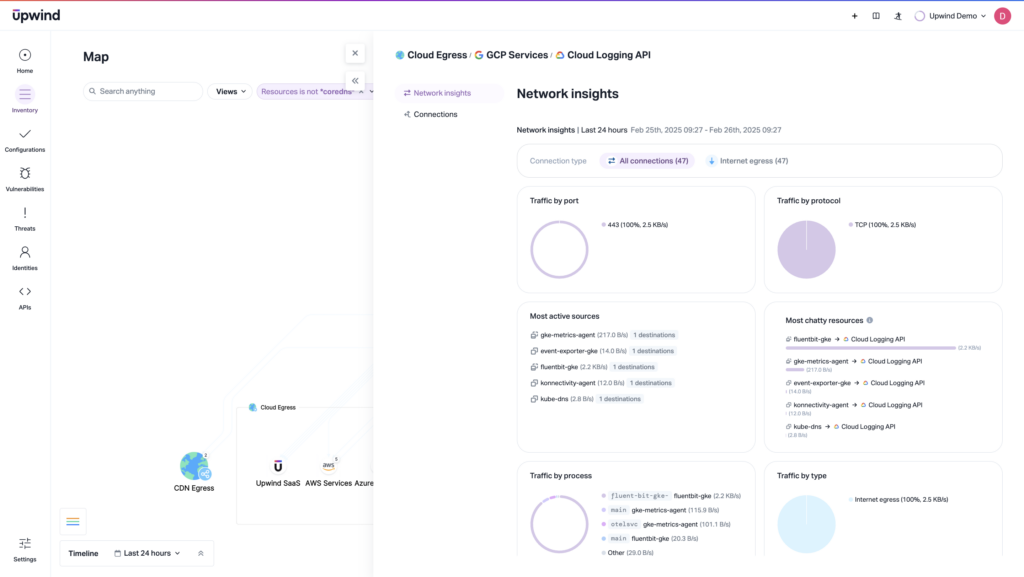
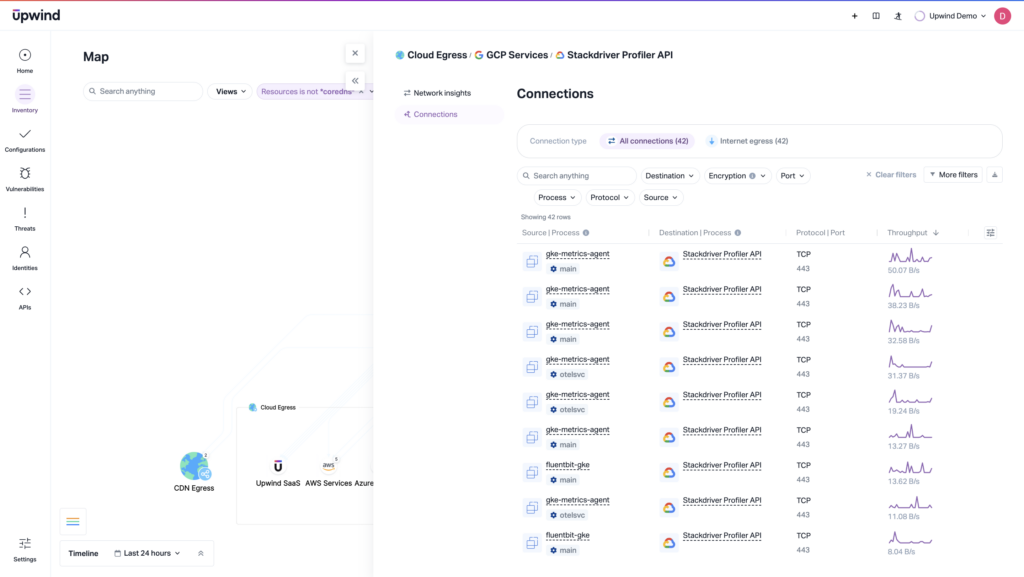
We then map all of this context accordingly on the Upwind Topology Map, visually representing service communications, dependencies, and network flows in an intuitive, interactive interface. This provides:
- Visibility into overall network topology and changes in network traffic
- Granular insights into traffic source, destination and destination domains
- Insights into traffic by process, port, protocol and throughput
Upwind provides granular visibility into resource and application communication with Google APIs, such as:
| Domain | Title |
| abusiveexperiencereport.googleapis.com | Abusive Experience Report API |
| acceleratedmobilepageurl.googleapis.com | Accelerated Mobile Pages (AMP) URL API |
| accessapproval.googleapis.com | Access Approval API |
| accesscontextmanager.googleapis.com | Access Context Manager API |
| actions.googleapis.com | Actions API |
| adexchangebuyer-json.googleapis.com | Ad Exchange Buyer API |
| adexchangeseller.googleapis.com | Ad Exchange Seller API |
| analyticsreporting.googleapis.com | Analytics Reporting API |
| bigqueryconnection.googleapis.com | BigQuery Connection API |
| billingbudgets.googleapis.com | Cloud Billing Budget API |
The above is a small sample of the Google domains that Upwind visualizes resource traffic to, providing deep visibility into resource and application traffic and behaviors.
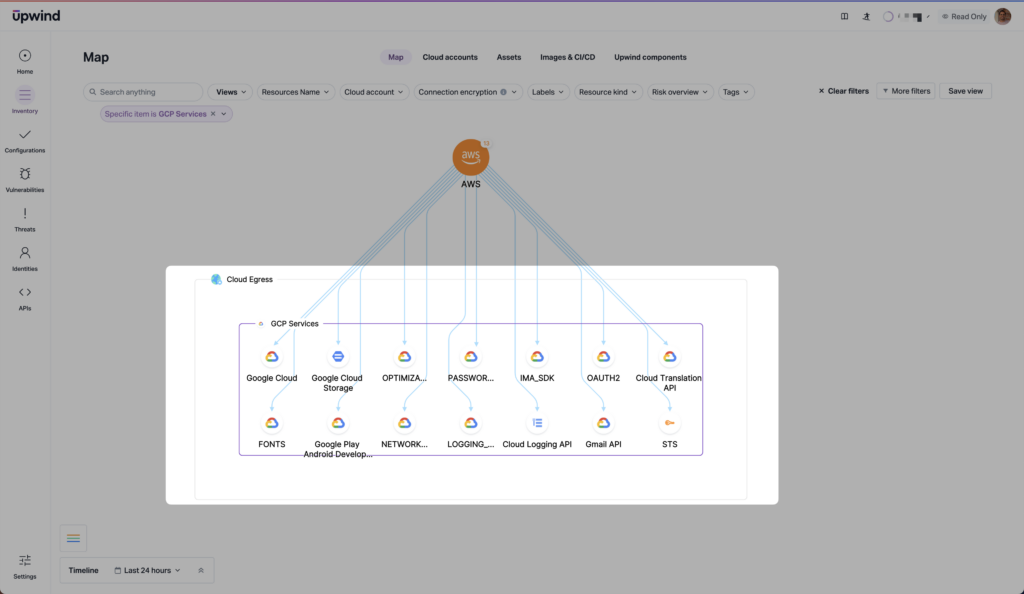
This makes it easy to analyze traffic patterns, identify unusual traffic and monitor application and resource performance. Upwind uses this data across the platform for risk prioritization and threat detection, notifying you when your resources are trying to communicate with low reputation domains or whenever resources are contacting addresses for the first time in a way that requires your attention.
Take Control of Your Cloud Traffic With Upwind
Use Upwind’s destination domain awareness to gain enhanced visibility of network traffic, monitor resource behavior, and proactively secure your Google Cloud infrastructure. In today’s evolving threat landscape, having real-time insights into your cloud traffic is critical to preventing breaches and mitigating risks before they escalate. To learn more, schedule a demo today.