
Cybersecurity vulnerabilities have been tracked since 1999, when the Internet Category of Attack (ICAT) toolkit began compiling attack scripts and made them available to developers to look up easily. ICAT evolved into the National Vulnerability Database (NVD) of today, holding over 150,000 vulnerabilities and adding tens of thousands more annually. Beyond the basics, we’re going over how complete the ever-expanding NVD is compared to other sources of cybersecurity intelligence, how quickly its threat scores are updated, and how to best use the NVD alongside multiple intelligence sources and behavioral analysis.
What is the National Vulnerability Database (NVD)?
The National Vulnerability Database (NVD) is a public repository maintained by the U.S. National Institute of Standards and Technology (NIST). It is a resource for cataloging and managing publicly disclosed cybersecurity vulnerabilities. Here are its core tasks:
- Cataloging all vulnerabilities that have been assigned a Common Vulnerabilities and Exposures (CVE) ID
- Assigning threat ratings using the Common Vulnerability Scoring System (CVSS)
- Adding data and analysis to CVEs, like weakness enumeration (CWE), mapping vulnerabilities to a known weakness class, patch information, or listing affected versions
- Offering an API gateway to connect NVD data to automation pipelines and vulnerability scanners for vulnerability management
The NVD does not discover vulnerabilities on its own. Instead, vulnerabilities are disclosed to the CVE system and MITRE, and CVE IDs are assigned through the work of researchers, vendors, and organizations that report them.
Further, the NVD does not track active threats or real-time exploit activity. Instead, it provides context to help organizations assess and prioritize vulnerabilities based on their severity, exploitability, and potential impact. That helps teams make more informed decisions in security workflows.
Prioritize Identifying Vulnerabilities with Runtime Scanning from Upwind
Upwind’s runtime-powered container scanning helps you prioritize CVEs effectively by providing real-time threat detection, contextualized analysis, and remediation insights. Understand which vulnerabilities matter most to your unique workloads and resolve them faster — up to 10X faster than traditional methods.
Get a DemoOn Vulnerability Discovery and Reporting with the NVD
The NVD is a foundational resource for cataloging vulnerabilities, assigning standardized scores (CVSS), and providing contextual information. As a U.S. government agency project, the NVD is part of how the National Institute of Standards and Technology (NIST) supports national security, critical U.S. infrastructure, economic stability, and, indirectly, private organizations.
That said, real-world vulnerability management often extends beyond what the NVD alone can provide, given a list of vulnerabilities to root out and eliminate may only create a checklist of tasks that extend beyond the capacity of teams but offer little in the way of improved security.
“Many customers report that they have experienced alert overload and a lack of prioritization in their security practice. At Upwind, we focus on real risk – cutting down noise by 95% and helping customers get to the root cause 10 times faster.”
–Joshua Burgin I CPO, Upwind
The NVD plays a significant role in cyber security. But its approach is cataloging, not action. So, teams will still need to identify the NVD’s listed vulnerabilities in their own systems and work to eliminate them efficiently, eliminating noise. They’ll also need to take note of the gaps in the NVD database. Let’s get a closer view of the vulnerability landscape of the NVD, looking at NVD challenges one at a time.
Timeliness and Delay in NVD Information
The NVD updates its records after ingesting and scoring CVE data. However, vendor advisories or dynamic threat intelligence platforms may update faster, especially when active exploitation is detected.
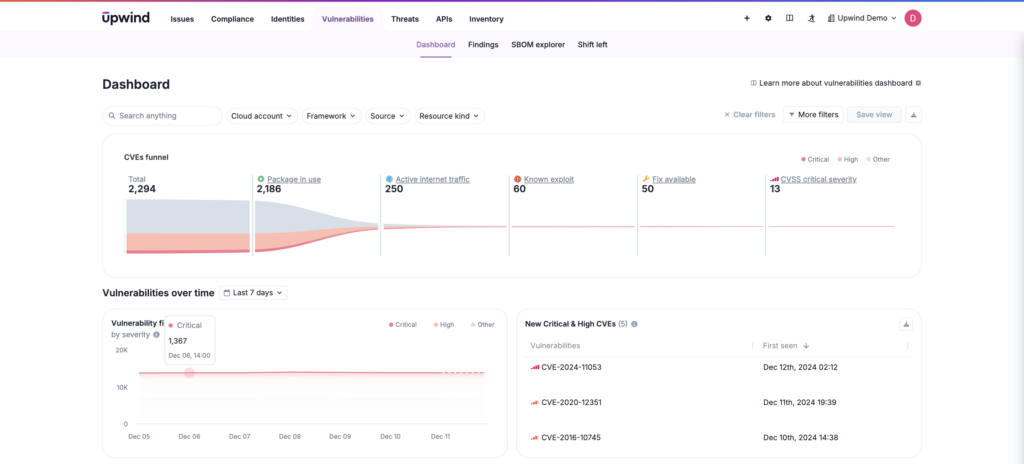
The solution is runtime security for real-time updates of exploits regardless of database timeliness or whether they’ve even been identified as vulnerabilities at the time of detection. Runtime security can also prioritize vulnerabilities actively being exploited in an organization’s environment, so less time is spent on vulnerabilities that aren’t critical.
Comprehensiveness of NVD Data
The NVD serves as a critical resource for cataloging vulnerabilities, but not all vulnerabilities are assigned CVE IDs, especially in niche or proprietary software. Further, as an American-managed system, the NVD may be biased toward software and disclosures from the U.S., potentially leaving out vulnerabilities in regional or less-documented ecosystems.
These gaps mean relying solely on the NVD could leave blind spots in vulnerability management strategy.
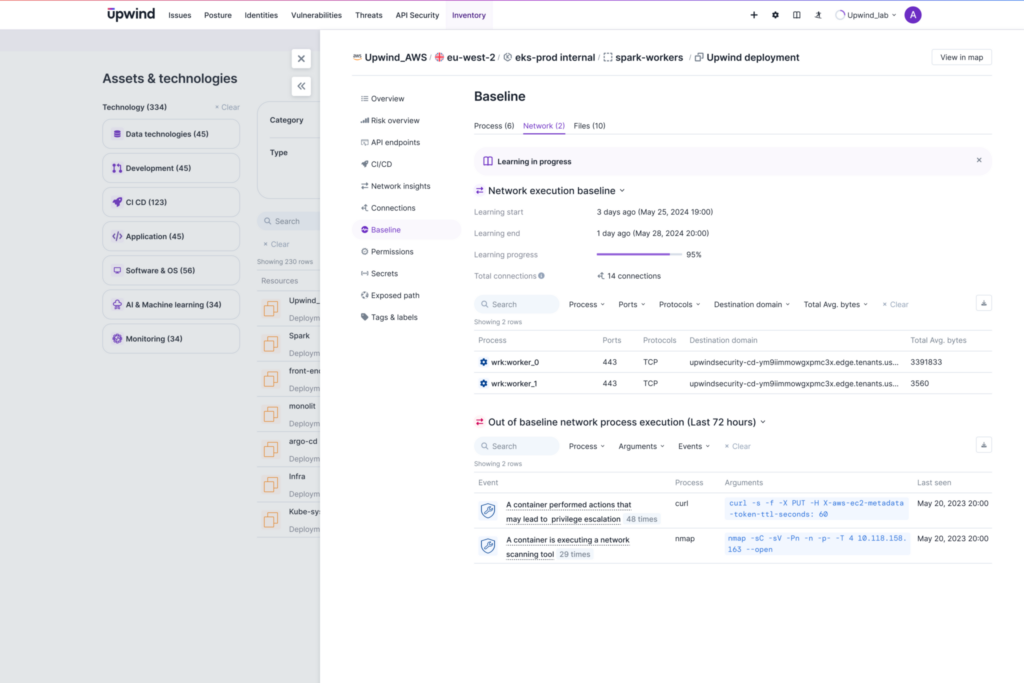
For instance, if an internal containerized application makes unexpected network connections or loads an unverified library during runtime, organizations would want to flag this behavior as a risk, even if there’s no corresponding CVE in the NVD.
Environment-Specific Threat Levels
While the NVD provides standardized vulnerability data, it doesn’t inherently prioritize or contextualize risks for specific environments.
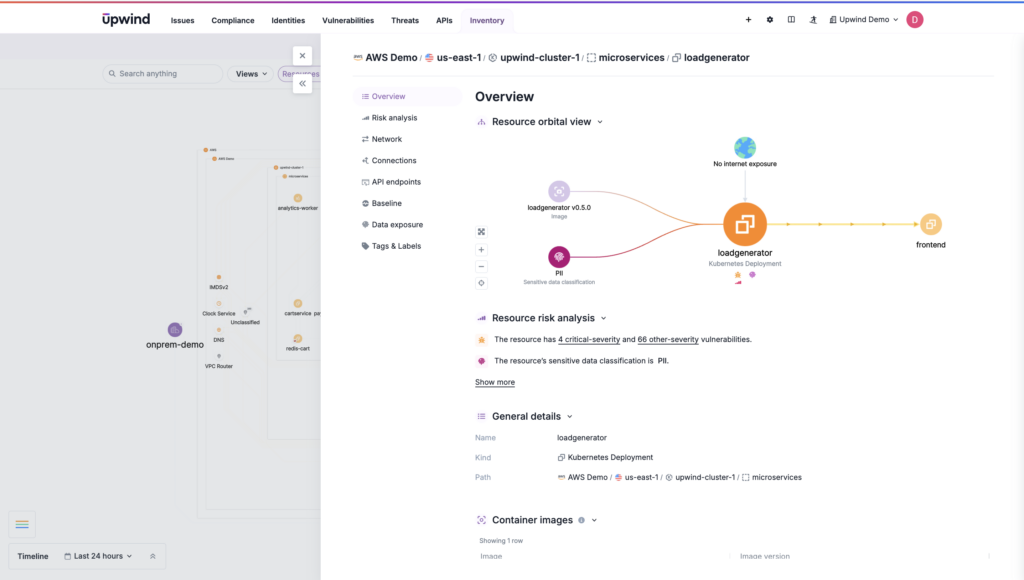
For personalized risk scores, organizations must correlate NVD data with runtime telemetry and attack path analysis, ensuring prioritized remediation.
Benefits and Limitations of the NVD for Vulnerability Security
The NVD provides a foundational layer for vulnerability management with broad coverage and simple integration into pipelines.
Let’s break down its key features, benefits, and limitations to help organizations understand how to maximize its use while addressing potential gaps.
| Facets of the NVD | Description | Strengths | Limitations |
| Scope | Catalogs vulnerabilities with CVE IDs across software and hardware. | Broad coverage of known vulnerabilities. | Excludes niche or proprietary software vulnerabilities. |
| Timeliness | Updates vulnerability data after CVEs are assigned and enriched with CVSS scores. | Standardized updates for many common vulnerabilities. | May lag behind vendor advisories or threat intelligence feeds, especially during active exploitation. |
| CVSS Scores | Assigns severity scores based on the Common Vulnerability Scoring System (CVSS). | Consistent framework for evaluating impact and prioritization. | Scores lack environment-specific context. |
| Dependency Analysis | Does not inherently analyze software stack dependencies. | N/A | Misses transitive vulnerabilities in layered dependencies. |
| Regional Coverage | Primarily based on disclosures from American organizations. | Excellent for widely used software with global reporting. | Regional biases may exclude vulnerabilities reported in non-U.S. contexts or languages. |
| Ease of Integration | Provides APIs for automated integration with security tools (e.g., SIEMs, SOAR platforms). | Enables integration into automated workflows. | Limited by static data and requires enrichment for dynamic environments. |
Organizations serious about vulnerability management often supplement the NVD with data from other large, reputable vulnerability databases to ensure comprehensive coverage and timeliness. So what are those, and how do they plug known gaps in the NVD? Here’s a breakdown of notable open-source and non-commercial databases:
1. MITRE CVE System
- What It Is: The foundational database that assigns unique CVE IDs to publicly disclosed vulnerabilities.
- Why It’s Important: The NVD relies on CVE entries as its primary data source, so MITRE is critical for initial vulnerability disclosure.
- Strengths:
- It’s universally recognized and foundational for vulnerability tracking.
- It covers the most widely reported vulnerabilities.
- Limitations:
- It contains minimal metadata compared to NVD (e.g., lacks CVSS scores or detailed references).
- It is not designed for prioritization or real-time threat assessment.
2. Exploit Database (Exploit-DB)
- What It Is: A free archive of publicly available exploits maintained by a private organization, Offensive Security (OffSec).
- Why It’s Important: It focuses on exploitation rather than just vulnerabilities, offering practical insights into attack methods.
- Strengths:
- It tracks active exploits for vulnerabilities, enabling organizations to assess real-world risk.
- It’s useful for red team exercises and security training.
- Limitations:
- It does not catalog all CVEs.
- It’s primarily a tool for penetration testing rather than full vulnerability management.
4. OSV (Open Source Vulnerabilities) Database
- What It Is: The OSV is a public-service vulnerability database focused on open-source software and maintained by Google.
- Why It’s Important: It addresses gaps in NVD coverage for open-source dependencies.
- Strengths:
- It’s tailored to developers and DevOps teams using open-source projects.
- It is integration-ready with tools like GitHub and open-source package managers.
- Limitations:
- The open-source focus may leave out proprietary software vulnerabilities.
- It is still evolving and not as comprehensive as the NVD.
5. CISA Known Exploited Vulnerabilities Catalog
- What It Is: It’s a curated list of actively exploited vulnerabilities published by the U.S. Cybersecurity and Infrastructure Security Agency (CISA).
- Why It’s Important: It highlights high-risk vulnerabilities with a focus on active threats.
- Strengths:
- It focuses on actionable risks.
- It’s regularly updated to reflect new exploitation trends.
- Limitations:
- It’s limited in scope compared to NVD, prioritizing actively exploited CVEs.
- The U.S.-centric focus may omit relevant threats from other regions.
6. GitHub Security Advisories
- What It Is: A database of security advisories specifically for GitHub-hosted projects.
- Why It’s Important: It targets open-source repositories, making it valuable for tracking vulnerabilities in widely used libraries.
- Strengths:
- It’s directly tied to GitHub, with alerts for repository users.
- It comes with a focus on developer-friendly remediation steps.
- Limitations:
- The narrow focus on GitHub-hosted projects.
- It does not cover broader ecosystems or proprietary software.
How Organizations Can Maximize the Value of the NVD
The National Vulnerability Database catalogs cybersecurity risks, but it is most effective as part of a broader vulnerability management strategy. But how? Here’s how organizations can make the most of the NVD:
1. Pair NVD Data with Active Threat Intelligence
The NVD focuses on cataloging vulnerabilities, not tracking active exploit trends. Organizations must integrate the NVD with tools that track active exploitation, such as the CISA Known Exploited Vulnerabilities Catalog or real-time threat intelligence platforms.
The result? Organizations gain the ability to Identify which NVD-listed vulnerabilities are currently being exploited in their ecosystems and prioritize patching accordingly.
2. Use Runtime Monitoring to Identify Environment-Specific Risks
The NVD provides static threat scores (CVSS) but does not factor in unique environmental contexts, such as misconfigurations or layered dependencies. Runtime security is the key here, too. Deploy runtime monitoring tools to detect risks tied to your specific configurations, even if those risks aren’t directly linked to CVEs.
3. Supplement the NVD with Additional Databases
No single database is entirely comprehensive. Use complementary sources like:
- Exploit-DB for exploit details.
- OSV Database for open-source vulnerabilities.
- Vendor-specific advisories for proprietary software.
4. Automate Vulnerability Management with NVD APIs
Automation reduces manual overhead and ensures consistent application of NVD data in security workflows. Use the NVD API to feed data into SIEM, SOAR, or use CNAPP tools that leverage NVD data for automated prioritization and remediation.
Have a specific use case? Here’s how to augment the NVD’s strengths for complete coverage:
| Use Case | NVD Role | Complementary Action | Example Tool |
| Identifying known vulnerabilities | Catalogs CVEs and provides standardized metadata | Use vendor advisories for faster updates | Microsoft Security Advisories |
| Prioritizing high-risk vulnerabilities | Assigns CVSS scores | Correlate with runtime exploit activity | CISA Known Exploited Vulnerabilities Catalog |
| Addressing open-source dependencies | Includes some open-source vulnerabilities | Integrate with the OSV database | GitHub Security Advisories |
| Detecting misconfigurations | NVD does not track configuration issues | Use runtime monitoring for real-time risk assessment | CSPM or a comprehensive CNAPP |
| Automating vulnerability workflows | Provides API access | Enrich with attack path analysis | SIEM or SOAR tools |
Organizations can create a more holistic vulnerability management strategy by combining the NVD’s foundational data with dynamic tools and complementary databases. This approach not only fills gaps in the NVD but also ensures timely and context-aware responses to evolving threats.
Upwind Superpowers Vulnerability Detection
It’s not just about listing vulnerabilities. It’s about knowing about them quickly, identifying zero days and those outside the scope of the NVD, and assessing criticality — not just overall, but for an organization’s specific, unique ecosystem.
Upwind makes identifying and mitigating vulnerabilities easier. See how. Schedule a demo today.
FAQ
What is the difference between NIST and the NVD?
NIST (National Institute of Standards and Technology) is a U.S. government agency that develops standards, guidelines, and tools to improve cybersecurity.
One of their projects is the NVD (National Vulnerability Database).
It’s a specific program operated by NIST that catalogs publicly disclosed vulnerabilities, enriches them with CVSS scores and other metadata, and provides tools for organizations to integrate that data into their security workflows.
Which is better? ISO or NIST?
Both are prominent frameworks for cybersecurity. Which one is right for you to adopt for compliance and certification? That depends.
ISO is best for global, high-level frameworks and certification (e.g., ISO 27001). It spans countries and industries, so it’s favored by multinational corporations.
NIST is more detailed and technical, widely used in U.S.-based organizations and industries like government and critical infrastructure. Companies choose NIST for detailed and flexible technical controls, especially in U.S. contexts.
How frequently is the NVD updated?
The NVD is updated multiple times per day as new CVE entries are processed and given additional data, such as CVSS scores, CWE mappings, and affected software details.
However, the timeliness of updates depends on when CVEs are disclosed and processed by MITRE and NIST.
When would you use the NVD?
Teams use the NVD to:
- Identify Known Vulnerabilities: Look up vulnerabilities by CVE ID to assess their details, severity (CVSS score), and affected software versions.
- Prioritize Remediation: Use CVSS scores and exploitability data to focus on addressing the most critical vulnerabilities.
- Integrate into Security Tools: Automate vulnerability management by feeding NVD data into vulnerability scanners.
- Support Compliance: Leverage NVD data to meet regulatory or industry standards requiring vulnerability assessments (e.g., PCI DSS, HIPAA).
- Research Vulnerability Trends: Analyze historical and emerging vulnerabilities to improve long-term security strategies.
It’s common for security solutions to use the NVD to enhance detection and analysis capabilities. Incorporating known vulnerabilities with runtime intelligence means companies can focus on critical risks and remediate vulnerabilities more efficiently, knowing they’re addressing those that make a difference in their own environments.