

Every action in Kubernetes, whether it’s deploying a pod, updating network policies, adjusting RBAC rules, or scaling workloads, happens via Application Programming Interface (API) calls. In other words, Kubernetes APIs are the control plane for modern cloud-native applications. Kubernetes APIs are powerful, but they also present a massive attack surface.
Attackers can exploit weak Role-Based Access Control (RBAC) policies, exposed API endpoints, and mismanaged authentication tokens to escalate privileges or take control of clusters. Containers themselves have unique security issues, and so do container orchestrators like Kubernetes. But what about the API? This article explores Kubernetes API security, covering threats, core security components, best practices, advanced protection, and more.
What is the Kubernetes API?
The Kubernetes API is the central control interface for managing Kubernetes clusters. It enables interactions between users, workloads, and the control plane — handling pod scheduling, networking, security policies, and more. All Kubernetes actions, whether via kubectl, Terraform, or CI/CD pipelines, execute through API calls to the Kubernetes API server (kube-apiserver).
How is the Kubernetes API different from any other API? Here are a few basics that define Kubernetes’ unique approach:
- The Kubernetes API controls infrastructure.
- Authentication and authorization are complex, with the Kubernetes API controlling not only users, but service accounts, nodes, and components like kubelets.
- The Kubernetes API is often the central control plane endpoint, with internal cluster components calling the API, not just outside services and users.
- Kubernetes API calls are often audited, but lack the built-in observability of general API gateways.
- Compromised pods can call the Kubernetes API to escalate privileges, so security requires attention to workloads, not just users.
| Component | Regular API Security | Kubernetes API Security |
| Reach | Feature/data access | Cluster-wide control |
| Auth/Z | Simple roles, tokens | RBAC, OIDC, service accounts |
| Attack Surface | External endpoints | External and internal access |
| Monitoring | API gateways/WAFs | Complex audit logs, no WAF |
| Abuse Scenario | Data leak, user spoofing | Infrastructure takeover, privilege escalation |
Runtime and Container Scanning with Upwind
Upwind offers runtime-powered container scanning features so you get real-time threat detection, contextualized analysis, remediation, and root cause analysis that’s 10X faster than traditional methods.
Get a DemoWhy API Security is Critical
Kubernetes API security is API security, but regular APIs usually control access to specific app features or data. With Kubernetes, the API controls the entire infrastructure. Access to this API can create, destroy, and reconfigure clusters, workloads, and networking — essentially everything. That represents a potentially huge blast radius.
Why does the Kubernetes API work like this? For one, Kubernetes was built for automation, not for airtight security. The same API that enables seamless scaling, automated deployments, and self-healing clusters also creates an ever-present risk of unauthorized access, privilege escalation, and lateral movement.
37% of companies have experienced financial loss due to a Kubernetes security incident, so it’s no wonder 38% cite security as a top concern of their Kubernetes and container strategies.
Security teams must balance making sure that developers and automation tools have the access they need while also preventing API abuse, excessive permissions, and configuration drift that can turn a minor misstep into a serious breach. Kubernetes is highly dynamic, with workloads, identities, and permissions constantly shifting. This means API security can’t be a one-time audit.
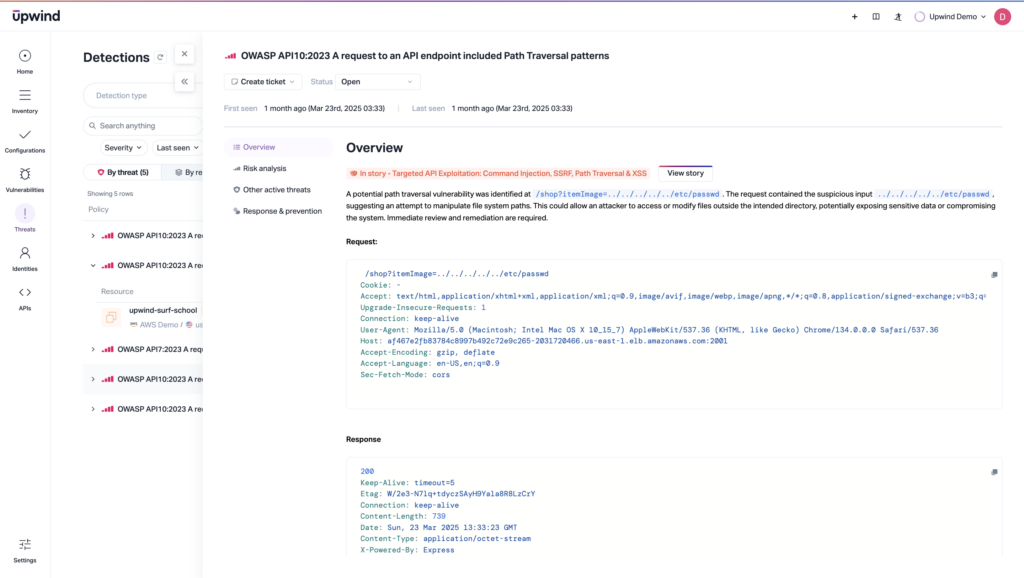
If attackers gain unauthorized access to the API, they aren’t just breaching a single container; they are gaining administrative control over the cluster itself. That’s an outsized problem as it lets cyberattackers:
- Deploy rogue workloads to execute malicious code or cryptojacking.
- Exfiltrate sensitive data by accessing mounted volumes or environment variables containing secrets.
- Disable security controls by modifying RBAC settings, network policies, or service accounts.
- Create persistence by injecting malicious controllers or operators that remain undetected.
Core Security Components
So, how can teams mitigate this broad attack surface without delaying deployments or rethinking Kubernetes altogether? Ultimately, Kubernetes API security is not just about restricting access. It’s also about ensuring that every interaction with the API is verified, encrypted, and governed by a company’s own security policies. And there are some tried and true best practices to get started doing just that.
Authentication & Access Control
Authentication in Kubernetes determines who or what can interact with the API, while access control defines what actions they can perform. A weak authentication or access control strategy can expose the API to unauthorized access, privilege escalation, or lateral movement attacks.
Best Practices for Securing Kubernetes API Authentication & Access Control:
- Use strong authentication mechanisms: Avoid static tokens or basic authentication. Instead, use OIDC (OpenID Connect), mTLS (mutual TLS), or Kubernetes service account tokens.
- Harden Role-Based Access Control (RBAC): Grant only the minimum permissions necessary for users, workloads, and service accounts. Avoid using cluster-admin roles unless absolutely necessary.
- Restrict API server access: Ensure that only authorized users and workloads can reach the Kubernetes API server (kube-apiserver) by configuring network policies and firewall rules.
- Rotate API credentials regularly: If using service account tokens or certificates for authentication, ensure they are short-lived and automatically rotated.
TLS & Secure API Communication
Every Kubernetes API request should be encrypted in transit to prevent eavesdropping and man-in-the-middle (MitM) attacks. TLS (Transport Layer Security) ensures that API requests and responses are encrypted between clients, workloads, and the Kubernetes control plane.
Best Practices for Securing API Communication with TLS:
- Ensure API server TLS is correctly configured: The Kubernetes API server should always enforce TLS 1.2 or 1.3 with strong cipher suites.
- Use mutual TLS (mTLS) for internal API authentication: This ensures that both clients and servers authenticate each other, preventing unauthorized API calls from untrusted workloads.
- Secure intra-cluster communications: Use Kubernetes Network Policies and service mesh encryption (such as Istio or Linkerd) to encrypt network traffic between microservices and API endpoints.
- Regularly rotate API server certificates: Expired or compromised TLS certificates can weaken API security—use cert-manager or Kubernetes-native tools to automate certificate management.
Admission Controllers & Policy Enforcement
Authentication and RBAC define who can access the API, but admission controllers determine what actions are allowed. These controllers intercept API requests before they take effect to enforce security policies, compliance requirements, and best practices.
Best Practices for Using Admission Controllers for API Security:
- Leverage open policy agent (OPA) or Kyverno: These tools allow organizations to enforce custom security policies on API requests — for example, blocking privileged containers or enforcing specific namespace usage.
- Enable pod security admission (PSA) controls: Replacing the deprecated Pod Security Policies (PSP), PSA restricts workloads from running as root, using host networking, or escalating privileges.
- Prevent insecure workloads from launching: Admission controllers can reject deployments with overprivileged RBAC roles, missing TLS encryption, or unsafe configurations.
- Audit API requests for security violations: Continuously monitor API calls and log rejected requests to detect unauthorized access attempts.
Kubernetes API Security Cheat Sheet
Here’s what those approaches look like in practice:
| Category | What it Secures | What to Do | Pro Tip |
| Authentication and Access Control | Who/what can talk to the API | Use OIDC, mTLS, or short-lived service account tokens. Enforce least privilege with RBAC. Restrict API server access via network/firewall rules. Rotate credentials regularly | Enforce TLS 1.2+ with strong ciphers. Use mTLS to authenticate internal services. Encrypt intra-cluster traffic with service mesh or network policies. Rotate API server certificates automatically. |
| TLS and Secure Communication | How securely clients talk to the API | Enable and configure custom policies. Use Pod Security Admission (PSA) for base workload hardeningBlock risky configs (host networking, privileged containers). Audit rejected requests to detect drift or abuse | Use tools like kube-bench to audit TLS settings and catch weak configurations early. |
| Admission Controllers and Policy Enforcement | What requests are allowed to succeed | Create a “dry-run” policy phase first to test policies before enforcing them to reduce deployment risk. | Create a “dry-run” policy phase first to test policies before enforcing to reduce deployment risk. |
| Visibility and Auditing | How to detect suspicious API usage | Enable audit logs and monitor them. Correlate API calls with identities and workloads. Watch for high-risk verbs like patch, exec, and create on sensitive resources. | Use runtime tools that visualize API activity over time to spot patterns, not just single violations. |
Common API Vulnerabilities
Best practices don’t always help teams know what top vulnerabilities they’re working to protect their Kubernetes deployments from. Below are some of the most pressing Kubernetes API vulnerabilities, why they matter, and how they are commonly exploited.
1. Unauthenticated API Access from Public Networks
Kubernetes API servers are often mistakenly exposed to the public internet. This can be due to misconfigured cloud load balancers or default settings that do not restrict network access.
- Why it’s a risk: Exposing the API server without authentication restrictions allows attackers to brute-force credentials, probe API endpoints, and look for misconfigured anonymous access.
- How it happens: Cloud deployments often default to exposing the API server externally, and teams fail to restrict access to internal IP ranges or VPNs.
Use firewall rules, private endpoints, and identity-based authentication to lock down access.
2. Weak or Misconfigured API Authentication
If authentication mechanisms for the Kubernetes API are weak, outdated, or misconfigured, attackers can exploit them to gain access to cluster resources.
- Why it’s a risk: Poor authentication policies allow unauthorized users to interact with the API server, steal secrets, or escalate privileges through compromised credentials.
- How it happens: Organizations may rely on static API tokens, weakly protected service account credentials, or improperly configured OIDC integrations that leave authentication vulnerable.
API authentication should be modern and identity-driven. Move away from long-lived tokens in favor of OIDC, mTLS, or short-lived credentials.
3. API Abuse via Overprivileged Service Accounts
Workloads running inside Kubernetes often inherit service account permissions that allow them to communicate with the API server. If these service accounts are too powerful, attackers can use them to escalate privileges.
- Why it’s a risk: If a compromised pod has access to an overprivileged service account, attackers can abuse API permissions to move laterally, exfiltrate secrets, or modify cluster configurations.
- How it happens: Service accounts are automatically mounted into pods unless explicitly disabled. Many organizations fail to restrict API access for service accounts, leaving them overprivileged.
Use dedicated service accounts with granular permissions instead of default settings, and disable service account mounting when unnecessary.
4. Lack of API Request Auditing and Visibility
Many organizations fail to log API requests properly, making it difficult to detect suspicious activity, unauthorized access, or privilege escalation attempts.
- Why it’s a risk: Without API request logs, attacks and misconfigurations can go unnoticed for long periods, delaying incident response.
- How it happens: API auditing is not always enabled by default, and many teams overlook log aggregation, real-time monitoring, and anomaly detection in API access patterns.
Use Kubernetes audit logging, API anomaly detection, and Security Information and Event Management (SIEM) integration to gain real-time insights into API behavior.
From Secure Configuration to Active Defense
RBAC, TLS, and policy enforcement define the baseline for Kubernetes API security, but they’re only part of an overall security strategy. For instance, once running, new cluster security risks emerge, from excessive API usage to token exposure and unmonitored lateral movement.
We’ve talked a little about how runtime insights can correlate events and make Kubernetes security standards stronger. But while best practices serve as the basics for Kubernetes security, they’re not operational controls. Here are the runtime and operational safeguards that reduce the risk of API misuse during day-to-day operations, from CI/CD lifecycle automation to workload execution.
| Safeguard | Why it Matters | What to Do | Hardening Tip |
| Rate Limiting and Throttling | Prevents brute-force, DoS, or accidental overload of the API server | Use built-in API server flags to cap concurrent requests. | Apply stricter limits to known automation sources like CI/CD tools to catch runaway jobs. |
| Credential Rotation & Token Hygiene | Long-lived credentials are low-effort, high-impact targets | Use short-lived tokens, like projected service account tokens, rotate them regularly, and disable unused service accounts. | Disable auto-mounting of service account tokens for pods that don’t need them. |
| Audit Logging & Behavior Monitoring | Detects unexpected patterns, such as privilege escalation or lateral movement | Integrate audit logs with your SIEM or CNAPP to visualize API call flows by user, pod, or namespace. | Monitor for high-risk verbs (exec, create, patch) or unusual frequency from automation identities. |
| Admission Control Feedback Loops | Blocks risky API calls before they take effect, but also informs policy tuning | Use Kyverno or OPA not just to block, but to log and iterate on policies that reflect real-world behavior. | Start with “audit” or “warn” modes before moving to enforcement to avoid breaking pipelines. |
| Endpoint Exposure Management | The API server is the cluster’s control plane — exposing it increases blast radius | Keep the API server on a private endpoint or restrict access via firewall/IP allowlists. | Disable public endpoint access entirely or pair it with bastion-based workflows. |
| Log Protection & Access Boundaries | API logs contain sensitive metadata that attackers can use for reconnaissance | Treat audit logs as sensitive and encrypt them in transit and at rest. Restrict log access to least privilege. | Tag API logs in your SIEM with context labels like workload, user type, and environment (prod, staging). |
These runtime safeguards complement static controls like RBAC and TLS. They detect and minimize abuse while the API is actively in use. Together, they help security teams move from a reactive posture to a proactive one, so attacker dwell time is limited and the risk of cascading failures from a single misused credential or misconfigured pod is reduced.
Strategic Enhancements for Mature Environments
Already implemented the basics? In high-scale or multi-team environments, these static and reactive controls often aren’t enough. Scale and complexity make overall Kubernetes security an ongoing issue. These teams need to handle:
- Expanding identity sprawl (users, service accounts, and automation)
- Diverse deployment pipelines across more than one team
- Dynamic workloads where privilege boundaries shift daily
- Attackers who test every overlooked credential or misconfiguration
To build a truly resilient Kubernetes environment, security teams must implement advanced protection strategies that go beyond perimeter defenses and enforce strong authentication, and continuous verification, using automation where possible — all at scale.
Strengthen Authentication & OIDC
One of the biggest security risks in Kubernetes API security is relying on weak or long-lived authentication mechanisms. Many organizations still use static API tokens or client certificates that, if compromised, provide an attacker with persistent access to the API server. Shifting to OpenID Connect (OIDC)-based authentication (an open standard authentication layer) ensures a more secure, identity-aware approach to API security.
Here’s how to mature your OIDC approach:
- Federate cloud IAM with Kubernetes to unify identity across infrastructure and workloads.
- Map users and service accounts to RBAC roles dynamically using OIDC groups or claims.
- Segment access by environment using separate OIDC identity providers.
- Review token usage patterns often to find overuse, drift, or long-lived credentials still in circulation.
Apply Zero Trust Principles
A Zero Trust security model assumes that every API request must be verified before being trusted, even if it originates from within a known environment. This approach reduces the risk of API misuse and privilege escalation.
Apply Zero Trust to Kubernetes API Security by:
- Using fine-grained RBAC policies to limit API access based on the principle of least privilege.
- Implementing Just-In-Time (JIT) access to provide temporary, expiring API permissions rather than granting long-term access.
- Applying continuous security validation on API requests to prevent session hijacking or unauthorized access. For example, recheck user roles, source IP, and workload identity.
- Requiring re-authentication for high-privilege API actions, such as modifying security policies or deploying workloads.
- Restricting API traffic with Kubernetes Network Policies to prevent unauthorized cross-cluster communication.
Automate Policy Enforcement Across Teams
Admission controllers work, but managing policies across teams and clusters can quickly become an overwhelming task.
How can teams scale enforcement?
- Use policy engines (Kyverno or OPA Gatekeeper are two open-source options) with tiered policy sets: mature organizations need org-wide baseline policies and team-level overrides.
- Implement policy-as-code pipelines where teams can propose policy changes via Git, with security approval workflows.
- Use webhooks that register dynamically by namespace to allow team-specific enforcement without bypassing global controls.
- Integrate policy violations into CI/CD pipelines as failing conditions, not just warnings.
Automate Incident Response
Manual response to API misuse is too slow for modern threats and environments, which means that mature teams must build automated detection-to-containment pipelines.
Here’s what that should look like in practice:
- When a suspicious API pattern is detected (e.g., repeated RBAC changes or token usage from new IPs), automatically:
- Revoke the token
- Disable the associated service account
- Quarantine the workload
- Tag high-risk API behaviors in your SIEM, enabling faster investigation and linking to SOAR playbooks.
- Use runtime-powered CNAPPs or eBPF tools to link API activity back to pods, users, or infrastructure, not just IPs.
Detection and Response: Watching the API in Real Time
Even when following the best Kubernetes API security practices, threat actors will still try to find different ways to hack into or manipulate these environments. Best practices help prevent risk, but let’s talk about how to see and respond to what gets through.
Identifying Suspicious API Activity
Kubernetes API abuse often begins with subtle reconnaissance actions, followed by privilege escalation and unauthorized modifications. Detecting these patterns early is critical to preventing a full-scale breach.
Common Signs of Kubernetes API Abuse:
- High-frequency API requests from unusual sources: Attackers may rapidly query the API to enumerate workloads, RBAC roles, and secrets.
- Unauthorized access attempts: Failed authentication attempts, particularly from unexpected IPs or service accounts, may indicate credential stuffing or brute-force attacks.
- Anomalous privilege escalation requests: If an attacker gains low-level access, they may attempt to modify RBAC roles, create new service accounts, or escalate permissions.
- API interactions outside normal usage patterns: Workloads typically follow predictable API request patterns; sudden spikes in API calls, new endpoints being accessed, or API requests from an unknown user should trigger alerts.
- Unexpected resource deletions or modifications: If an attacker is attempting to hide their tracks, they may try to delete logs, disable monitoring, or modify security policies.
Organizations should use behavior-based anomaly detection instead of relying only on static rules. Tools like machine learning-based SIEMs, Kubernetes-native security platforms, and eBPF-based monitoring CNAPP tools can all add a layer of analysis for API activity and flag deviations from the norm.
Setting Up Audit Logs & Alerts
Kubernetes API audit logs provide crucial forensic data that helps security teams track API requests, detect anomalies, and investigate incidents. However, audit logging is often misconfigured or disabled by default, leaving security gaps in API visibility. What can teams do?
Best Practices for API Audit Logging:
- Enable Kubernetes API audit logging: Configure the API server (kube-apiserver) to log all API requests, including request metadata, user identities, and access timestamps.
- Centralize logs for analysis: Forward API logs to SIEM solutions to correlate API activity with other security events.
- Set up alerts for suspicious API events: Configure alerts for:
- Failed authentication attempts from unknown sources.
- Modifications to RBAC roles, service accounts, or admission controllers.
- High-volume API requests from non-standard locations.
- Unexpected API calls to sensitive namespaces (e.g., kube-system).
Security teams should integrate Kubernetes API logs with cloud provider security tools like AWS CloudTrail, Google Cloud Audit Logs, and Azure Monitor to gain cross-environment visibility into potential API threats.
Automated Response to API Threats
Manual incident response is too slow to contain fast-moving API threats in Kubernetes. Attackers can escalate privileges, deploy rogue workloads, or exfiltrate data within minutes. Security teams need automated response mechanisms to rapidly detect and contain API abuse.
The first layer of automated response happens at the admission control level, where security policies can block malicious API requests before they execute. Beyond just prevention, though, security teams must implement automated containment measures for active threats.
If a high-risk API request is detected, such as an unusual increase in failed authentication attempts or a sudden burst of privilege escalations, a security automation platform (like a SOAR system or cloud-native runtime security tools) can take immediate action. This may involve:
- Revoking compromised API tokens to prevent further unauthorized access.
- Disabling suspicious service accounts that are being abused for privilege escalation.
- Quarantining or shutting down compromised workloads to contain the impact of an attack.
Upwind Helps Secure Kubernetes APIs
The Kubernetes API is constantly in motion. It handles authentication, workload scheduling, network configurations, and more. That’s why traditional security tools struggle to track this level of dynamic activity, leaving security teams blind to evolving threats. But with Upwind, teams get unparalleled insight into API resources and endpoints, identifying vulnerable APIs, unauthorized ingress traffic, and anomalous behavior.
Continuously monitor API interactions for policy drift, configuration changes, and compliance violations, all integrated with automation workflows so security policies are not just enforced once, but continuously validated.
See it in action. Get a demo.
Frequently Asked Questions
How does API security impact cluster protection?
API security is a gateway to cluster protection, and it’s critical because nearly all Kubernetes actions go through the API server. API security matters for protecting clusters because:
- All interactions with the cluster go through the API server
- Misconfigured access can lead to lateral movement or cluster takeover
- Attackers can target exposed APIs to bypass other defenses
- Over-permissioned service accounts can be exploited via API calls
- Limited visibility into APIs hides malicious activity and configuration drift
What are the most critical Kubernetes API vulnerabilities?
The most critical Kubernetes API vulnerabilities include:
- Overly permissive RBAC roles: Attackers can exploit broad roles (like cluster-admin) to gain full control via API calls.
- Exposed API server: Publicly accessible kube-apiserver endpoints are a favorite target for automated scans and attacks.
- Insecure service account tokens: Long-lived or auto-mounted tokens can be stolen and used to make privileged API requests.
- Lack of API audit logging: Without logs, it’s nearly impossible to detect misuse, drift, or unauthorized API activity.
- Unrestricted access to sensitive verbs: Access to patch, delete, or exec on key resources, like secrets or pods, can lead to lateral movement or data exfiltration.
- Bypassing admission controls: In clusters without enforced policies, attackers can deploy insecure workloads via API.
- Inadequate TLS/mTLS enforcement: Poor encryption allows for man-in-the-middle attacks or unauthorized API usage inside the cluster.
Attackers exploit these weaknesses to bypass access controls, gain persistent cluster access, and manipulate workloads for lateral movement or data exfiltration.
How do authorization controls protect the API?
Authorization controls like Role-Based Access Control (RBAC) and admission controllers restrict who can access the API and what actions they can perform. Properly configured RBAC prevents overprivileged accounts from making unauthorized API modifications, while admission controllers enforce security policies that block risky API requests in real time. Ultimately, controls:
- Enforce least privilege
- Prevent accidental or malicious changes
- Scope access to namespaces and resources
- Support audit and policy enforcement
- Work alongside authentication, controlling what even verified users are able to do
What monitoring is essential for API security?
Must-have components of API security monitoring include:
- Audit logs of API requests: Tracking who did what, when, and where across all API interactions.
- High-risk verb monitoring: Watching for sensitive actions like create, patch, delete, or exec, especially outside expected workflows.
- Identity-based activity tracking: Monitoring API usage by users, service accounts, and workloads.
- Failed authentication and authorization attempts: Flagging repeated failures as potential brute-force or privilege probing behavior.
Policy violation alerts: Detecting and logging rejections from admission controllers or PSP/PSA enforcement. - Drift and configuration changes: Monitoring for unauthorized changes to cluster resources, especially RBAC, NetworkPolicies, and Kubernetes Secrets.
How does API security integrate with workload protection?
Workloads use the API, too. So, API security and workload protection are closely connected and must work together by ensuring that only trusted workloads interact with the Kubernetes API.
First, admission controllers enforce workload security at the API level, with policies that prevent insecure workloads from being deployed. API audit logs help by revealing malicious or compromised workloads that emerge in the form of API activities. And runtime CNAPPs help detect when benign-looking workloads begin behaving like attackers via the API. They can also correlate API usage back to pods, service accounts, and workloads, which is crucial in ephemeral, dynamic clusters.