
Secure coding, writing software to minimize vulnerabilities, is a shift-left development approach that can deliver applications resistant to exploitation. To actualize that promise, teams will need to do more than wave a magic “secure coding” wand — they’ll face ongoing challenges like scaling secure code across teams and balancing resource-intensive needs with development realities. Best practices can help. We’ve looked into the broader best practices to build effective DevSecOps programs; in this article, we’ll examine the best approaches to one component of that early-stage security approach — secure coding.
Recap: What is Secure Coding?
First, the basics: secure coding involves developing software that prevents vulnerabilities by integrating security into every stage of the development lifecycle, especially its earliest development stages. This includes implementing consistent coding standards and focusing closely on writing software in ways that minimize security risks, like:
- Using consistent naming conventions
- Adopting modular coding practices
- Ensuring proper error and exception handling, etc.
It also includes secure design frameworks so application architecture is resistant to vulnerabilities, with standards like OWASP’s Application Security Verification Standard (ASVS), which offers best practices for data storage, authentication design, microservices security, and more.
Finally, tools bridge the gap between secure coding writing and design practices, from secure code reviewing platforms, infrastructure as code (IaC) scanning tools, and static and dynamic application security testing (SAST and DAST) tools, to name a few.
The three components of secure coding work together to benefit teams by:
- Reducing vulnerabilities
- Improving compliance
- Lowering costs
- Improving reputation and trust
- Streamlining incident response
After all, finding vulnerabilities before deployment means simpler fixes, no loss of public trust, and improved software products later on.
However, those who have already instituted secure code may see new challenges, like how to:
- Scale secure code while maintaining agility and speed
- Address risks in dependencies and open-source code components that developers don’t write themselves
- Incorporate real-time monitoring so new threats and the runtime context are considered
- Secure API-driven applications
- Manage the extra time, tools, and expertise needed to stack security into development lifecycles and add to the plates of developers
- Retrofit secure coding practices into legacy systems
- Consolidate tools and making sure they work for teams’ workflows
- Define meaningful metrics for their secure coding practices
- Balance extra security with user experience
- Surmount cultural resistance to a secure coding approach
Reduce Vulnerabilities with Upwind
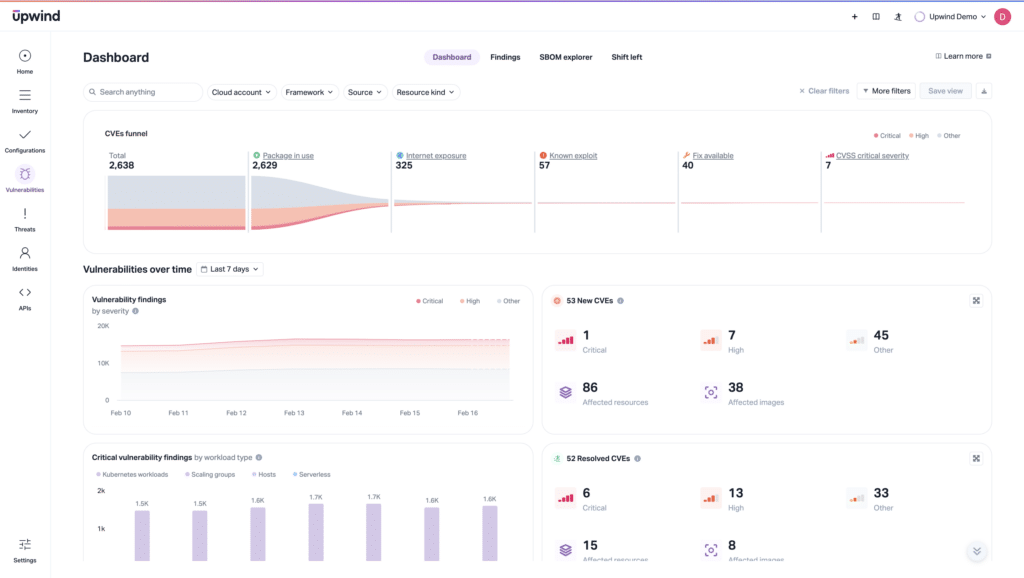
Upwind includes input validation, dependency scanning, and runtime context so you get real-time threat detection, contextualized analysis, remediation, and root cause analysis that’s 10X faster than traditional methods.
Get a DemoBenefits of Secure Coding
The advantages of catching and eliminating vulnerabilities early can be attractive despite new concerns, and further, there are nuances in which teams can actualize the best of secure coding. For those poised to benefit most or who can implement secure coding well, the promise of more secure applications with minimal challenges remains appealing.
That’s especially true in an environment with an ever-growing number of vulnerabilities.
The 26,000+ vulnerabilities disclosed in 2023 represent an increase of over 1,500 critical vulnerabilities over the previous year.
Those vulnerabilities impact most company applications, and they could be exploited at any time — for years. That’s an ongoing stressor as teams are challenged to know what these vulnerabilities are amidst a cascade of newly identified threats, whether they’re affected, where they’re affected, and how to remediate the issue. In an ideal world, wouldn’t avoiding vulnerabilities in the first place make the most sense?
Of course. But as new vulnerabilities are added daily and others don’t raise the alarm until runtime, it’s not quite that simple.
Let’s look at the benefits in more depth, starting with the primary goal of many secure coding programs: reducing the number of vulnerabilities in their deployed apps.
Reducing Vulnerabilities
There’s no denying it: secure coding practices can significantly lower the risk of common vulnerabilities like injection attacks, insecure object references, or authentication flaws. By integrating security directly into the code, organizations can avoid those breaches.
Not all teams realize the full benefit.
- Incomplete coverage: First, Secure coding focuses on the code developers write, but vulnerabilities can still arise from misconfigurations, insecure dependencies, or runtime issues beyond the code itself.
- Human error: Even skilled developers may overlook edge cases or fail to follow secure practices consistently, even with outstanding tooling or peer reviews.
- Evolving threat landscape: Threats evolve faster than coding guidelines can be updated, leaving gaps in even well-secured applications.
Improving Compliance
In addition to reducing vulnerabilities, secure coding aligns applications with regulatory standards like GDPR or PCI DSS, reducing compliance violations. Security audits become more of a test of a proactive approach to data protection.
Secure coding isn’t a path to compliance; it’s just part of a cultural shift toward prioritizing compliance. Some teams miss out on the biggest benefits because they are challenged with:
- A superficial focus on compliance: Teams may focus on meeting the bare minimum for audits rather than embedding comprehensive security into development, deprioritizing some critical issues.
- Misalignment between teams: Compliance teams often operate independently from development, creating disconnects in how requirements make their way into code at build time.
- Shifting standards: Regulatory updates can introduce new requirements that existing secure coding practices don’t address, so compliance lags behind.
Lowering Costs
Fixing security flaws early in the development lifecycle is exponentially cheaper than addressing them post-deployment or in response to an incident, when breaches may impact customers, incident response and communications teams embark on remediation work that saps resources, and entire applications must be re-architectured.
But not all teams enjoy lower costs. Why? Often, teams:
- Underestimate secure coding investments: Secure coding requires investment in training, tools, and process changes, which can create upfront costs that are difficult to justify to non-technical stakeholders. Imagine inspecting every piece of code before assembling an app rather than simply addressing the troublesome pieces that emerge later.
- See secure coding as a one-stop solution: Teams may overestimate the impact of secure coding and underinvest in complementary measures like runtime protection, leading to incidents that require large, expensive fixes.
- Make decisions based on resource constraints: Teams pressured to meet deadlines may prioritize speed over adherence to secure coding practices.
Improving Reputation and Trust
Ultimately, applications built with secure coding practices are less likely to experience breaches. That strengthens customer trust and protects the organization’s reputation, a potential impact that can be hard to quantify. In the end, stakeholders view security-first organizations as more reliable partners.
But, of course, not all adherents of secure coding see the same uplift in reputation. Why not? Teams may:
- Fail to fix ongoing blind spots in their supply chains: Even if internal code is secure, vulnerabilities in third-party libraries or APIs can lead to breaches that damage reputation.
- Suffer from past breaches: Trust is built over time, but a single breach, even when unrelated to coding practices, can severely harm reputation. Even where organizations aren’t working their way back from a breach, trust may be built slowly.
- Be unable to convey best practices to customers: Customers often lack insight into an organization’s secure coding efforts, so it can be challenging to translate secure coding efforts into trust.
Streamlining Incident Response
The best secure coding programs reduce the frequency and impact of incidents, allowing security teams to focus on proactive measures and long-term improvements rather than constant firefighting.
However, some are still beholden to reactive work. Here’s why:
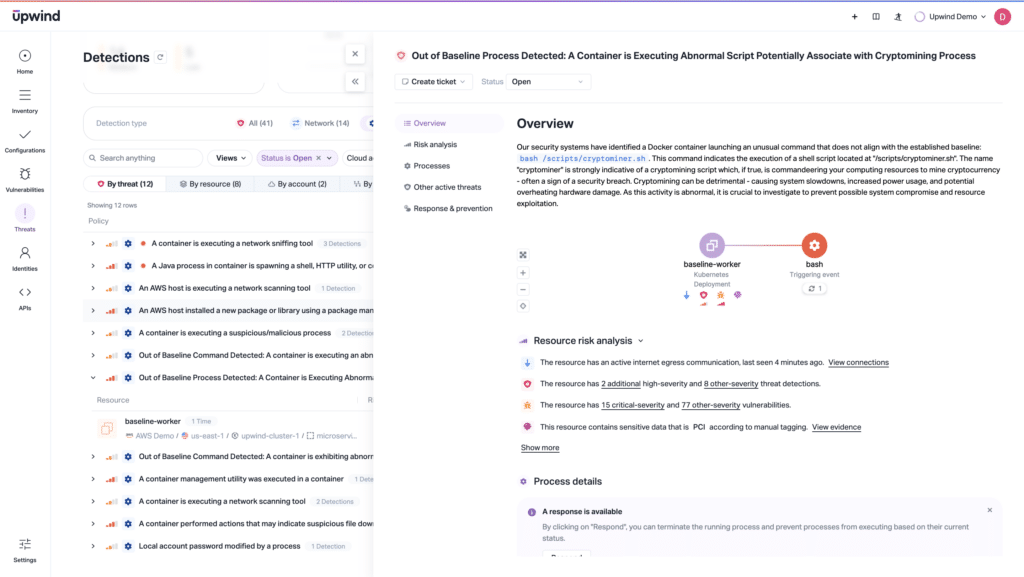
- They over-focus on prevention over detection: Secure coding emphasizes prevention, but without complementary detection mechanisms, organizations often miss early signs of exploitation.
- Limited context: Secure coding doesn’t address runtime anomalies or unexpected behaviors that arise after deployment.
- Operational overheads: Even with secure coding, incident response teams must account for unknown variables, such as zero-day vulnerabilities, which secure coding alone cannot mitigate.
Best Practices for Secure Coding
So, while there are a number of common secure coding pitfalls to avoid, what positive steps can teams take to make sure their secure coding efforts are getting them closest to the ideal of vulnerability-free, safe, and secure deployments?
Since outcomes depend on how well these practices integrate with broader security strategies and whether organizations address the inherent limitations, best practices may differ by organization. However, the foundations start with this checklist:
| Benefit | Best Practice | What to Do |
| Reduce Vulnerabilities | Input Validation | Validate user inputs to prevent attacks like SQL injection or XSS. |
| Least Privilege Access | Limit permissions to only what is necessary for functionality. | |
| Dependency Scanning | Scan and update third-party libraries regularly to mitigate risks. | |
| Error Handling | Avoid exposing sensitive information in error messages. | |
| Code Reviews | Use automated tools and peer reviews to catch vulnerabilities early. | |
| Improve Compliance | Secure Data Storage | Encrypt sensitive data in transit and at rest. |
| Regulatory Alignment | Follow OWASP ASVS or NIST standards to meet compliance requirements. | |
| Audit Logging | Maintain secure and compliant logs for key events. | |
| Lower Costs | Shift Left Security | Address security issues during design and early development. |
| Developer Training | Train developers on secure coding to reduce costly errors. | |
| Automated Testing | Integrate SAST and DAST tools in CI/CD pipelines for early detection. | |
| Improve Reputation | Secure APIs | Enforce authentication and authorization for all API endpoints. |
| Supply Chain Visibility | Monitor and secure third-party code and dependencies. | |
| Transparency with Stakeholders | Communicate security practices to build customer trust. | |
| Streamline Response | Runtime Monitoring | Use tools to detect anomalies and potential exploits in real time. |
| Threat Intelligence Integration | Prioritize vulnerabilities based on active exploit data. | |
| Incident Playbooks | Prepare predefined response strategies for common scenarios. |
While secure coding practices focus on preventing vulnerabilities during development, tools like a comprehensive CNAPP can be a large part of the solution, extending security into both deployment and runtime contexts.
For example, to reduce vulnerabilities, leaders need to enforce secure coding practices like modular design within the code itself. But tools can monitor and detect suspicious inputs, flagging suspicious behavior that may bypass static checks, analyze application dependencies even post-deployment, and provide visibility into live vulnerabilities. Teams should pair runtime tools with secure coding practices to amplify the benefits of a secure coding approach alone.
In the world of compliance, the same idea applies: teams must align their coding practices with regulatory standards during development since compliance in secure coding requires enforcing frameworks like OWASP ASVS in the design and build phases. But tools can help. CSPM functions of a CNAPP can conduct IaC scans to meet compliance by design and can manage compliance for some frameworks — like HIPAA, CIS Benchmarks, or SOC 2. Runtime tools can also identify compliance breaches as they happen and use runtime insights to inform building practices.
To lower costs best, invest upfront in secure coding tools and training, but utilize tools like shift left, integrating into pipelines to detect issues earlier, reducing the cost of fixes compared to post-deployment remediation. An even better bet is to couple pipeline integration with runtime insights, which can help prioritize truly critical vulnerabilities and stop teams from chasing thousands of vulnerabilities without the clear promise of improved security.
As for reputation, tools can only mitigate issues caused by unidentified vulnerabilities that lead to breaches. That leaves teams to address trust gaps caused by design flaws or past breaches. Today, tools can monitor the supply chain, identify dependencies, and offer reporting dashboards that translate easily into stakeholder communication.
Finally, incident response is helped by tooling that uses runtime anomaly detection and threat prioritization, then shifts left to incorporate these findings into the CI/CD pipeline. But tools can’t prepare teams with playbooks and training to address incidents.
Upwind Provides Runtime Insights that Make Secure Coding Best Practices Better
Runtime insights from Upwind offer better data to inform playbooks, provide training, and inform future builds, so secure coding programs produce even cleaner code than they would with traditional tools. And Upwind Shift Left puts those critical runtime insights into the CI/CD pipeline where they belong. It’s perfect for teams that want to reduce vulnerabilities early but also understand the reality of newly emerging vulnerabilities and zero-day attacks.
Upwind provides real-time visibility into vulnerabilities, prioritizes threats based on active exploits and context, and then extends shift-left principles into runtime. Secure coding has never looked so attainable. Want to see it in action? Schedule a demo.
FAQ
What are the three techniques used in secure coding?
Secure coding uses three primary code-writing techniques to make sure code written is secure. They are:
- Input validation: Making sure all inputs (user-provided, API calls, or system inputs) are properly validated, sanitized, and constrained. Input validation prevents malicious data from exploiting the application. Tools for validation include libraries for validation (e.g., OWASP’s ESAPI, Python’s re for regex validation).
- Secure authentication: Instituting mechanisms to verify users’ identities (authentication) and enforce permissions (authorization) to control access to resources. Typically, teams employ identity providers and secure libraries to get the job done.
- Error and exception handling: Making sure errors and exceptions are managed securely to avoid exposing sensitive system information or creating vulnerabilities. It requires logging frameworks with sensitive data masking features.
What is secure coding training?
Secure coding training is the education required to institute a secure coding program. It’s meant to teach developers how to write software that minimizes vulnerabilities and adheres to security best practices throughout the software development lifecycle (SDLC). What will that include? Here are components of a typical curriculum:
- The basics: Understanding secure coding principles, including input validation, error handling, and secure authentication.
- Hands-on work: Real-world coding exercises to identify and remediate vulnerabilities and simulated attack scenario practice.
- Language-specific education: Tailored training for the programming languages developers use (e.g., Java, Python, C++) and focused on the vulnerabilities most common to individual programming languages.
- Tool training: Training on using static and dynamic application security testing (SAST and DAST) tools effectively and on tools integrated into the CI/CD pipeline, like runtime insight and monitoring tools.
- Design and architecture training: From secure design frameworks like OWASP ASVS to best practices for handling cloud architectures and dependencies.
- Compliance training: To understand standards like GDPR, NIST, ISO 27001, or PCI DSS, that aren’t normally part of a developer’s education.
How do you write secure code?
Much of the “how” of writing secure code simply uses the three core principles of secure code: input validation, secure authentication, and error and exception handling. But it can encompass a litany of practices related to these principles. Here’s a more in-depth list of what secure code writers do:
- Input validation
- Use allowlists to define acceptable input formats.
- Sanitize inputs by escaping special characters.
- Validate inputs for type, length, and structure.
- Follow least privilege principles
- Assign permissions based on roles (RBAC) or attributes (ABAC).
- Avoid using overly permissive APIs, database queries, or IAM roles.
- Secure authentication and authorization
- Use secure authentication mechanisms, like multi-factor authentication (MFA).
- Hash and salt passwords using strong algorithms (e.g., bcrypt, Argon2).
- Protect sensitive data
- Encrypt data at rest and in transit using strong encryption protocols (e.g., AES-256, TLS 1.3).
- Use secure key management tools to store cryptographic keys.
- Handle errors securely
- Use generic error messages for end users to avoid exposing system details.
- Log detailed error information securely for internal use.
- Use general secure coding standards
- Adopt standards like OWASP Secure Coding Practices, CERT coding standards, or language-specific guidelines (e.g., PEP 8 for Python).
- Avoid hardcoding sensitive information
- Use environment variables or secure vaults for sensitive information.
- Leverage security testing tools
- Use SAST tools to scan code.
- Use DAST tools to test running applications.
- Update and patch
- Keep dependencies and third-party libraries up to date.
- Use dependency scanning tools to identify vulnerable packages.
- Secure APIs
- Use authentication mechanisms like OAuth 2.0.
- Validate and sanitize API inputs and outputs.