

Protecting cloud infrastructure and securing the data it stores are two of the primary challenges of the modern enterprise landscape. These challenges, while interconnected, demand distinct approaches because infrastructure misconfigurations and data exposure risks often arise from fundamentally different root causes. To address these issues, organizations turn to specialized tools like cloud security posture management (CSPM) for infrastructure-related vulnerabilities and data security posture management (DSPM) to safeguard sensitive information.
We’ve looked at the basics of these solutions on their own, but in this article, we’ll dive into how they work together. How do you integrate these tools? Should you? Which organizations should consolidate them under a CNAPP? Do you even need both?
Differences between CSPM and DSPM in Cloud Security
First, let’s recap the basics:
Cloud Security Posture Management (CSPM) is a tool that focuses on securing cloud infrastructure by identifying and remediating misconfigurations, compliance violations, and policy gaps.
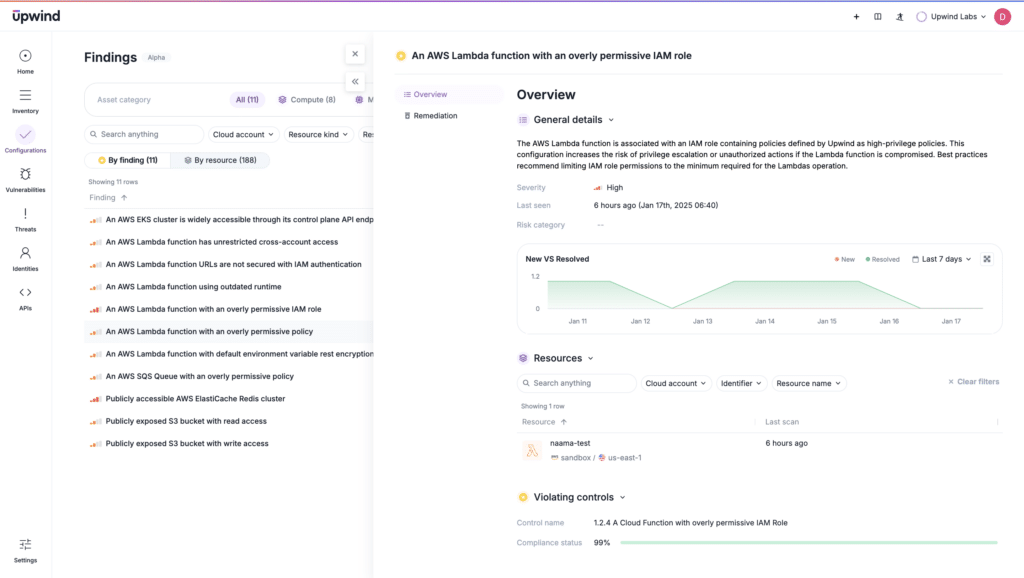
Data Security Posture Management (DSPM) protects sensitive data by discovering, classifying, and mitigating risks to exposed or unprotected information.
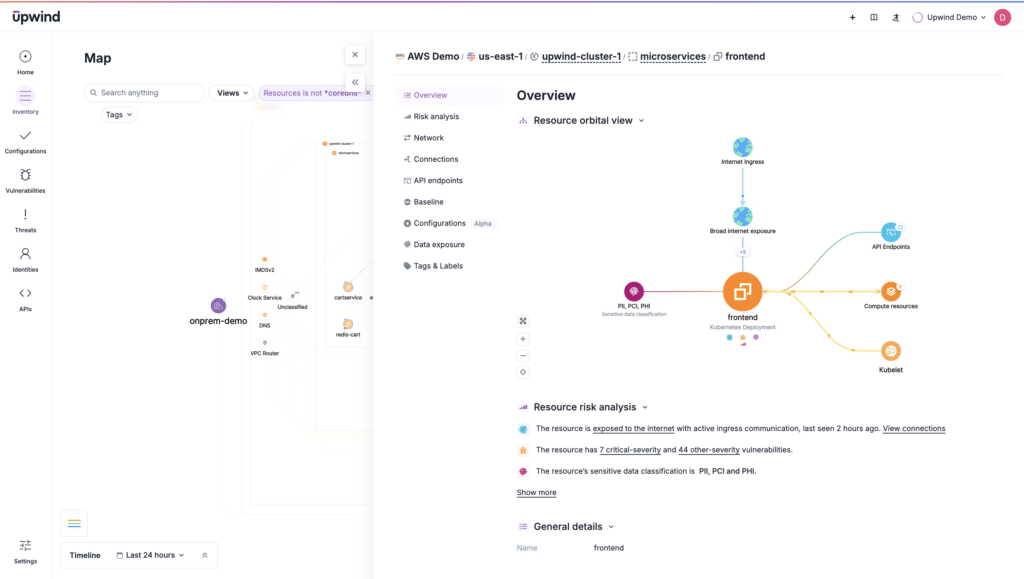
While CSPM provides a broader view of cloud infrastructure security, DSPM delivers specific insights into data-level risks, making these tools complementary parts of a comprehensive cloud security strategy.
Here’s what their differences look like for teams considering either solution:
| CSPM | DSPM | |
| Risk Prioritization | Infrastructure risks, such as exposed resources | Data risks, like unencrypted PII in accessible locations |
| Key Use Case | Managing cloud security configurations and compliance | Protecting sensitive data across all locations, including cloud and on-premises |
| Integration Requirements | CSPM requires access to the full cloud ecosystem to effectively monitor for misconfigurations. | DSPM requires discovery capabilities across the entire technology infrastructure. |
| Compliance Scope | Focusing on frameworks like CIS Benchmarks, SOC 2, or GDPR compliance | Focusing on data privacy regulations like the EU’s General Data Protection Regulation (GDPR), the California Privacy Rights Act (CPRA), or healthcare’s HIPAA |
| Remediation | Fixes misconfigurations, removes over-permissive roles | Encrypts data, limits access, and protects sensitive files |
While it may look like CSPM and DSPM operate in separate realms, they share some key intersections:
- Storage risks: CSPM may identify an exposed storage bucket, while DSPM reveals whether sensitive data resides within.
- IAM and Data Access: CSPM can highlight overly permissive IAM roles, and DSPM can determine whether those roles access sensitive information.
- Shared Compliance Goals: Both tools address compliance, albeit from different perspectives, contributing to a stronger overall compliance position.
While CSPM offers a wide lens on cloud infrastructure security, DSPM adds depth by focusing on the data itself. By leveraging both, organizations can:
- Avoid blind spots where misconfigurations intersect with data exposure.
- Prioritize risks better, basing assessments on both infrastructure vulnerabilities and data sensitivity.
- Strengthen their overall compliance posture by addressing requirements across infrastructure and data layers.
When to Prioritize CSPM
In an increasingly complex ecosystem of multi-cloud and ephemeral computing, teams are likely familiar with the idea that they’ll need multiple tools to secure multiple types of assets.
Logically, teams understand they’ll likely consider one or both solutions to secure their environments. But there’s nuance in how teams are already addressing those threats and the benefits each type of solution brings, both as a set of tools and individually. Here are some general guidelines about when to use each.
Organizations without a comprehensive overview of their misconfigurations, insecure network settings, and permissive roles should think about a CSPM tool, which might include CSPM features as part of a more comprehensive tool like a CNAPP or alongside DSPM. Those who should prioritize CSPM first are organizations in which:
- Visibility is their primary concern.
- It’s increasingly difficult to manage risks and consistent settings across multi-cloud ecosystems.
- They seek better alignment with CIS Benchmarks or regulatory frameworks like SOC 2.
That’s a starting point. But how can teams assess if a more comprehensive solution, like a CNAPP, is right for their CSPM needs instead of CSPM or a CSPM/DSPM combination?
When to Use CSPM Alone
In general, CSPM tools within CNAPPs cover the same core functionalities as standalone CSPM solutions. So, why use a CSPM tool alone?
- A standalone CSPM can be an economical, straightforward solution that’s easy to implement, and requires fewer integrations, for organizations operating in single-cloud environments.
- A standalone CSPM is also best for teams using an existing solution for other aspects of cloud security that may be covered by comprehensive solutions to avoid overlap — for instance, for teams who use and love an existing CWPP tool they use to monitor workloads.
- CSPM alone is ideal for organizations where the primary concern is infrastructure misconfigurations or meeting compliance guidelines like SOC 2 or NIST standards; other problems aren’t on the radar and won’t be in the near future.
When to Incorporate CSPM Features in a Comprehensive CNAPP
Combine solutions by using a comprehensive tool like a CNAPP instead of CSPM when:
- The team is concerned about protecting multiple layers, including infrastructure, but also workloads with some data concerns (a runtime-powered CNAPP) or sensitive data across regions (DSPM).
- Multi-cloud, hybrid, and on-prem? Complex landscapes benefit from CNAPP solutions that can cover all organizational assets, wherever they are. Look for a solution that includes on-prem protection if needed.
- Compliance is more than configurations. Organizations looking beyond infrastructure governance. For instance, some comprehensive CNAPPs can discover and classify sensitive data flows, helping eliminate gaps across environments as data moves through an organization.
When to Prioritize DSPM
Despite some CNAPP data protection features, complicated data needs often require dedicated solutions. Here are the considerations for incorporating DSPM into team toolkits.
When to Use DSPM Alone
DSPM alone is best for teams that focus on data governance and compliance for their data, not infrastructure. That includes teams with:
- High regulation needs: Healthcare, finance, or legal sectors benefit from granular control over sensitive data as they work to comply with GDPR, HIPAA, or CPRA.
- Static or low-risk infrastructure: Companies with minimal cloud activity or legacy systems may not need comprehensive cloud infrastructure monitoring.
- A privacy-focused mission: Businesses prioritizing customer trust and privacy initiatives may wish to ensure sensitive data is classified, encrypted, and monitored.
- Limited cloud-native adoption: Teams without containers, Kubernetes, or serverless workloads may find runtime monitoring unnecessary.
When to Combine DSPM with CSPM
When does combining CSPM with DSPM make more sense than consolidating with a CNAPP tool? That CSPM + DSPM combination works for organizations with:
- Heavy data compliance needs: For industries like healthcare or finance with strict data-centric regulations (e.g., HIPAA, GDPR), DSPM can provide granular governance over sensitive data at rest, while CSPM handles infrastructure compliance.
- Granular data governance requirements: DSPM tools specialize in creating detailed inventories of sensitive data, tagging unstructured data, and enforcing fine-grained policies. That specificity differs from CNAPPs, which focus more on data flows and runtime.
- No need for runtime context: When security priorities are focused on infrastructure and sensitive data, standalone CSPM and DSPM tools avoid the added features of CNAPPs, which include broader runtime and workload protections that may not be necessary.
The TL;DR on CNAPP
Want the actual TL;DR on CNAPP (hint – it starts with runtime security)? Don’t spend days reading someone’s PhD dissertation – check out our comprehensive 8 step CNAPP guide.
Get the E-BookWhen to Consider CNAPP Alone
While a CNAPP does not typically include the depth of data security a dedicated DSPM solution provides, it can provide data security capabilities like:
- Identification of sensitive data in transit (e.g., between containers or APIs).
- Classification of data flows to assess risks related to sensitive or critical information.
- Monitoring data access and movement for anomalous or unauthorized behavior.
- Integration with dedicated DSPM tools for deeper data analysis. In a runtime-powered CNAPP, this can mean greatly enhanced capabilities like risks identified by a DSPM being correlated with runtime or infrastructure-level threats.
Teams should consider a comprehensive CNAPP instead of a CSPM+DSPM combo when they need:
- Unified risk context across layers: A CNAPP integrates CSPM, runtime security, and data flow classification so teams can correlate infrastructure misconfigurations with live threats and sensitive data exposures. The unified view reduces gaps and eliminates the need for manual prioritization across tools.
- Dynamic multi-cloud or cloud-native environments: For organizations operating in multi-cloud or cloud-native architectures like Kubernetes or serverless workloads, a CNAPP provides comprehensive visibility and consistent policy enforcement across providers, something CSPM + DSPM may struggle to achieve cohesively.
- Proactive threat detection and mitigation: With runtime capabilities, a CNAPP can detect and respond to active threats, such as unauthorized access to sensitive data or malicious container activity. That goes beyond the static analysis of CSPM and DSPM by addressing live risks in real time.
- Tool consolidation and operational efficiency: CNAPPs reduce complexity and costs by consolidating CSPM, runtime monitoring, and data flow analysis into one platform.
When to Use CNAPP + DSPM
With so much overlap between CSPM and CNAPP features, organizations that want to cover posture plus workload, and incorporate deep data insights, should consider integrating their runtime-powered CNAPP with a DSPM solution — it not only consolidates CSPM with runtime tools, but it makes more of DSPM data, correlating it with both runtime and misconfigurations.
So, what’s the simplest way to compare tools? Here’s a summary:
| Scenario | Best Solution | Why it Works |
| The primary concern is visibility and infrastructure security | CSPM Alone | It’s good for teams focused on managing misconfigurations, securing network settings, and aligning with frameworks like SOC 2 or NIST. It’s also best in single-cloud environments or when runtime is not a priority. |
| Heavy data compliance needs | CSPM + DSPM | The combination supports industries like healthcare or finance where granular data governance (e.g., HIPAA, GDPR) is required. DSPM manages sensitive data at rest, while CSPM ensures infrastructure compliance. |
| Granular governance over sensitive data | CSPM + DSPM | DSPM excels in inventorying sensitive data, tagging unstructured information, and enforcing fine-grained policies. That complements CSPM’s infrastructure security capabilities. |
| Dynamic multi-cloud or hybrid environments | CNAPP (with CSPM features) | CNAPPs unify misconfiguration management across multiple clouds (and sometimes on-prem). They also provide runtime protection and enforce consistent policies. |
| Need for unified risk context across layers | CNAPP (with runtime-powered features) | A CNAPP integrates CSPM, runtime security, and data flow analysis, correlating infrastructure risks with runtime behaviors and sensitive data flows. |
| Tool consolidation and efficiency | CNAPP | A CNAPP reduces complexity and costs by integrating CSPM, runtime monitoring, and data classification into one platform, eliminating redundancies. |
| Focus on both runtime and deep data insights | CNAPP + DSPM | CNAPP plus DSPM combines CNAPP’s runtime context and infrastructure security with DSPM’s detailed governance of sensitive data at rest. |
| Focus on data governance and privacy without cloud-native workloads | DSPM Alone | It’s good for organizations with highly regulated data needs, especially those with static infrastructure. |
Upwind Simplifies Multilayer Security
With its CSPM capabilities, Upwind provides comprehensive visibility into cloud misconfigurations, insecure network settings, and overly permissive IAM roles all at once. It ensures compliance with frameworks like CIS Benchmarks and SOC 2, while handling the heavy lifting of remediation automatically. Upwind also powers runtime security to connect misconfigurations to live threats and sensitive data flows. By identifying and classifying data in motion, like PII traveling between APIs, Upwind adds a layer of data protection that goes beyond typical CSPM platforms.
The integrated approach lets teams prioritize risks based not only on infrastructure vulnerabilities, but on the sensitivity and exposure of their assets and data, too. To see it in action, schedule a demo.
Frequently Asked Questions
How do CSPM and DSPM complement each other?
Cloud security posture management and data security posture management complement each other as two parts of a comprehensive approach to cloud security:
- CSPM emphasizes securing cloud infrastructure and configuration. It identifies misconfigurations, insecure network settings, and overly permissive IAM roles so the cloud environment is hardened against breaches.
- DSPM identifies and secures sensitive data within the cloud infrastructure. It discovers, classifies, and protects sensitive data, even inside other assets like databases, so teams can comply with data regulations like GDPR and HIPAA.
Using both solutions together allows organizations to monitor and safeguard both cloud environments and the sensitive data they contain. For example, CSPM can flag an exposed storage bucket, while DSPM determines whether sensitive data resides within it so teams can prioritize remediation effectively.
However, the two solutions aren’t always used together, nor are they always required. Organizations with minimal sensitive data or static cloud environments may find CSPM alone meets their needs, while those prioritizing data compliance may rely solely on DSPM. For complex, multi-cloud environments, integrating both tools — or leveraging a CNAPP that combines their strengths — can deliver the security that teams need.
Should teams implement CSPM or DSPM first?
The easy answer is: it depends. Here’s how to decide:
Start with CSPM if primary issues include cloud infrastructure security, visibility, and multi-cloud complexity. CSPM will offer:
- Visibility into cloud assets, access controls, and compliance.
- A way to identify misconfigurations.
- A method of enforcing controls across clouds and despite differing cloud provider policies and defaults.
Start with DSPM if the primary concern is data privacy. Teams that handle highly sensitive and regulated data will be able to:
- Ensure compliance with regulations like GDPR
- Discover and classify data
- Monitor data movement
- Address data-specific tasks without adding the complexity of CSPM
What are the implementation challenges of DSPM and CSPM?
Some of the key challenges of implementing a DSPM and CSPM include:
- Data complexity
- Integration with diverse cloud environments
- Managing large volumes of data
- Accurately identifying sensitive data stored in the cloud on or on-premises
- Complex configuration management, especially in cloud environments
- Aligning security policies with business needs
- Ensuring seamless communication between security tools
Despite complexity, implementation challenges come with some solutions. Teams will want to consider consolidating with a CNAPP, leaning on vendor support, balancing security with operational efficiency, establishing cross-team workflows and communication, and opting for tools with built-in solutions to an organization’s most pressing implementation challenges.
How do you measure security effectiveness?
For CSPM, key security metrics include:
- Misconfiguration Detection Rate: The percentage of misconfigurations identified across cloud resources.
- Policy Compliance Rate: How well an organization adheres to frameworks like SOC 2, CIS Benchmarks, or GDPR for cloud configurations.
- Remediation Speed for Misconfigurations: The average time to fix identified misconfigurations, from exposed storage buckets to overly permissive IAM roles.
- Cloud Asset Coverage: The proportion of cloud resources monitored for security posture.
- Alert Volume and Prioritization Accuracy: The number of alerts generated and the percentage of high-priority risks correctly flagged.
- Multi-Cloud Consistency: The uniformity of security policies and controls across multiple cloud providers.
- Role and Access Mismanagement: The number of overly permissive IAM roles or unapproved access configurations detected.
In terms of DSPM, common metrics for security effectiveness include:
- Sensitive Data Discovery Rate: The percentage of sensitive data (e.g., PII, PHI, financial data) discovered within the cloud and on-prem environments.
- Data Classification Accuracy: The precision of classifying sensitive vs. non-sensitive data to false positives and negatives.
- Sensitive Data Access Incidents: The number of unauthorized or anomalous access attempts to sensitive data.
- Data Residency Compliance: Adherence to location-based regulatory requirements for data (e.g., GDPR, CCPA).
- Encryption Coverage: The percentage of sensitive data encrypted at rest and in transit.
- Data Flow Monitoring: The volume and security of sensitive data moving between workloads, APIs, or cloud regions.
- Access Control Violations: The number of incidents where sensitive data was accessed without appropriate permissions or roles.
- Data Exposure Incidents: The number of cases where sensitive data is inadvertently made public or accessible outside defined policies.
Can these tools replace existing security solutions?
No. CSPM and DSPM can’t replace other security solutions. These solutions are vital for cloud security, but their emphasis on cloud environments means that they don’t necessarily address the protection of on-premises workstations, network security, endpoint defense, or other critical systems. For this reason, organizations still need additional security tools to adequately protect all their critical systems.
Here’s what CSPM replaces:
- Manual checking of cloud configurations
- Audits of cloud security for compliance gaps
Here’s what CSPM can’t replace:
- Firewalls
- Security Information and Event Management (SIEM) and threat detection tools
- Endpoint protection
Here’s what DSPM replaces:
- Manual work to identify and monitor sensitive data
- More basic tools like native-cloud security features that offer some data protection
Here’s what DSPM doesn’t replace:
- Data Loss Prevention (DLP) tools
- Encryption tools
- SIEM tools