
One of the most significant trends in the modern technology landscape, the DevSecOps blends development, security, and operations into a unified continuous development and security analysis pipeline. DevSecOps practices integrate security into the development lifecycle, enabling companies to release software with fewer known vulnerabilities and greater overall stability. But it’s not a perfect union.
This article surveys the best practices for an effective DevSecOps program — but also goes deeper into issues that emerge when teams embrace the model, like how to effectively scale security automation, balance trade-offs, and find metrics that matter.
Let’s Review: Understanding DevSecOps
DevSecOps is an advanced framework that integrates security practices into every stage of the software development lifecycle (SDLC). It combines development (Dev), security (Sec), and operations (Ops), into a unified and often highly automated workflow. With security embedded in the CI/CD pipeline, DevSecOps teams share more responsibilities, letting them release software faster and proactively mitigate risks like vulnerabilities and misconfigurations.
DevSecOps is an evolution of the DevOps paradigm, which was developed in the late 2000s to integrate software development (Dev) and IT operations (Ops) into a unified workflow.
When deployed correctly, DevOps’s streamlined workflow enabled organizations to continuously develop applications and updates with minimal user impact. However, in its early iterations, DevOps lacked an integrated focus on security best practices.
By embedding security concepts directly into the software development lifecycle, security becomes an ongoing concern instead of one last item on a deployment checklist. It shifts organizational mindsets to a proactive security posture, committing to continuously addressing potential threats and vulnerabilities.
Benefits include:
- Reducing the likelihood of costly post-launch vulnerabilities, which take longer to remediate
- Higher overall software quality
- Preventing issues that might erode customer trust
- Accelerating time-to-market
- Developing cross-team expertise and collaboration
- Meeting compliance requirements
- Scalability through automation
But the approach comes with challenges, including:
- Cultural resistance
- Increased complexity of tools, workflows, and integrations
- Slower deployment due to new security checks at earlier stages
- Teams may lack the expertise needed to take on security responsibilities
- Over-reliance on automation where human oversight is needed
- False positives and alert fatigue
Despite challenges, DevSecOps is here to stay. As application vulnerabilities, especially those tied to the software supply chain, continue to rise, organizations have prioritized security, and a DevSecOps approach promises to help catch vulnerabilities early, keep up with compliance, and bring teams together more effectively.
Does it deliver? Not always. However, following these best practices can afford teams a greater chance of success, learning from where forerunners learned to optimize what the DevSecOps approach offers.
The TL;DR on CNAPP
Want the actual TL;DR on CNAPP (hint – it starts with runtime security)? Don’t spend days reading someone’s PhD dissertation – check out our comprehensive 8 step CNAPP guide.
Get the E-BookModern DevSecOps Security Challenges
DevSecOps has the power to reduce vulnerabilities by 50%, but that doesn’t mean those successes come with caveats: How much added time went into those reductions? Were those vulnerabilities critical or inconsequential? How do we know it was worth it? After all, slashing vulnerabilities during builds isn’t always easy.
According to Gartner research, 64% of developers struggle to use the security tools introduced in a DevSecOps approach.
While DevSecOps is widely embraced, a fundamental best practice is to face its challenges and anticipate how to meet them in the actual development environment. Let’s go deeper into a few of the most common challenges upfront:
- Cultural resistance: Development, security, and operations teams have different goals and often different cultures. The potential for cultural misalignment can result in teams resisting collaboration efforts, particularly when introducing security into DevSecOps processes. Building a culture of shared responsibility and fostering communication is the first step in implementing a DevSecOps framework.
- Integration complexities: It can be complex to integrate security tools like static application security testing (SAST) and software composition analysis (SCA) with the tools that support the DevOps pipeline, like code managers and binary libraries. Some tools, like runtime-powered CNAPPs, can integrate findings into the CI/CD pipeline, but not all can. And with multiple tools, managing alerts becomes an increasingly unwieldy challenge. Teams realistically need to uncover unified solutions, or those that integrate more readily, to ensure that the DevSecOps methodology can function effectively.
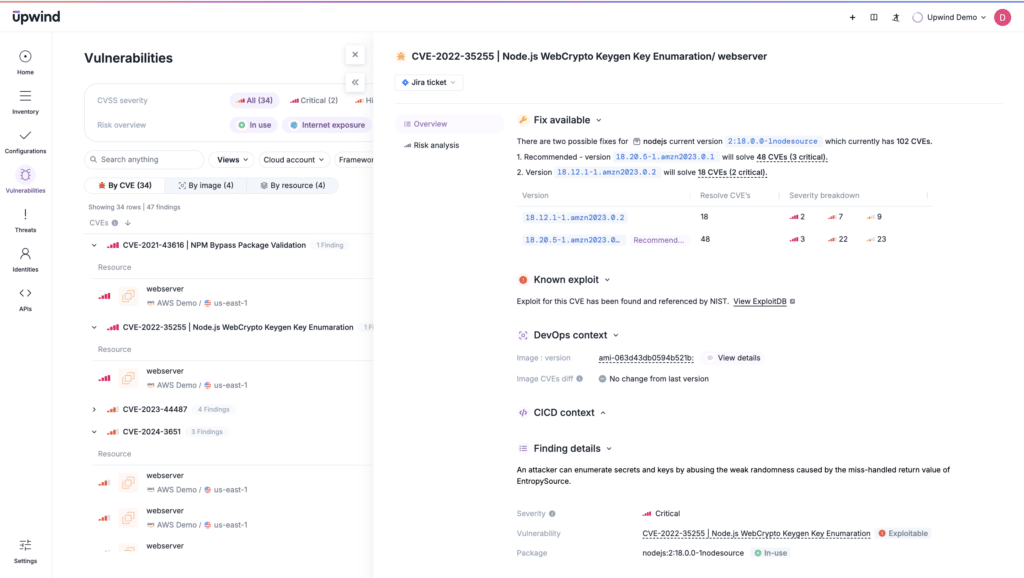
- Balancing speed vs. security: Continuous deployment prioritizes rapid delivery, often at the expense of security. Adding security analysis into the DevOps lifecycle can slow the deployment process if not optimized. And with multiple tools and the expectation of new skills and workflows, DevSecOps can take some time to optimize. Initially, it’s important to balance speed and thorough security.
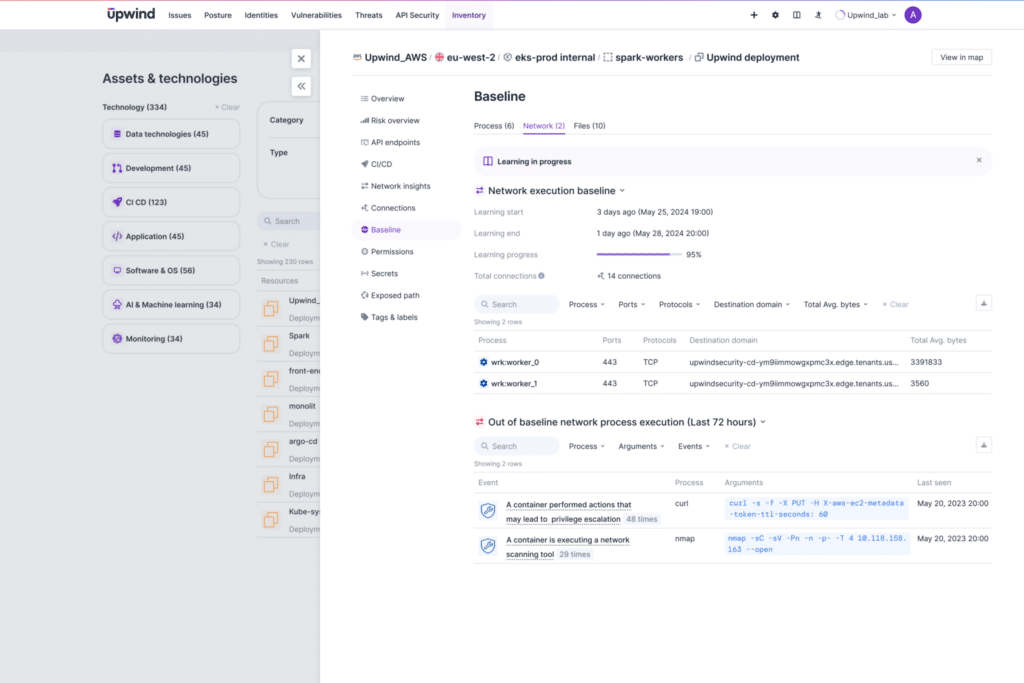
- Managing automation and false positives: Over-reliance on automation in DevSecOps can lead to significant blind spots in security. For example, automated vulnerability scanners might flag a low-risk misconfiguration as critical while overlooking more subtle issues like chained vulnerabilities.
While automation improves speed and consistency, skilled professionals are best at interpreting results, addressing edge cases, and making informed decisions about complex, evolving risks. And tools incorporating advanced machine learning can help hone alerts so that critical issues are genuinely critical and chained vulnerabilities have nowhere to hide.
DevSecOps Security Best Practices
Effective DevSecOps isn’t just about having the right tools; it’s about using those tools to advance tech goals and address real-world challenges. So, while the foundational components of DevSecOps, from shift-left security to automated testing and secure coding, are key, their real value lies in how they’re implemented as part of a broader strategy (including shift-right insights).
Let’s frame those components of DevSecOps programs as actionable best practices to improve security outcomes and include best practices that reflect the evolving complexity of modern software development so teams are equipped to build secure applications effectively.
| Best Practice | Why It Matters |
| Shift-Left implementation | Integrate security early in the software development lifecycle by incorporating tools like SAST into the CI/CD pipeline. |
| Automated Security Testing | Minimize manual effort, ensure consistency, and quickly detect vulnerabilities. |
| Infrastructure as Code security | Detect vulnerabilities in IaC templates pre-deployment to prevent misconfigurations at scale. |
| Secrets Management | Securely store and manage sensitive data like credentials, so access is restricted to the minimum necessary. |
| Secure Coding Practices | Enforce secure coding standards to proactively prevent common vulnerabilities. |
| Vulnerability Management | Continuously prioritize and remediate risks based on their impact and likelihood of exploitation. |
| Compliance and Governance | Embed compliance checks into development workflows to streamline adherence to regulations. |
| Building a Security-First Culture | Foster cross-team collaboration to embed security as a shared responsibility. |
| Incident Response Planning | Create clear workflows for detecting, mitigating, and recovering from security incident response. |
| Tool Interoperability | Select compatible tools that integrate seamlessly into CI/CD workflows to streamline DevSecOps practices and reduce tool sprawl. |
| Real-Time Visibility and Analytics | Use dashboards to monitor live workloads and track security metrics that drive improvement. |
| Training and Upskilling | Equip teams with the skills needed to use security tools effectively and interpret results. |
| Risk-Driven Prioritization | Use contextual risk analysis to focus on vulnerabilities that pose the greatest business impact. |
In all cases, DevSecOps best practices blend technical practices with cultural shifts.
For instance, shifting left emphasizes catching vulnerabilities early, reducing remediation costs and delays. But it leaves teams to balance new tools and training with the need for quick delivery in fast-moving CI/CD pipelines. Teams might start by:
- Implementing Static Application Security Testing (SAST) at early coding stages, built into the Integrated Development Environment (IDE) to provide real-time feedback for developers.
- Defining and enforcing coding standards through automated linters to catch coding inconsistencies unrelated to threats.
- Institute threat modeling during the design phase to identify potential vulnerabilities and address them proactively.
- Develop a plan to demonstrate how slowdowns save time downstream, shifting cultural norms toward DevSecOps.
- Hone in on security tools that integrate easily into the development pipeline to minimize disruptions.
Automated security testing complements shift-left practices. It allows for speed and consistency, but it relies on careful configuration to avoid false positives. Leveraging automation best means identifying where developers need to prioritize human oversight. Here, teams can:
- Configure their toolsets to prioritize high-priority risks by context, from SAST to DAST, SCA, or runtime-powered CNAPPs that integrate into the CI/CD pipeline.
- Implement automated regression tests to make sure new updates don’t reintroduce previously fixed vulnerabilities.
- Use machine learning-powered tools to reduce false positives.
- Automation can overlook complicated attack paths. Implement safeguards like pen testing or machine learning-powered prioritization tools.
Tools like Infrastructure as Code (IaC) security and secrets management add proactive layers of protection, guarding against misconfigurations and credential leaks before deployment. Both practices reinforce scalability but require governance to avoid tool sprawl and alert fatigue. What can teams do to ease the transition with better tech outcomes? Try to:
- Use pre-deployment checks to catch issues in templates.
- Set up role-based access controls (RBAC) for IaC files to restrict changes to authorized users only.
- Automate template updates with secure defaults.
- Validate IaC templates at every stage, including development.
- Regularly update policies to enforce least privilege.
- Store secrets in secure, made-for-purpose tools, and rotate them periodically using automated pipelines. Consider dynamic secrets, where temporary credentials expire after use.
- Regularly audit policies concerning secrets management.
Finally, incident response planning bridges proactive and reactive strategies. Unlike automation-heavy practices, it relies on clear, pre-defined workflows and cross-team collaboration, so it’s a key basis for the cultural alignment central to DevSecOps. Actionable best practices include:
- Developing a playbook for incident response with clear roles and responsibilities between and within teams.
- Running regular simulations with tabletop exercises as well as live breach simulations.
- Centralizing communication with new, dedicated channels
- Integrating tools, so runtime monitoring connects to incident response workflows for real-time data ready for developers. Alternatively, consider streamlining DevSecops with a comprehensive CNAPP.
- Defining recovery metrics, like time to detect and time to respond to incidents.
- Expand teams beyond DevSecOps, so teams like communications and legal know what to do in a real-life breach scenario.
Incorporating these practices into a holistic security framework will help teams develop a framework that is secure and adaptable, ready to meet the challenges of modern development environments.
Upwind Elevates DevSecOps
With Upwind, teams can use intelligence gathered from runtime to inform secure builds for a smoother DevSecOps transition. With comprehensive features like CI/CD pipeline integration, correlated with runtime and prioritized with machine-learning-powered prioritization and an SBOM explorer that identifies impacted assets even in complicated supply chains, Upwind helps teams build better software without chasing false alerts and slowing the pipeline.
To learn more about Upwind, schedule a demo.
Frequently Asked Questions
What makes DevSecOps different from traditional security approaches?
Traditionally, security was a single function. But that didn’t account for the reality of the modern cloud. DevSecOps differs from traditional security approaches by integrating security practices seamlessly into every phase of the software development lifecycle, from build to deployment and maintenance. That means it’s an approach that can reckon with the need for:
- Increased software supply chain risks
- Cloud-native architecture requiring real-time security measures
- Shared responsibility in the cloud
- Compliance pressures
- Faster deployment cadences
- Growing complexity of attack surfaces
- The sophistication of threat actors and the rise of artificial intelligence
- Automation capabilities in CI/CD pipelines
- A cultural shift in security that breaks down silos
DevSecOps promotes collaboration between development, security, and operations teams, rather than treating security as a separate, later-stage process where security teams review code only at the end of development. Ultimately, DevSecOps is an approach that is often better equipped than its predecessor to handle current threats.
How do you measure DevSecOps success?
To measure DevSecOps success, key metrics include:
- Deployment frequency
- Lead time for changes
- Change failure rate
- Mean time to recovery (MTTR)
- Vulnerability remediation time
- Security test coverage
- Code review findings
- Number of security incidents
- Security posture metrics like patch management rate, compliance adherence, and attack surface coverage
What role does automation play in DevSecOps?
Automation plays a foundational role in DevSecOps. Why? Because without it, scaling DevSecOps would be nearly impossible. Automation in DevSecOps streamlines security processes by integrating tools that identify, test, and remediate vulnerabilities directly into the development lifecycle; that reduces manual effort, accelerates workflows, and leads to consistent enforcement of security policies without delaying deployments.
Examples of automation in DevSecOps include:
- Static Application Security Testing (SAST): Scanning source code for vulnerabilities during development.
- Dynamic Application Security Testing (DAST): Simulating attacks on running applications.
- Infrastructure as Code (IaC) Scanning: Identifying misconfigurations in templates before deployment.
- Dependency Scanning: Automating the detection of insecure third-party libraries or outdated software components.
- Vulnerability Management: Prioritizing and tracking remediation of risks across environments.
- Secrets Management: Powering automated rotation and secure storage of credentials and API keys.
- Compliance Automation: Verifying adherence to regulatory frameworks like GDPR or PCI DSS in real time.
When should organizations transition to DevSecOps?
Organizations should transition to DevSecOps when they need to improve software security. For instance, they may be experiencing frequent vulnerabilities or struggling to meet compliance requirements. Shifting to a DevSecOps approach is also warranted when organizations want to address security but keep their focus on accelerated scaling or maintaining speedy development lifecycles. Other times when the transition makes sense include adopting cloud-native technologies or managing complex CI/CD pipelines. Here are some examples of times when the transition makes the most sense:
- Frequent Security Breaches: When vulnerabilities are repeatedly exploited, leading to downtime, data loss, or customer trust issues.
- Regulatory Pressure: When organizations face stricter compliance requirements, such as GDPR, PCI DSS, or HIPAA.
- Cloud-Native Adoption: When teams shift to cloud environments with containers, microservices, and serverless functions.
- Scaling DevOps Practices: When development and deployment frequencies increase and traditional security practices can’t keep pace.
- Extended Supply Chain Risks: When reliance on third-party dependencies and open-source software exposes the organization to supply chain vulnerabilities.
- Increased Complexity: When multi-cloud or hybrid environments make managing security manually unfeasible.
- Team Alignment Issues: When development, security, and operations teams struggle to collaborate.