

Updated on November 11, 2026
When it comes to vulnerability scanning, complexities have long made what might seem simple a complex, multi-layered endeavor. That doesn’t mean vulnerability scanning isn’t worthwhile or that it isn’t a foundational part of enterprise security. It just means that as IT environments evolve with ephemeral assets and cloud-native ecosystems, balancing security with efficiency must also evolve. We’ve already discussed container vulnerability scanning; this article takes a deeper look at vulnerability scanning more broadly so teams can get the most out of this common tool.
What is Vulnerability Scanning?
Vulnerability scanning is an automated process of identifying and reporting security weaknesses within a system, network, application, or infrastructure. Vulnerability scanning helps organizations patch security soft spots before attackers can exploit them.
How? Vulnerability scanning tools identify assets like servers, databases, and applications within a network, inspect them for known vulnerabilities, misconfigurations, and outdated software versions, then generate a report of vulnerabilities for remediation.
Vulnerability scanning tools typically work using both the National Vulnerability Database (NVD) and Common Vulnerabilities and Exposures (CVE) systems. They draw on enhanced NVD details, such as Common Vulnerability Scoring System (CVSS) scores, to help rank vulnerabilities’ severity. But NVD enrichment is no longer a complete or timely basis for ranking. After more than 48,000 CVEs were published in 2025, NIST shifted NVD prioritization toward risk-based handling of its backlog. That leaves database-only scanning with predictable blind spots from disclosure timing, enrichment backlogs, and incomplete metadata. Teams should treat CVE and NVD data as one input into prioritization, not the whole control plane.
Further, different types of scanning target different aspects of an organization’s IT infrastructure:
- Network vulnerability scanning
- Host-based vulnerability scanning
- Web application vulnerability scanning
- Database vulnerability scanning
- Cloud and container vulnerability scanning
- Port scanning
- Source code scanning
Vulnerability scans can also be classified based on methodology:
- Active scanning: Sending direct probes to systems
- Passive scanning: Monitoring network traffic without direct interaction for continuous scanning that doesn’t impact system performance
- Internal scanning: Focusing on systems inside the organization’s network perimeter
- External scanning: Assessing internet-facing systems and public-facing assets
- Authenticated scanning: Performing scans using valid user credentials
- Unauthenticated scanning: Simulating an external hacker’s perspective
While vulnerability scanning identifies weaknesses in order to safeguard digital assets, it comes with three core challenges:
1. False positives and negatives
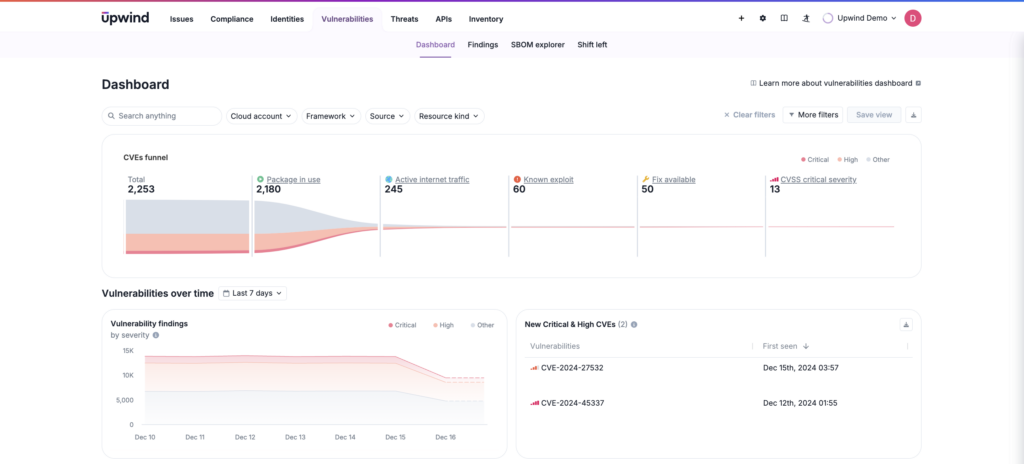
False positives can add to vulnerability scanning noise, sending teams scrambling after vulnerabilities that aren’t real threats. And time spent investigating non-issues might delay response time for real threats. Conversely, false negatives are also challenging since undetected vulnerabilities can lead to breaches, especially if attackers exploit them before the next scan cycle.
2. Lack of contextual analysis
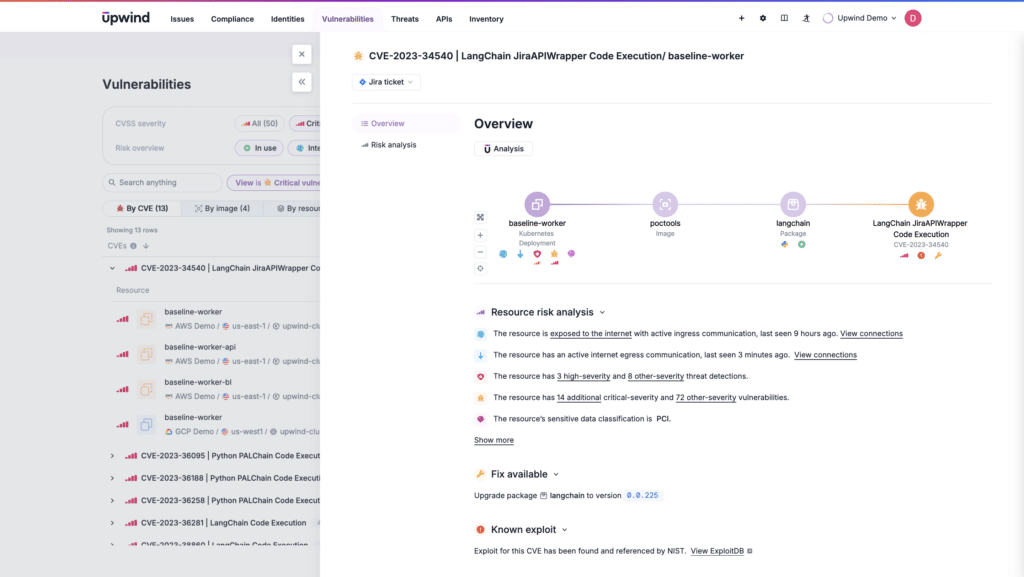
Even when scans surface accurate issues, scanners operate without knowing the true severity of the vulnerabilities they uncover. Teams may get a CVSS score for a vulnerability, but that score doesn’t account for whether the vulnerability sits in a critical asset or is exposed to the internet. It also doesn’t show whether the vulnerable code is ever reached: a package can match a CVE while the vulnerable function has no execution path in production.
3. Difficulties working with complex environments
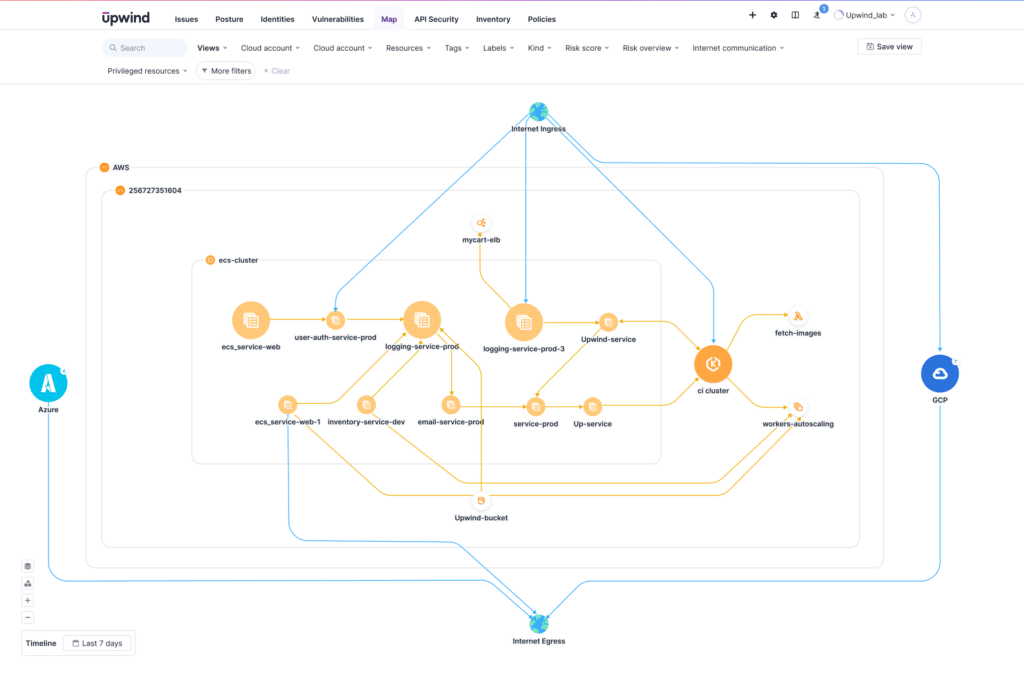
Modern IT environments can’t rely on periodic scans. Their ephemeral resources, such as containerized workloads that last for seconds and serverless functions triggered on demand, may escape a scanner’s scrutiny entirely. Continuous coverage shouldn’t be assumed just because a tool runs frequently, either. Teams should test whether cloud workloads, containers, endpoints, and network assets are actually rediscovered as the estate changes, not only on a scheduled scan cycle.
Application-Specific Testing Methods
Application vulnerability scanning focuses on the application itself, not just the host it runs on or its open ports. It looks at web app content, code behavior, dependencies, APIs, and runtime activity. Beyond common flaws like XSS and SQL injection, it targets issues such as CSRF, and more capable scanners can find harder problems like asynchronous SQL injection and blind SSRF.
Four methods do most of the work, and each fits a different point in the software development lifecycle (SDLC):
- SAST (Static Application Security Testing): Scans source code or code artifacts before the app runs. It’s used early in development, when source code is available. It can inspect code directly and catch issues before deployment. But it doesn’t see real runtime behavior, so it can miss issues that only appear when the app is executing.
- DAST (Dynamic Application Security Testing): Tests the running application from the outside, like an attacker would. It’s used once the app is deployed to a test or staging environment, or before release. It sees real requests, responses, and runtime behavior, which suits web apps and APIs. Without source code or internal visibility, though, it may miss deeper code context, some business logic flaws, or states it can’t reach, and it can produce false positives.
- IAST (Interactive Application Security Testing): Combines runtime testing with visibility from inside the app. It’s used during QA or staging, while the app is running and being exercised. That added runtime context can improve accuracy. However, it requires instrumentation, and it only covers what gets exercised during testing.
- SCA (Software Composition Analysis): Checks third-party libraries and dependencies for known vulnerabilities. It’s used early in development and continuously in build and CI/CD pipelines. It finds risky dependencies quickly and is well suited to automation. Because it doesn’t inspect custom application logic, it won’t find business logic flaws in your own code.
Any automated method can produce false positives, especially when teams rely on just one. Business logic flaws tied to how an application works or controls access remain hard for every scanner to catch.
No single method covers everything in modern web apps, APIs, containers, and CI/CD pipelines, so teams should combine them rather than rely on one.
Runtime and Container Scanning with Upwind
Upwind offers runtime-powered container scanning features so you get real-time threat detection, contextualized analysis, remediation, and root cause analysis that’s 10X faster than traditional methods.
Get a DemoWhat are the Benefits of Vulnerability Scanning?
Vulnerability scanning does more than identify security flaws, it plays an outsized part in reducing risk, improving operational efficiency, and strengthening resilience. And risks are considerable.
According to Amazon Web Services intelligence, every day, global threat monitoring systems observe over 100 million potential cyber threats, with around 500,000 confirmed as malicious.
With threats a constant and massive presence, vulnerability scanning has become a first line of defense to find and close gaps before attackers can exploit them. The right scanning approach can do more than detect risks — it can strengthen an organization’s entire security posture.
Here are the core benefits of vulnerability scanning:
Early Threat Discovery
Detecting vulnerabilities before attackers exploit them prevents costly breaches and reduces the impact of potential security incidents. But a core debate revolves around how to make it happen best.
- Active Scanning (Proactive): Actively probing systems can detect issues early, but it risks disrupting live environments with agents.
- Passive Scanning (Reactive): Observing network traffic and behavior reduces disruption but may miss dormant issues.
Modern platforms are blending both approaches using continuous, agentless monitoring (as through API integration) and an active sensor like eBPF for deeper runtime security.
Reduced Attack Surface
By uncovering unnecessary services, exposed ports, and outdated software, vulnerability scanning minimizes the number of entry points attackers can target. However, the question of how far to go is a point of debate.
- Breadth-Focused Scanning: Scanning every asset results in comprehensive coverage but, often, excessive noise.
- Risk-Based Scanning: Prioritizing high-value, exposed assets reduces alert overload but potentially misses some vulnerabilities.
Is there a balance? Yes, a comprehensive CNAPP might use agentless scanning to provide visibility across all assets, apply context-aware prioritization, and add eBPF-sensor monitoring for runtime visibility where critical workloads need it.
Risk Prioritization and Planning for Remediation
Effective scanning ranks vulnerabilities by business impact and contextual factors so teams can fix the most critical issues first. The challenge is how to prioritize meaningfully in large and complicated environments. Options include:
- CVSS-Based Scoring: Standardized scores offer consistency but lack real-world context, creating unmanageable alert volumes.
- Context-Aware Scoring: Weighing asset criticality and exploit likelihood requires complex data integration.
The severity of a vulnerability is meaningless without context-based intelligence. Today that means reachability analysis to confirm the vulnerable code actually runs in production. It also means pre-CVE visibility, so teams aren’t waiting on a CVE entry to act on a known issue. The pressing question is how simply those data sources can be aggregated and integrated so organizations can get control, reduce manual analysis, and cut noise.
Compliance and Regulatory Assurance
Regular scanning helps meet industry security standards to make audits easier, reduce fines, and build customer trust. However, the tension lies between compliance-driven vs. security-driven scanning.
- Compliance-Driven Scanning: Focusing only on passing audits can lead to a minimal-security mindset and missed risks.
- Security-Driven Scanning: Comprehensive coverage can overcomplicate operations.
Platforms should integrate with compliance protocols, make it simple to stay updated, and balance regulatory needs with solid security.
Continuous Security Improvement
Ongoing scans provide insight, which drives future security planning and investment. The goal is to improve an organization’s defensive posture over time, but sustaining improvements isn’t automatic.
- Scheduled Scans: Periodic scans risk missing fast-evolving threats between scans.
- Continuous Scanning: Up-to-date scans can lead to better security, but not if teams don’t use the insights they provide.
Periodic scanning is often used for compliance and requires fewer resources. But for real-time protection in cloud environments, where traditional scans can miss so much, continuous scanning has become a security must.
Essentially, while vulnerability scanning offers critical security benefits, each advantage comes with technical and operational challenges. No single approach solves every issue. But comprehensive security platforms can help make balance a little easier. Here’s what that should look like:
| Benefit | Challenges | Platform Features |
| Early Threat Discovery | Disruptive scansIncomplete coverage | Blended agentless and runtime sensors like eBPF |
| Reduced Attack Surface | Excessive alertsMissed flaws | Asset discovery plus real-time risk scoring |
| Risk Prioritization | Data integrationAlert fatigue | Context-aware scoring driven by behavioral analysis and machine learning |
| Compliance Assurance | Minimum-security mindsetOvercomplex systems | Compliance made simple with automated enforcement |
| Continuous Security Improvement | Insights go unusedTeam fatigue | Real-time insights with automation features |
Beyond Basic Scanning: Advanced Detection Methods
While vulnerability scanning is often considered a foundational security practice, its role extends beyond identifying common misconfigurations and known CVEs. It plays a supporting role in addressing advanced threats such as zero-day vulnerabilities, supply chain attacks, and advanced persistent threats (APTs) by serving as a detection baseline and enforcement layer.
How can it help with advanced threats outside the narrow scope of known vulnerability detection? Let’s explore a few examples:
Zero-Day Attacks
Vulnerability scanning can’t help identify unknown vulnerabilities — they’re invisible to conventional scanners. But that doesn’t mean vulnerability scanning is useless in thor detection.
Vulnerability scanning supports a strong zero-day strategy in multiple ways: first, continuous scanning establishes baseline behaviors from systems, so when deviations happen, they can indicate potential zero-day exploitation. And integration with global threat feeds also helps prioritize assets most likely to be targeted by emerging zero-day exploits.
In the end, organizations get better visibility and deeper understanding of their systems. It’s knowledge that can be used to identify future zero-days faster, so responding is quicker, too.
Supply Chain Attacks
Another concern is modern software dependencies, which extend organizational vulnerabilities across a vast ecosystem (and an enlarged attack surface). A supply chain attack occurs when attackers compromise one of those third-party services. Are organizational resources at risk? It can be difficult to even get visibility into versions and resources in cloud dependencies.
Scanning development environments and container images for known vulnerabilities can help detect vulnerabilities pre-deployment for fewer issues later. Plus, Tools like SBOM explorers (Software Bill of Materials) map out an application’s entire dependency tree so teams can quickly identify vulnerable components when a new CVE is disclosed.
Advanced Persistent Threats (APTs)
APTs are stealthy, involving well-funded attackers like state-sponsored hackers or cybercriminal groups. They operate over a long period of time to evade detection, banking on persistence to grant them access to valuable data while evading detection.
But vulnerability scanning continuously reduces the attack surface for APTs, making it harder to gain and maintain access. Continuous scanning can help eliminate seemingly small vulnerabilities that might be exploited by these elusive hackers, or that may be coupled together in chain attacks to grant access across systems.
Further, vulnerability scanning analyzes both infrastructure configurations and code to increase the chance an attack is caught early, before it can escalate. Attacks often start with infrastructure-level misconfigurations and escalate through code-level vulnerabilities, so scanning both increases the likelihood of detecting an issue early in the attack chain, preventing lateral movement and reducing damage.
While vulnerability scanning alone cannot prevent zero-day attacks or thwart APTs, it undergirds advanced threat detection. It reduces the attack surface, supports zero-day response, and secures the software supply chain. With scanning integrated into development pipelines and runtime environments, organizations can catch vulnerabilities before they become gateways to larger, more dangerous attacks.
Upwind Brings More Effective Vulnerability Scanning to Complex Ecosystems
Upwind’s vulnerability scanning integrates runtime intelligence to identify and prioritize vulnerabilities across virtual machines, containers, and serverless environments. By analyzing runtime data, Upwind reduces the noise of traditional vulnerability scanning by a large margin, letting teams get down to business on important issues faster.
By combining cloud security posture management with runtime context and real-time protection, teams lose their alert fatigue. To learn more, schedule a demo.
FAQ
How do you define vulnerability?
A vulnerability is a weakness in an organization’s digital ecosystem. Vulnerabilities can include weaknesses like coding bugs, misconfigured firewalls, open ports, and weak default settings. They can also include human flaws, like vulnerability to phishing schemes.
Vulnerabilities can appear in:
- Hardware
- Networks
- Applications
- Software
- Processes
Like an unsecured laptop left in public, a vulnerability isn’t a problem until it’s exploited by a bad actor. A vulnerability itself simply has characteristics that allow misuse to happen: It’s exposed, it’s exploitable, and any exploitation will have an impact, from downtime to data loss.
What are the 3 types of vulnerability scanners?
The three primary types of vulnerability scanners are:
- Network-based: Securing the infrastructure
- Host-based: Securing endpoints and servers
- Web application-based: Securing web-facing and internal applications
These primary scanners focus on scanning different types of resources and together, they cover much of an organization’s IT infrastructure where vulnerabilities are most likely to exist. Typically, CNAPPs cover all 3 types of vulnerability scanning by connecting to cloud environments using API integrations and using runtime scanning with technology like eBPF sensors for deeper insights into hosts like cloud VMs, containers, and Kubernetes nodes.
What are the 5 steps of vulnerability management?
The five steps of the vulnerability management lifecycle are:
- Identification: Discovering and cataloging vulnerabilities
- Evaluation: Vulnerabilities are assessed in terms of their severity and potential impact.
- Prioritization: More severe vulnerabilities are slated for patching and remediation first.
- Remediation: Teams patch, alter configurations, or implement workarounds.
- Verification: After a fix is deployed, teams rescan the environment to confirm the vulnerability is closed. The finding stays open until that rescan confirms it’s resolved.
The steps are cyclical, as new vulnerabilities are constantly discovered, and identified vulnerability information is incorporated into CI/CD pipelines for continuous improvement.
How does a web vulnerability scanner work?
A web vulnerability scanner first maps the application. Older scanners rely on spidering, while more modern ones crawl the site to chart every path a user could take, including different page states. The scanner also looks for default and common content, then probes for known vulnerabilities such as reflected cross-site scripting (XSS), SQL injection, directory traversal, some command injection flaws, and open redirection. Passive scans perform non-intrusive checks, while active scans simulate an attack. Some scans also use authentication to reach further into the application. The scanner then produces a report that usually includes the specific request and response behind each finding, so a knowledgeable user can manually confirm it.
How do you perform a vulnerability scan in practice?
Start by identifying your assets, the threats they face, and the risk each one carries. Then write scanning policies and procedures with a named owner. These should define scan frequency, the types of scans, the tools used, which vulnerabilities take precedence, and what happens after a scan. Next, choose the scan type, configure it, and run it. Finally, evaluate the risks, interpret the results, and create a remediation and mitigation plan. Many security professionals consider assessments at least quarterly to be best practice, though compliance, infrastructure changes, and business needs all factor in, and many organizations now adopt continuous vulnerability management.
What is continuous vulnerability scanning?
Continuous vulnerability scanning keeps automated scans running on an ongoing basis rather than as one-off checks. According to the UK’s National Cyber Security Centre (NCSC), scans can run on a schedule, on demand, or in response to trigger events, such as a new software build or the deployment of a new server, which keeps an up-to-date view of the vulnerability landscape. The NCSC also stresses that scanning only reduces risk as part of a larger vulnerability management program that covers system discovery, asset classification, triage, and remediation.
What is internal vulnerability scanning, and when should teams use it?
Internal vulnerability scanning runs from a location with access to the internal network. Because it can see more of the network, it shows vulnerabilities in greater depth than an external scan. It’s best used to verify that patching has happened or to produce a detailed report of vulnerabilities in the network. Credentialed internal scans give a deeper view, while uncredentialed scans show what a regular user or insider without privileged access could learn about the network.
What is CVE vs. CWE vs. CVSS?
CWE (Common Weakness Enumeration) is a community-developed list of common software weaknesses that could lead to vulnerabilities, such as code errors, design flaws, and configuration issues (for example, CWE-200: Information Exposure). CVE (Common Vulnerabilities and Exposures) identifies and tracks a specific publicly known vulnerability in a particular product or system (for example, CVE-2017-5638 in Apache Struts). CVSS (Common Vulnerability Scoring System) scores a vulnerability’s severity and impact from 0 to 10, with 10 the most severe, to help teams prioritize fixes.
What does an exploit scanner actually do, and how is exploit-risk scanning different from a normal vulnerability scan?
An exploit scanner checks whether a reported vulnerability is actually exploitable and how serious the real risk is. It looks at whether the issue can be exploited remotely or only with physical access, whether public exploit code exists, and the likely attack surface and impact. A normal vulnerability scan is an automated identification and reporting process. It compares systems, code, containers, dependencies, configurations, passwords, and settings against vulnerability databases, then assigns a risk rating. In short, a vulnerability scan asks what weaknesses are present, while exploit-risk scanning asks which of them an attacker could actually use, and how dangerous they are.
What are the best practices for validating whether a reported vulnerability is actually exploitable?
Start with clear objectives, scope, timing, and budget. Then choose a testing method and rules of engagement that fit the question, since a full-scope test isn’t always necessary. Use qualified testers, vetted on methodology, references, reporting, and certifications, and have your security team monitor the test in real time to see whether existing controls detect or stop the attempt. Afterward, prioritize the vulnerabilities that were truly reached, validate again after fixing them, and capture lessons learned, including whether similar weaknesses exist elsewhere and whether incident response plans need updates.
What is cloud vulnerability scanning, and how is it different from network or host scanning?
Cloud vulnerability scanning assesses the security posture of cloud platforms like AWS, Azure, and GCP, finding flaws in cloud workloads and infrastructure within cloud security’s shared responsibility model. Network scanning looks broadly at infrastructure such as systems, ports, routers, switches, firewalls, and network settings. Host scanning focuses on a single machine, checking its operating system, installed software, file systems, user accounts, and privileges. In short, network scanning is infrastructure-wide, host scanning is device-specific, and cloud scanning is cloud-specific.
What does container CVE scanning involve, and how should it be done across images and runtime workloads?
Container CVE scanning inspects images for known vulnerabilities in OS packages and application dependencies, along with hardcoded secrets and misconfigurations. It works by unpacking image layers, building a package manifest from sources like APK, APT, RPM, or language lockfiles, and comparing component versions against vulnerability databases and vendor advisories. Scan on every pull request build, immediately after the final image is pushed to a registry, and on a recurring schedule for deployed images, since build-time results go stale as new CVEs appear. Use reachability analysis to block deployment only on confirmed, relevant Critical or High findings, log Medium and Low findings, and generate an SBOM so affected images can be found quickly later.