Feed
Upwind Feed
Feed
Grid
research
November 2, 2026
Kick the Bucket: S3 Bucket Squatting Through a Series of Half-Patched AWS Patterns

This is the fourth and final post in our series on S3 bucket squatting in AWS. In the three preceding posts, we walked through the individual findings: cross-tenant RCE in SageMaker, silent query exfiltration in Athena, and log capture in EMR. Here we step back to share how we found them, why the fixes failed,…
November 2, 2026
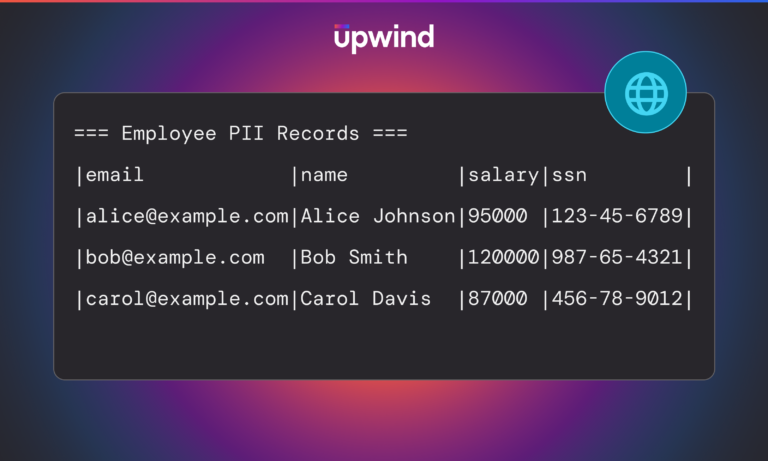
Spark in the Dark: Silent Cross-Tenant Log Exfiltration in Amazon EMR
This is the third post in our series on S3 bucket squatting through half-patched AWS patterns. Previously, we covered cross-tenant RCE in SageMaker via a broken ownership check and silent query result exfiltration in Athena through an SDK that was never patched alongside the service. This time, we cover an actively exploitable vulnerability in EMR.…
November 2, 2026
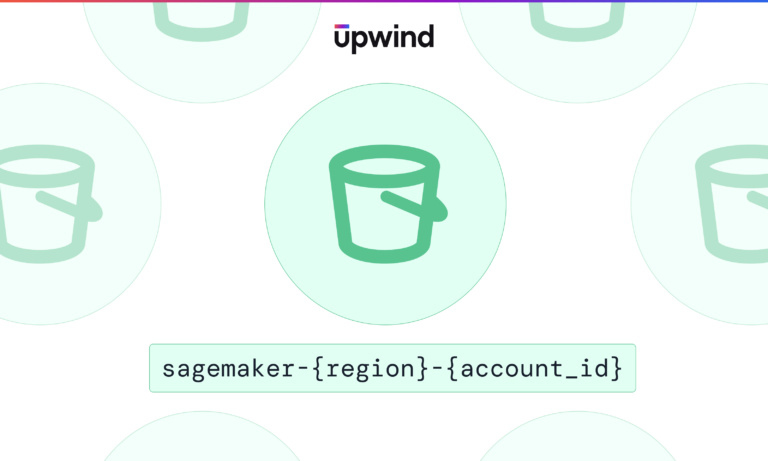
Training on Enemy Ground: Cross-Tenant RCE in Amazon SageMaker
This is the first in a four-part series on S3 bucket squatting vulnerabilities we found across AWS services, each in a service that had already been "fixed." We start with the most severe: cross-tenant remote code execution in Amazon SageMaker. TL;DR We found that AWS SageMaker's default S3 bucket - used by virtually every SageMaker…
October 21, 2026
eMudhra CA Compromise: What Cloud Security Teams Need to Know


Executive summary On October 17, a researcher reported control of eight eMudhra intermediate certificate authority private keys. Mozilla independently recovered the keys and confirmed that their generation was flawed. The technical finding is severe: the affected P-384 private keys were integers below 256, making them trivially recoverable from public information. Describing this simply as a…
October 12, 2026
The State of AI Security for Endpoints

A first look at 10,000 workstations We analyzed AI agent activity across 10,000 workstations at Upwind customers in the United States and Europe. This post is a sneak peek at the findings ahead of the full report. The short version: agent adoption has already moved past the point where an approval process can catch up…

October 8, 2026
CVE-2026-21589: Unauthenticated Arbitrary File Read in Atlassian Data Center Suite

On October 5, 2026, Atlassian issued an emergency out-of-band security advisory for CVE-2026-21589, a critical vulnerability impacting eight self-hosted Atlassian Data Center and Server product suites - including Jira Software, Confluence, Bitbucket, Jira Service Management, Bamboo, Crowd, Fisheye, and Crucible. The flaw allows an unauthenticated remote attacker to read sensitive internal files within the application's…

October 6, 2026
Agent Skill Risks: Taxonomy 101


Introduction In the first eight months of 2026, a Russian-speaking threat actor who had built a career on hotel-booking and fintech platforms turned to AI companies. The technique they used against one AI vendor did not involve any exploit. Like most AI vendors, the target ran an automated evaluation sandbox, an agent pipeline that reads…
September 25, 2026
What IAM Sees That You Don’t
Every IAM policy you write depends on condition keys - they're the precision layer that turns "can call S3" into "can call S3 only from our VPC, using our identity, on resources we own." They're the backbone of least-privilege, data perimeters, and SCP guardrails. But here's the thing: for every request, the IAM engine assembles…
September 25, 2026
Let Me Speak to Your Manager (Account)
The management account is the most privileged account in any AWS Organization. It controls SCPs, creates and deletes member accounts, manages IAM Identity Center, and is itself exempt from SCPs. Getting its 12-digit account ID is the first step in targeting it. The documented way to get it is organizations:DescribeOrganization - but security-conscious environments restrict…
September 23, 2026
What You Could Build If IAM Let You: New Policies From Undocumented Condition Keys
In the previous post, we mapped 36 condition keys that the IAM engine evaluates but has never documented. The decomposition model, the service-specific resource identifiers, the organizational metadata - all of it sitting in the request context, invisible unless you probe for it. That post was about discovery. This one is about what you can…
September 23, 2026
Show Me the Context: Building the Full Request Context for AWS IAM
This post was written in early August 2026, ahead of our fwd:cloudsec Europe talk. On August 25, AWS launched the Access Troubleshooter (currently in public preview), a first-party feature that surfaces the request context for denied requests. We've updated this post to account for it. When the IAM engine evaluates your request, it matches your…

September 16, 2026
What’s Behind the Curtain? AWS Bedrock AgentCore Runtime Tear Down – Part III
Recap In Part I and Part II, we: Networking and VPC Mode Network Isolation Testing The microVM is assigned an IPv6 address matching the value in the JWT. Across multiple runs, all addresses shared the same 2600:1f18::/32 prefix, but cross-microVM communication always failed. We attempted to reach the host EC2 IMDS by manipulating the route…
Kick the Bucket: S3 Bucket Squatting Through a Series of Half-Patched AWS Patterns
This is the fourth and final post in our series on S3 bucket squatting in AWS. In the three preceding posts, we walked through the individual findings: cross-tenant RCE in SageMaker, silent query exfiltration in Athena, and log capture in EMR. Here we step back to share how we found them, why the fixes failed,…
Spark in the Dark: Silent Cross-Tenant Log Exfiltration in Amazon EMR
This is the third post in our series on S3 bucket squatting through half-patched AWS patterns. Previously, we covered cross-tenant RCE in SageMaker via a broken ownership check and silent query result exfiltration in Athena through an SDK that was never patched alongside the service. This time, we cover an actively exploitable vulnerability in EMR.…
Training on Enemy Ground: Cross-Tenant RCE in Amazon SageMaker
This is the first in a four-part series on S3 bucket squatting vulnerabilities we found across AWS services, each in a service that had already been "fixed." We start with the most severe: cross-tenant remote code execution in Amazon SageMaker. TL;DR We found that AWS SageMaker's default S3 bucket - used by virtually every SageMaker…
eMudhra CA Compromise: What Cloud Security Teams Need to Know
Executive summary On October 17, a researcher reported control of eight eMudhra intermediate certificate authority private keys. Mozilla independently recovered the keys and confirmed that their generation was flawed. The technical finding is severe: the affected P-384 private keys were integers below 256, making them trivially recoverable from public information. Describing this simply as a…
The State of AI Security for Endpoints
A first look at 10,000 workstations We analyzed AI agent activity across 10,000 workstations at Upwind customers in the United States and Europe. This post is a sneak peek at the findings ahead of the full report. The short version: agent adoption has already moved past the point where an approval process can catch up…
CVE-2026-21589: Unauthenticated Arbitrary File Read in Atlassian Data Center Suite
On October 5, 2026, Atlassian issued an emergency out-of-band security advisory for CVE-2026-21589, a critical vulnerability impacting eight self-hosted Atlassian Data Center and Server product suites - including Jira Software, Confluence, Bitbucket, Jira Service Management, Bamboo, Crowd, Fisheye, and Crucible. The flaw allows an unauthenticated remote attacker to read sensitive internal files within the application's…
Agent Skill Risks: Taxonomy 101
Introduction In the first eight months of 2026, a Russian-speaking threat actor who had built a career on hotel-booking and fintech platforms turned to AI companies. The technique they used against one AI vendor did not involve any exploit. Like most AI vendors, the target ran an automated evaluation sandbox, an agent pipeline that reads…
What IAM Sees That You Don’t
Every IAM policy you write depends on condition keys - they're the precision layer that turns "can call S3" into "can call S3 only from our VPC, using our identity, on resources we own." They're the backbone of least-privilege, data perimeters, and SCP guardrails. But here's the thing: for every request, the IAM engine assembles…
Let Me Speak to Your Manager (Account)
The management account is the most privileged account in any AWS Organization. It controls SCPs, creates and deletes member accounts, manages IAM Identity Center, and is itself exempt from SCPs. Getting its 12-digit account ID is the first step in targeting it. The documented way to get it is organizations:DescribeOrganization - but security-conscious environments restrict…
What You Could Build If IAM Let You: New Policies From Undocumented Condition Keys
In the previous post, we mapped 36 condition keys that the IAM engine evaluates but has never documented. The decomposition model, the service-specific resource identifiers, the organizational metadata - all of it sitting in the request context, invisible unless you probe for it. That post was about discovery. This one is about what you can…
Show Me the Context: Building the Full Request Context for AWS IAM
This post was written in early August 2026, ahead of our fwd:cloudsec Europe talk. On August 25, AWS launched the Access Troubleshooter (currently in public preview), a first-party feature that surfaces the request context for denied requests. We've updated this post to account for it. When the IAM engine evaluates your request, it matches your…
What’s Behind the Curtain? AWS Bedrock AgentCore Runtime Tear Down – Part III
Recap In Part I and Part II, we: Networking and VPC Mode Network Isolation Testing The microVM is assigned an IPv6 address matching the value in the JWT. Across multiple runs, all addresses shared the same 2600:1f18::/32 prefix, but cross-microVM communication always failed. We attempted to reach the host EC2 IMDS by manipulating the route…