
We are excited to announce a new enhancement to Upwind’s posture capabilities, with Upwind now providing comprehensive executive-level Configuration Reports.
Users can now generate and download configuration reports, powered by live runtime data, directly from the UI. These reports deliver clear, actionable summaries of posture risk and misconfiguration findings, making it easier for security leaders to support compliance reviews, communicate with stakeholders, and make informed decisions.
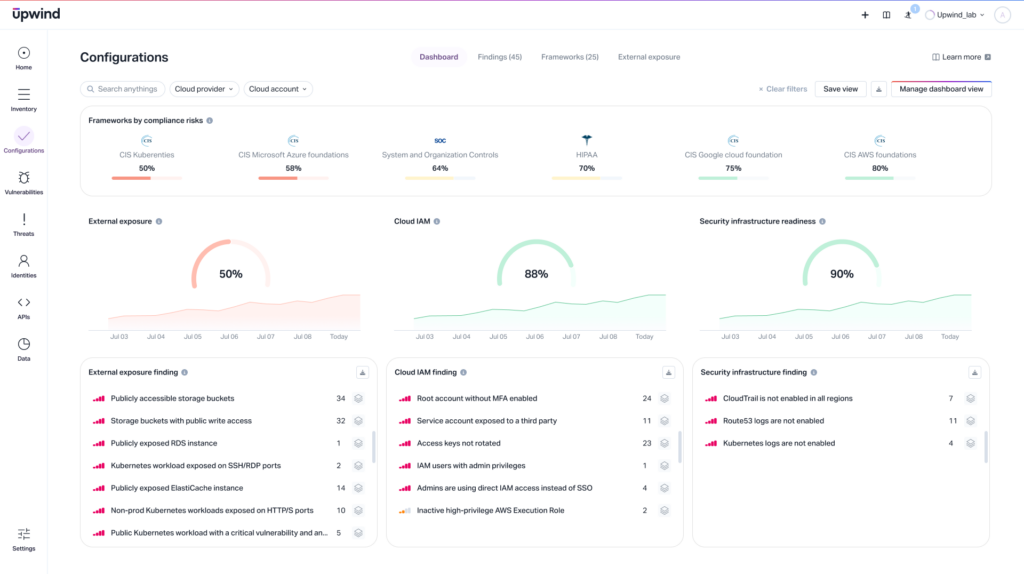
By providing easy-to-understand high-level dashboards and seamless report creation, Upwind saves teams time while improving accuracy, visibility, and operational transparency.
What are Configuration Reports?
Configuration reports are readouts that provide a comprehensive view of cloud infrastructure security by collecting and synthesizing critical configuration details across diverse resources like containers, Kubernetes, cloud services, or workloads.
These configuration reports empower teams by:
- Identifying specific configuration elements that could lead to vulnerabilities or compliance deviations
- Offering actionable intelligence for security, DevOps teams, and executive leadership
- Facilitating communication of security posture to stakeholders
- Supporting audits
- Demonstrating regulatory compliance
- Enabling continuous monitoring.
By highlighting risks, configuration reports empower organizations to proactively address misconfigurations, strengthen security, and reduce the likelihood of breaches or violations. Regular generation of configuration reports is crucial for a strong cloud security program.
Configuration Reporting within the Upwind Platform
The Upwind Platform has the ability to generate reports on specific frameworks, based on runtime data, with a few UI clicks.

Configuration reports offer comprehensive compliance status overviews, providing detailed insights into the adherence of your environments to established and customized standards. Like all features, our configuration reports are rooted in runtime data and context. This ensures you’re reporting on what’s happening right now, not outdated snapshots from hours or days ago.
Upwind Configuration Reports can be generated in a variety of formats, including easily shareable and archivable PDF documents or directly through email, facilitating both local storage and distribution.
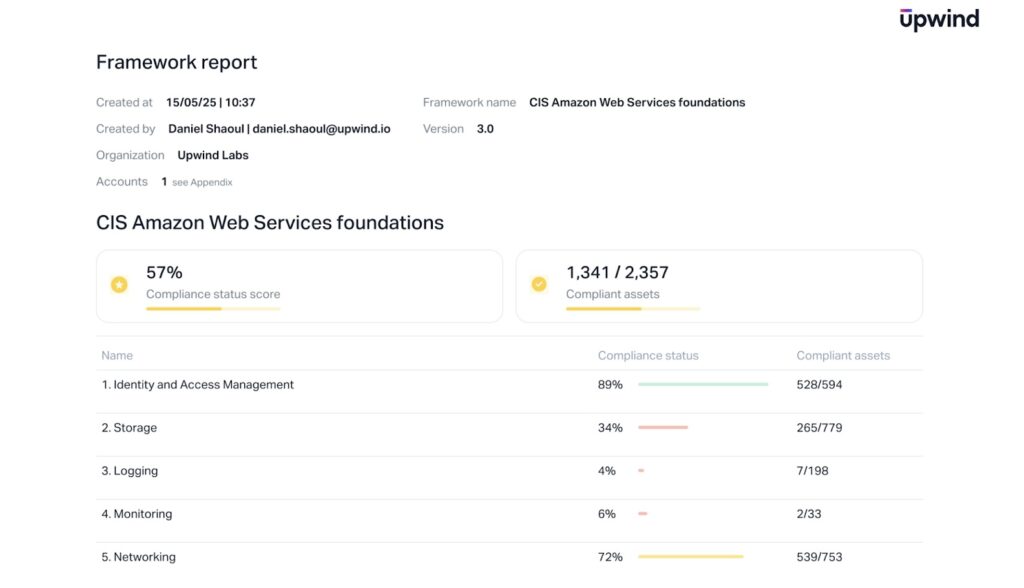
To further streamline compliance monitoring and reporting, Upwind supports automated report generation on a pre-defined schedule through the settings section and workflows subheader of the Upwind Platform, eliminating the need for manual intervention and ensuring regular updates are provided to stakeholders. Our scheduling feature allows for the proactive identification of potential compliance gaps and facilitates timely remediation efforts, contributing to a consistently compliant operational environment.

To schedule automatic configuration reports:
- Go to the Settings section of the Upwind Platform.
- Click on the Workflows subheader.
- Select Create Workflow.
- Follow the prompts to set your desired report type and schedule.
Why It Matters
Upwind’s UI-driven configuration reporting streamlines compliance audits and security monitoring. Reports can be generated in just a few clicks, with automated scheduling to ensure teams stay prepared without the manual scramble.
Whether for internal reviews or external certification, stakeholders get accurate, real-time insights grounded in what’s actually running, not outdated snapshots. These reports help teams maintain continuous compliance, reduce overhead, and improve overall security posture through clear, actionable intelligence based on runtime context.
Want to make configuration reporting faster and more accurate with real-time data? Schedule a demo or reach out at [email protected].