
Cloud security teams face an overwhelming amount of data. Misconfigurations, vulnerabilities, identity risks, and exposures often live in separate tools and dashboards, making it difficult to see how they connect. The real challenge is understanding how these signals intersect to create true risk.
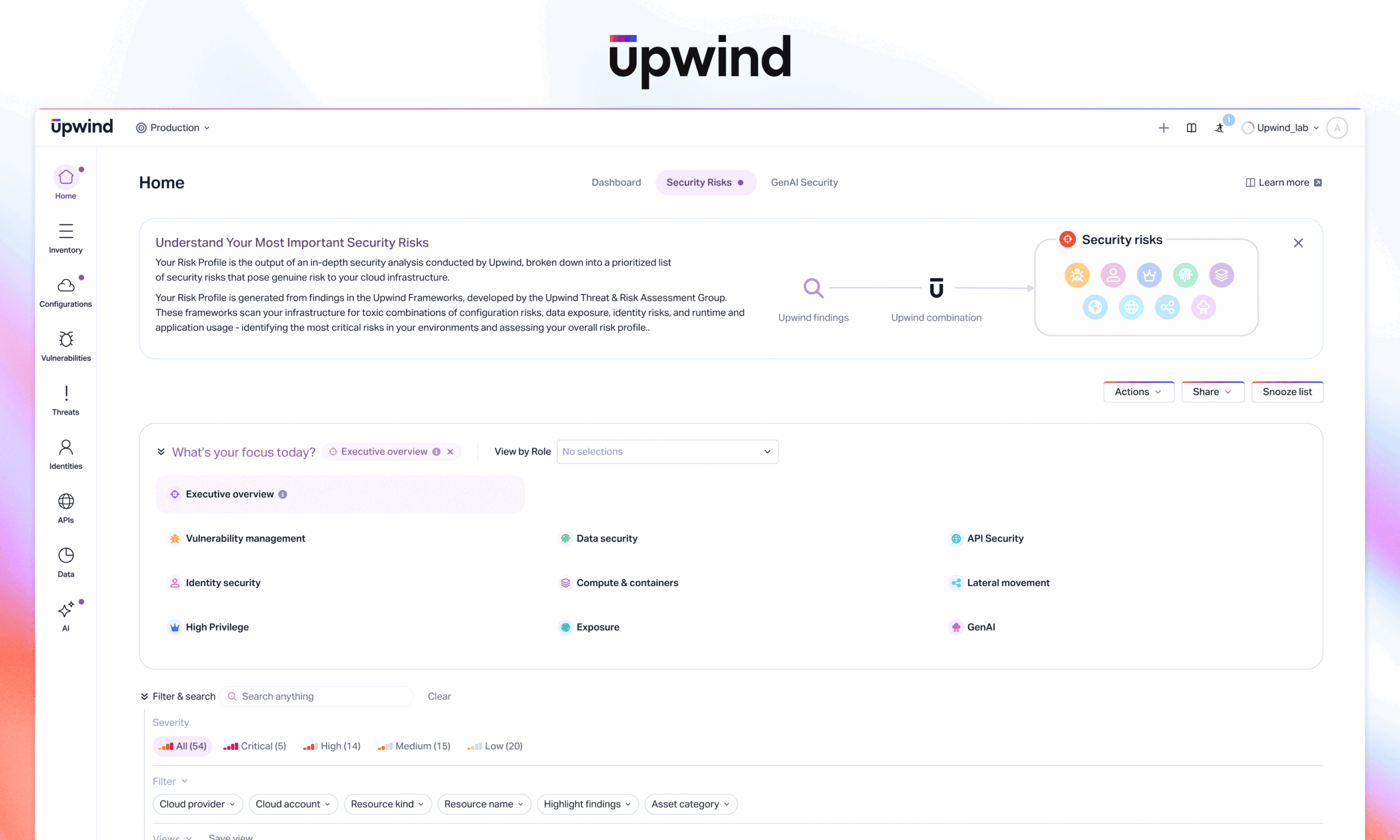
That’s why we are excited to introduce Upwind Security Risks – a unified view of correlated risk signals, all in one centralized place within the Upwind console. It combines findings from across runtime, identity, configuration, and exposure into a single view that surfaces what really matters: how combined security risk factors can create exploitable paths in your environment.
Turning Separate Findings to Unified Risk Context
Traditional dashboards present lists of issues, which are often disconnected, lack prioritization and are difficult for teams to parse. Upwind takes the opposite approach, transforming those findings into an interconnected model of risk.
By continuously correlating signals across the runtime fabric, Upwind’s Security Risks helps teams:
- Identify combinations of security risks such as vulnerable workloads with excessive permissions or exposed services connected to sensitive data.
- Prioritize what is actively exploitable in runtime, not just theoretically risky.
- Understand each issue’s impact, related controls, and recommended remediation steps in one place.
The result is a live, operational view of your environment that connects detection with decision-making.
Upwind helps us eliminate alert fatigue by providing us with information that is relevant and actionable in real-time
– Kurdeen Karim, Information Security and Privacy, CallRail
A Unified View of Security Risks
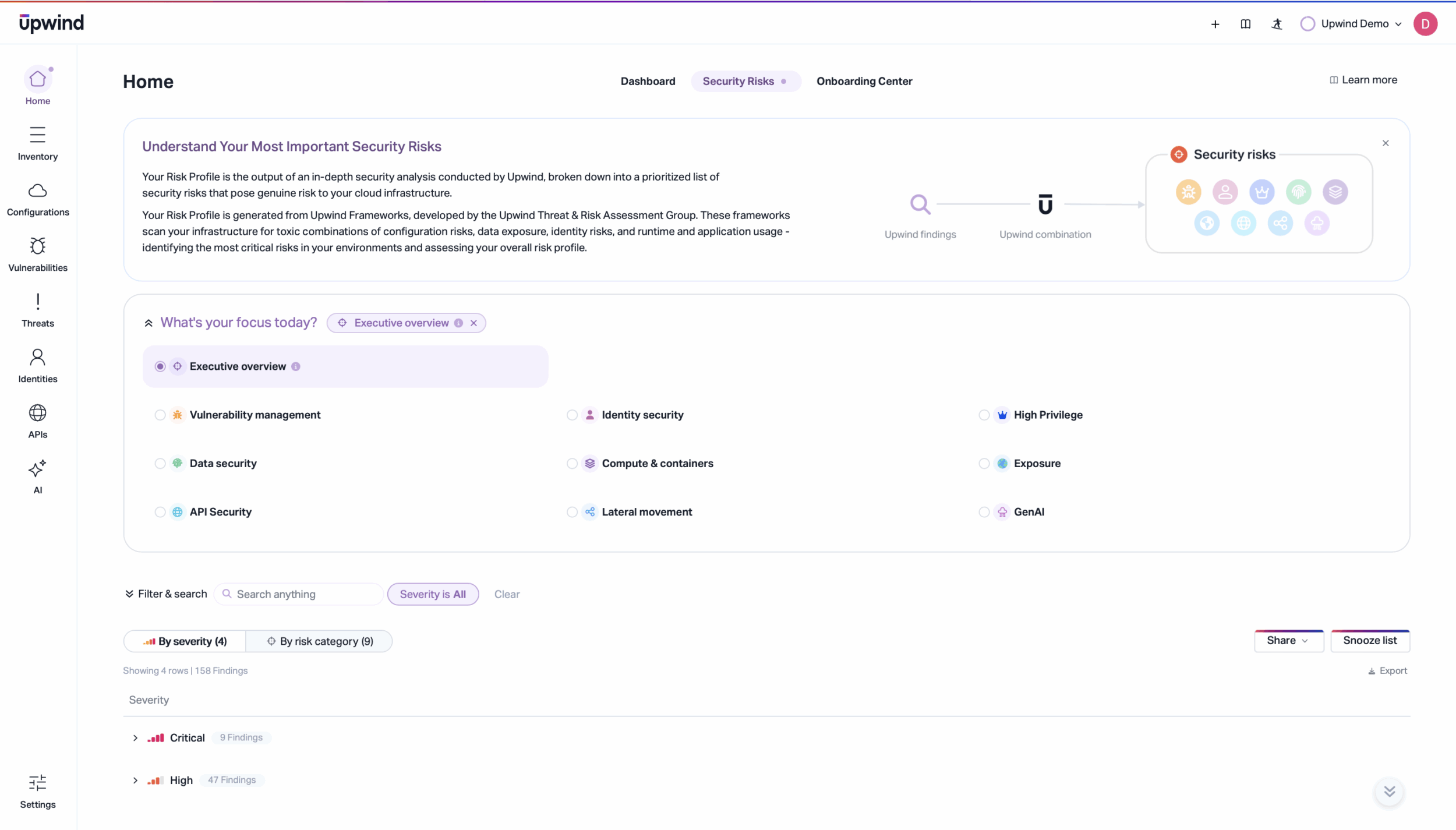
The new Security Risks Dashboard visualizes this risk model in the Upwind console. It serves as a central command center for executives, engineers, and compliance leaders to view, prioritize, and act on interconnected risks.
Each role can focus on what matters most:
- Security leaders can review organizational risk summaries and trends.
- Vulnerability managers can target critical and high-severity findings across active workloads.
- Identity teams can pinpoint security risks involving privileged or high-risk access.
- Platform engineers can analyze exposure paths and dependencies that increase attack surface.
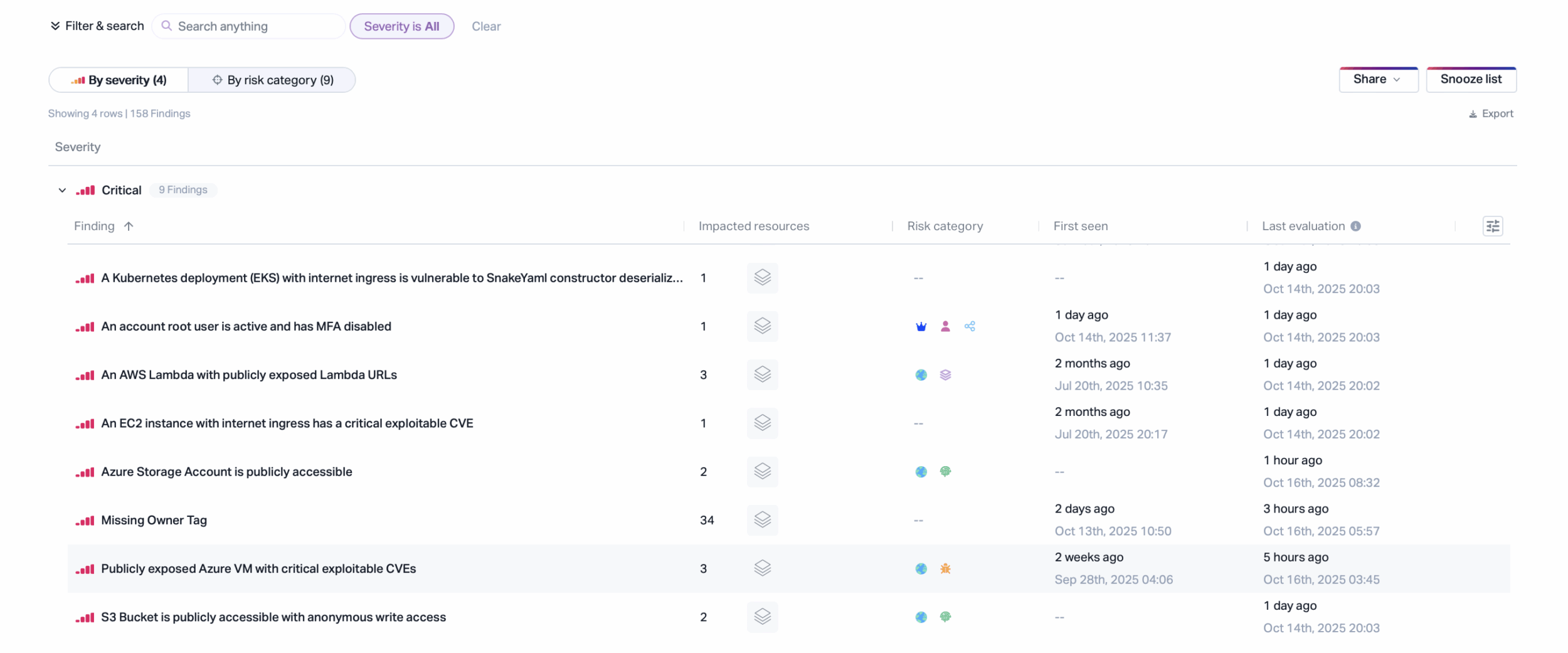
In the Security Risks list, you’ll see how many resources are impacted, which risk category it falls into, when it was first detected, and when it was last validated in runtime. This level of context gives leaders confidence they’re working with live, accurate intelligence – and gives engineers a clear, prioritized path to remediation without the guesswork.
Upwind saves us a significant amount of time, helping our team focus on the truly critical alerts while disregarding low-priority findings
– Sardorbek Pulatov, VP Engineering (Security)
Drill Down into the Details
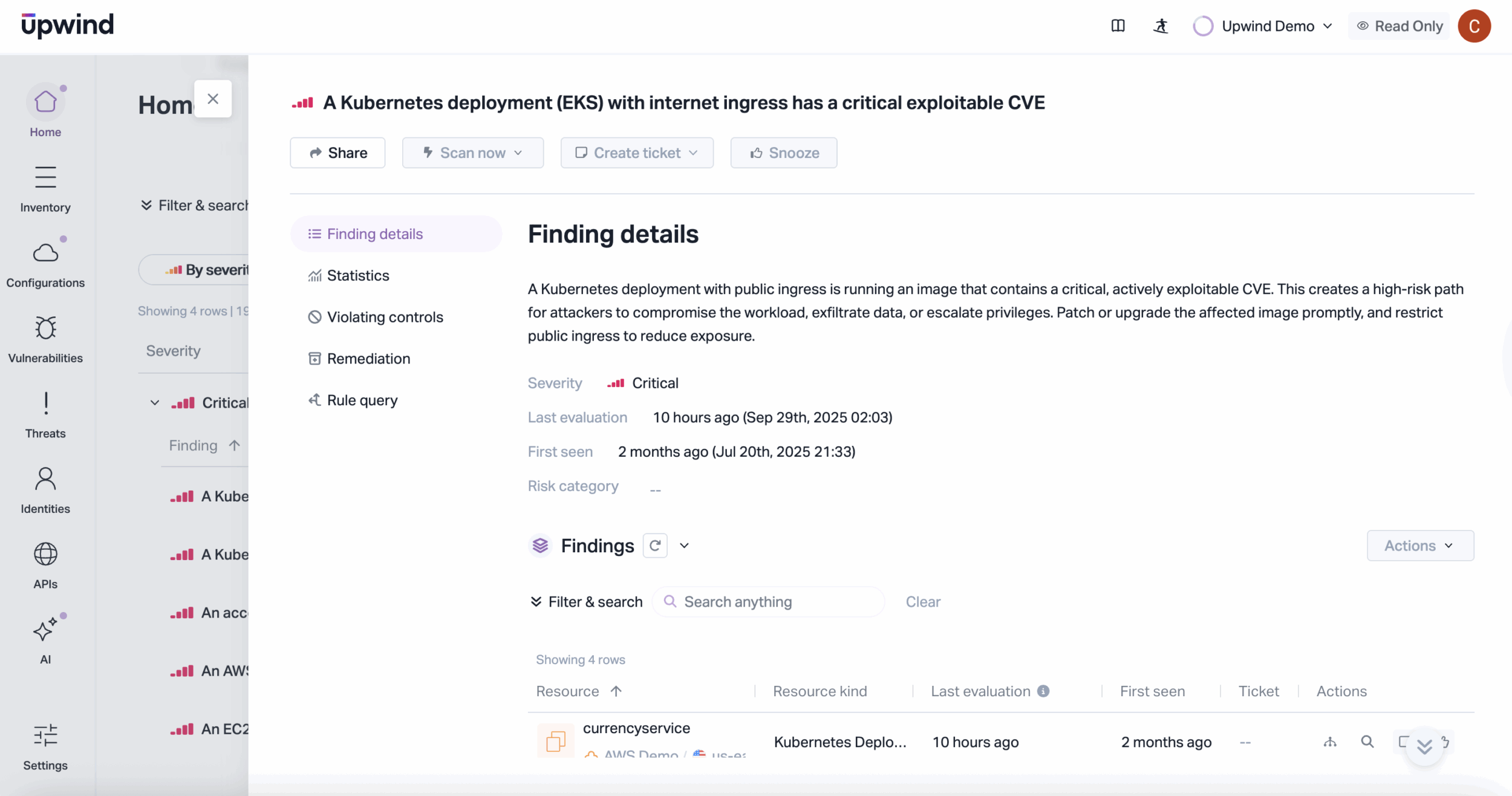
Clicking into a specific finding opens a detailed view that brings full context to the surface. You’ll see a clear description of the issue, related statistics that show its scope, and the exact rule query and controls that flagged it.
Even more importantly, you’ll find remediation guidance right there in the view, so your team isn’t left wondering what to do next. And when action is required, you can create a ticket directly from the finding itself, making it easy to assign and track remediation without leaving your workflow. This drill-down capability is where the dashboard bridges the gap between detection and resolution. Instead of passing around screenshots or reports, teams can move from problem to solution in one seamless experience.
See Full Security Risk Picture
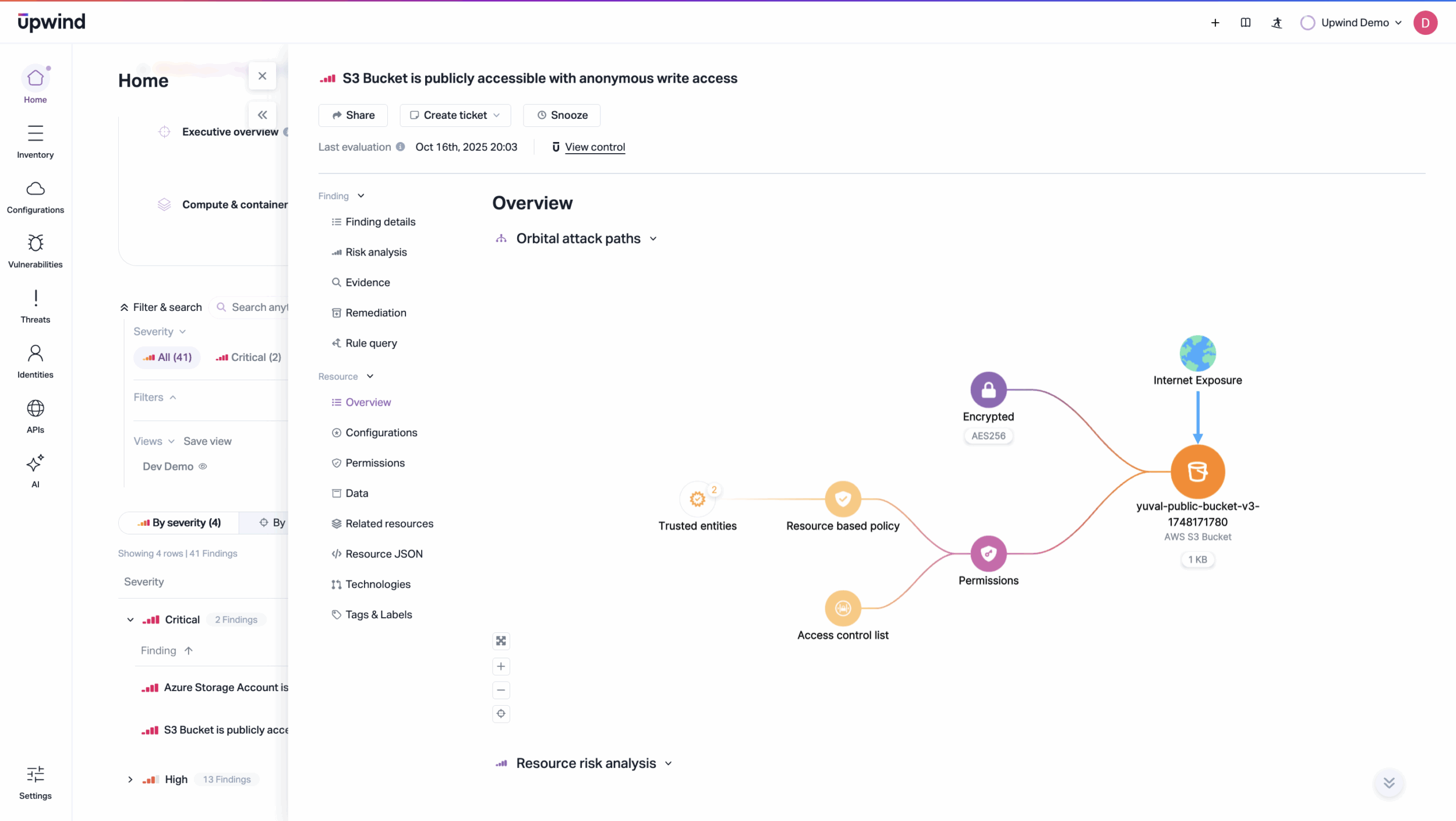
Every finding in Upwind Security Risks is connected to a broader story. When you open a risk, you can instantly see how it relates to the rest of your environment by viewing the impacted resource.
Each finding expands into a visual map of affected assets, identities, and dependencies, helping teams understand why it matters, not just where it was found.
For example:
- A vulnerability on a public-facing workload might reveal linked high-privilege identities and reachable data assets, forming a combination of security risks that demands immediate action.
- An identity risk might show excessive permissions tied to exposed workloads or sensitive storage, giving teams a complete picture of potential lateral movement.
- A cloud service exposed to the internet with critical vulnerabilities and access to sensitive PII represents a complete attack path that connects exposure, exploitability, and business impact.
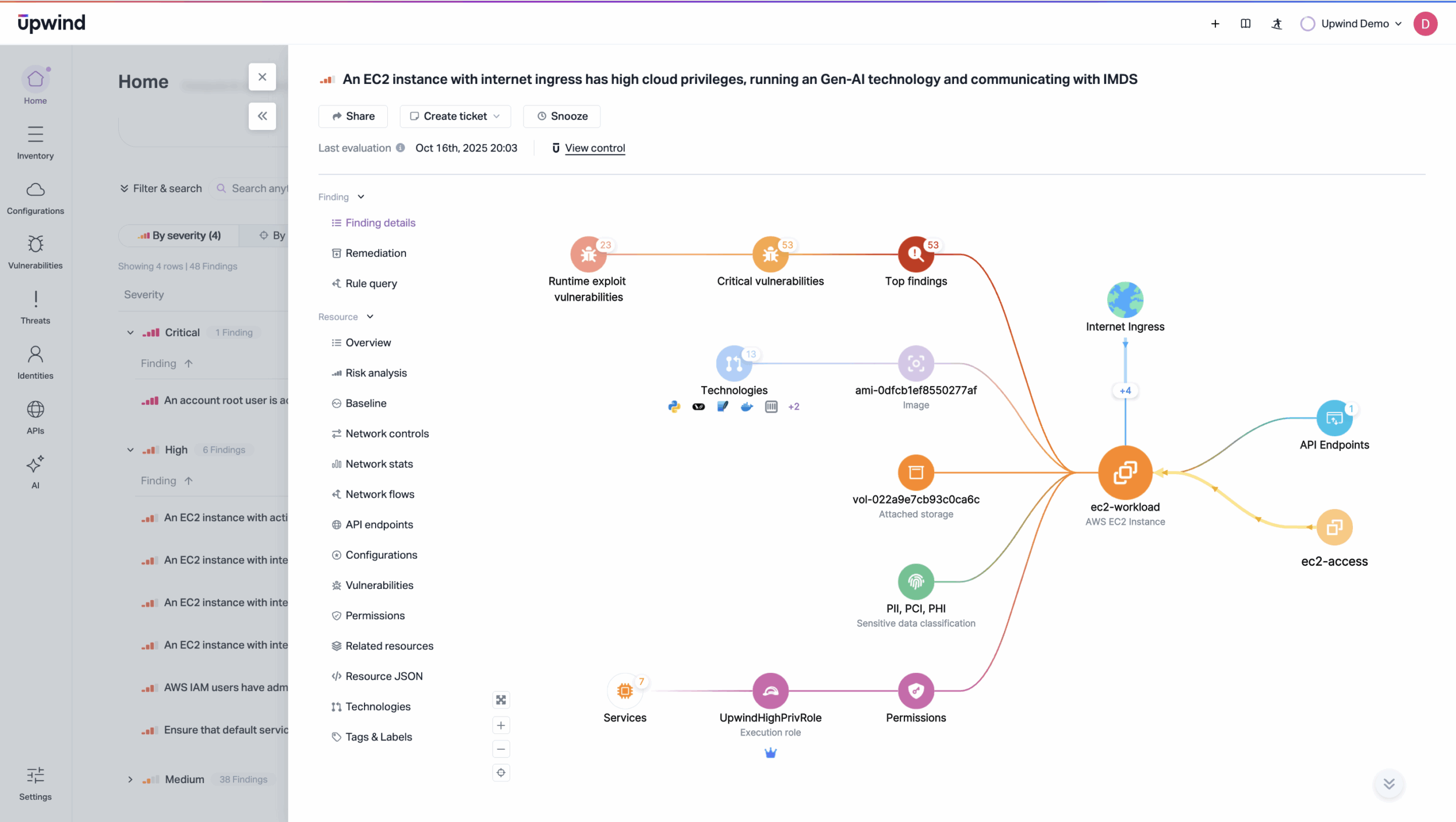
With these views, teams move from isolated findings to a fully connected risk story, understanding exposure, privilege, and exploitability in a single workflow.
Turn Security Risks into Actionable Steps
In modern cloud environments, risk rarely comes from a single issue. It emerges from how multiple small exposures connect. Security Risks enables teams to see those relationships clearly and address the conditions that matter most to their security posture.
By unifying every risk signal into a single, intelligent model, organizations can prioritize remediation with precision and operate with greater confidence. See how Security Risks can simplify your security workflow and bring clarity to your risk posture by booking a customized demo with us today.