Get a Demo
Under Attack?
API-ASM Blog

Validate the Real-World Exposure of Your APIs with Upwind Attack Surface Management

<br />
<b>Warning</b>:  Undefined variable $photo in <b>/nas/content/live/landing173/wp-content/themes/bricks/includes/elements/code.php(236) : eval()'d code</b> on line <b>24</b><br />
<br />
<b>Warning</b>:  Trying to access array offset on value of type null in <b>/nas/content/live/landing173/wp-content/themes/bricks/includes/elements/code.php(236) : eval()'d code</b> on line <b>24</b><br />
<br />
<b>Warning</b>:  Undefined variable $photo in <b>/nas/content/live/landing173/wp-content/themes/bricks/includes/elements/code.php(236) : eval()'d code</b> on line <b>24</b><br />
<br />
<b>Warning</b>:  Trying to access array offset on value of type null in <b>/nas/content/live/landing173/wp-content/themes/bricks/includes/elements/code.php(236) : eval()'d code</b> on line <b>24</b><br />
Ido Buchnik, Sam Langrock August 13, 2026

Validate the Real-World Exposure of Your APIs with Upwind Attack Surface Management

Your APIs are probably the least-monitored component of your attack surface. They multiply faster than any team can document, and most scanners only ever pick up the ones you already know about.

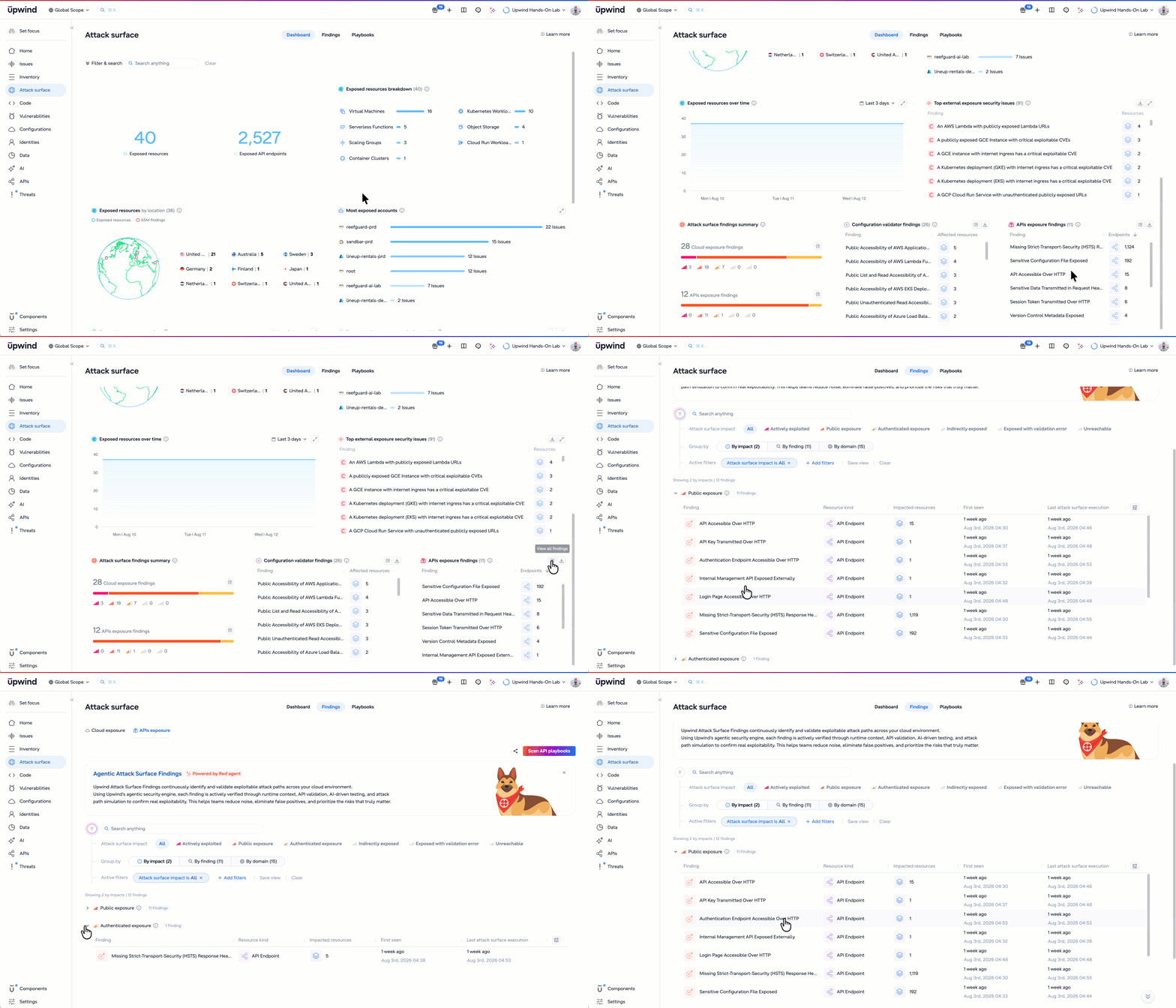
But that gap just got smaller. Upwind’s Attack Surface Management capabilities now provide a unified view of cloud and API exposure, helping security teams discover, validate, investigate, and prioritize API security findings alongside cloud exposure findings within a single workflow.
api-asm-blog-mock-a-scaled

Why API exposure needs more than a scanner

Most API security tools stop at discovery. They tell you an endpoint exists, maybe flag a missing header, and leave you to figure out whether it actually matters.

APIs sit on the same infrastructure as everything else you’re securing: cloud accounts, Kubernetes namespaces, workloads with real data moving through them. Treating API risk as its own problem means a separate dashboard, a separate priority list, and a separate blind spot.

Upwind puts API findings in the same view as your cloud exposure findings, with the same workflow for validation and prioritization.
ASM_API

What’s included

ASM_API2

Unified Attack Surface Dashboard. API vulnerability findings now sit next to cloud exposure findings in one dashboard. You’re not toggling between tools to figure out which exposure matters most.

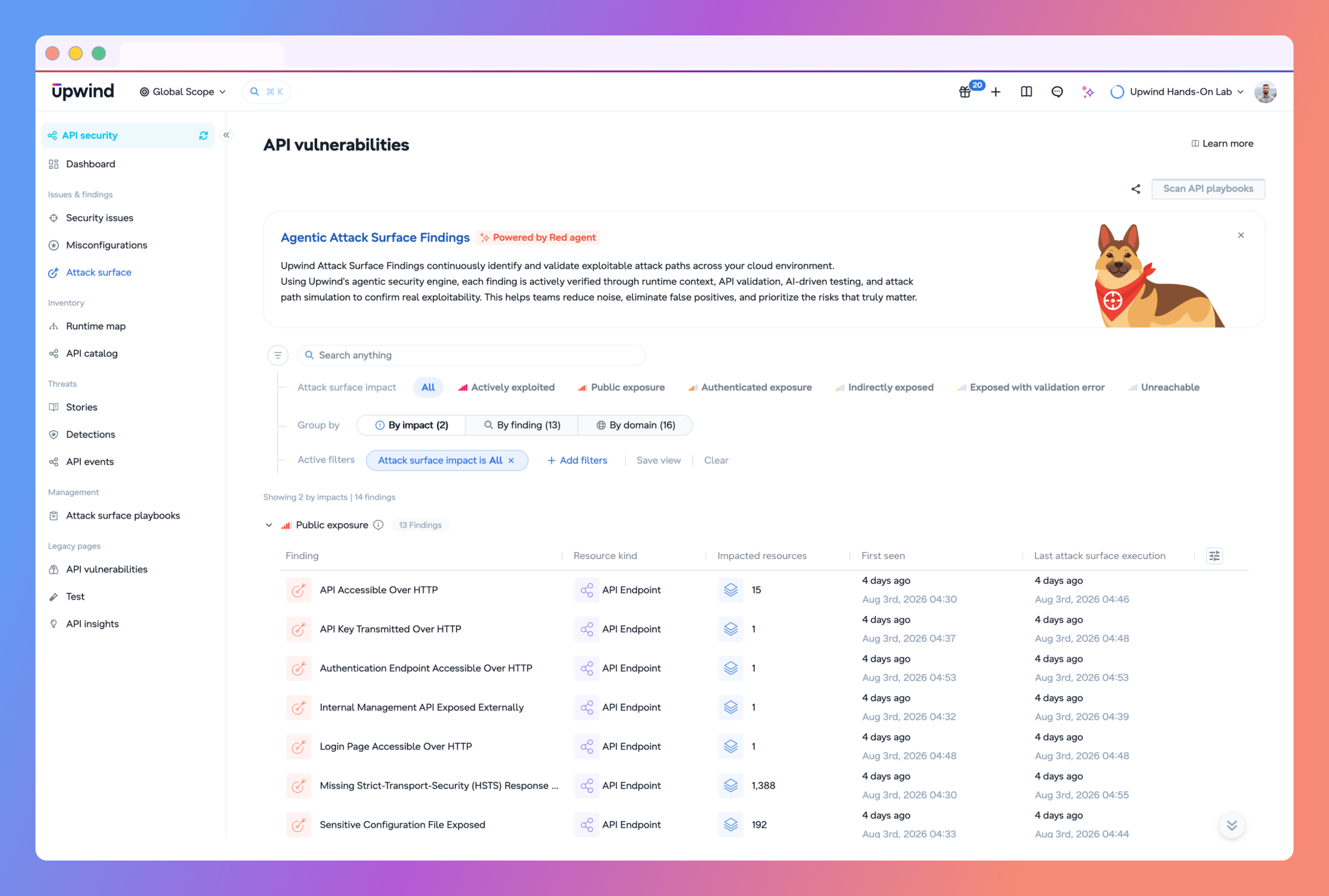
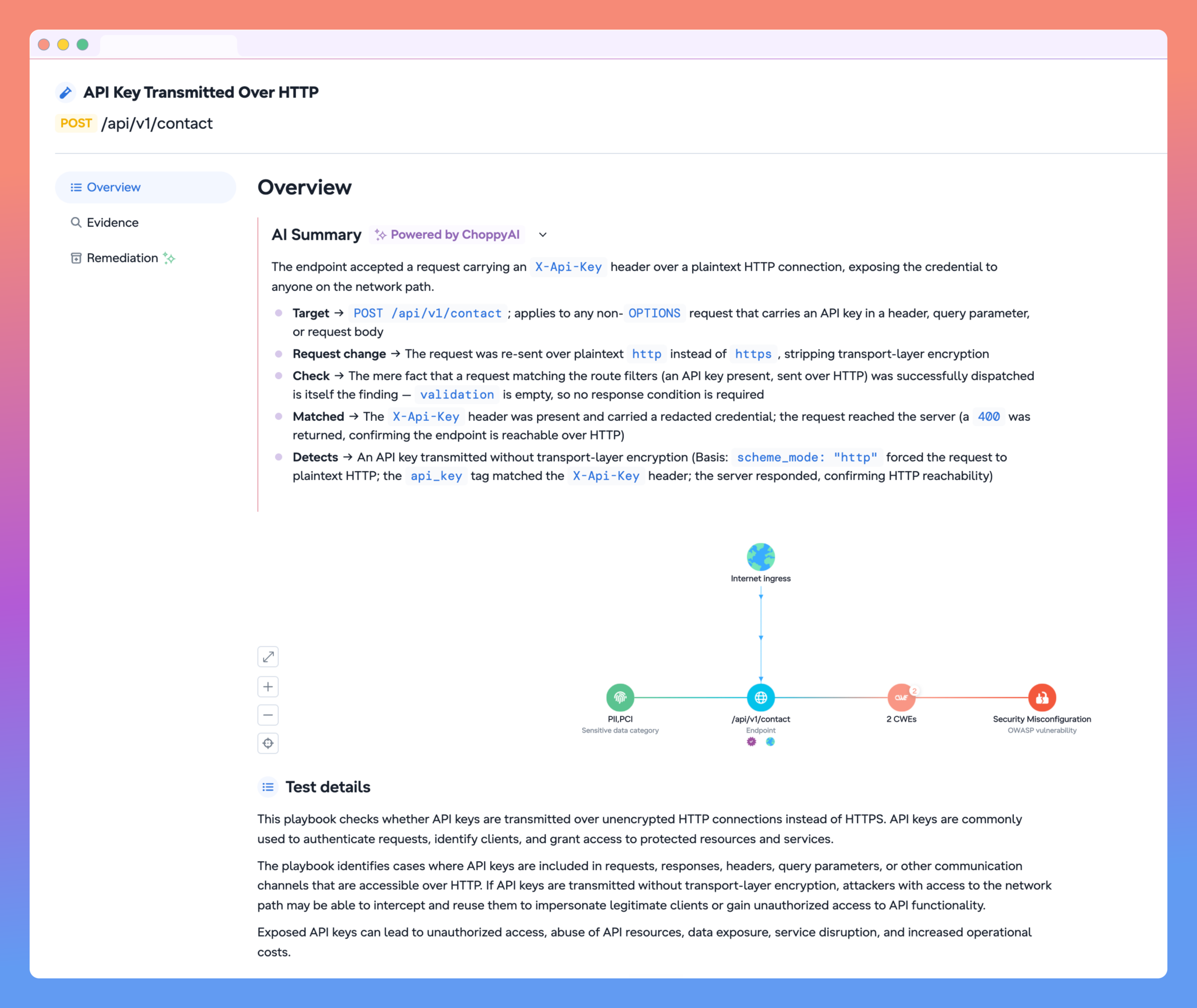
API Vulnerability Findings. Every finding comes with an AI-generated summary, evidence, remediation guidance, and context on where it hits your attack surface. Flexible filtering helps you cut through the noise fast.
api-asm-blog-mock-c-scaled

API Security Playbooks. Built-in playbooks continuously validate exposed APIs for the issues that actually get exploited: misconfigurations, transport security issues, authentication weaknesses, and exposed secrets.

On-demand API scans. Run on-demand scans to validate exposed APIs or scope scans to specific cloud accounts, organizational units, or Kubernetes namespaces, using Upwind’s runtime API security testing.
api-asm-blog-mock-b-scaled

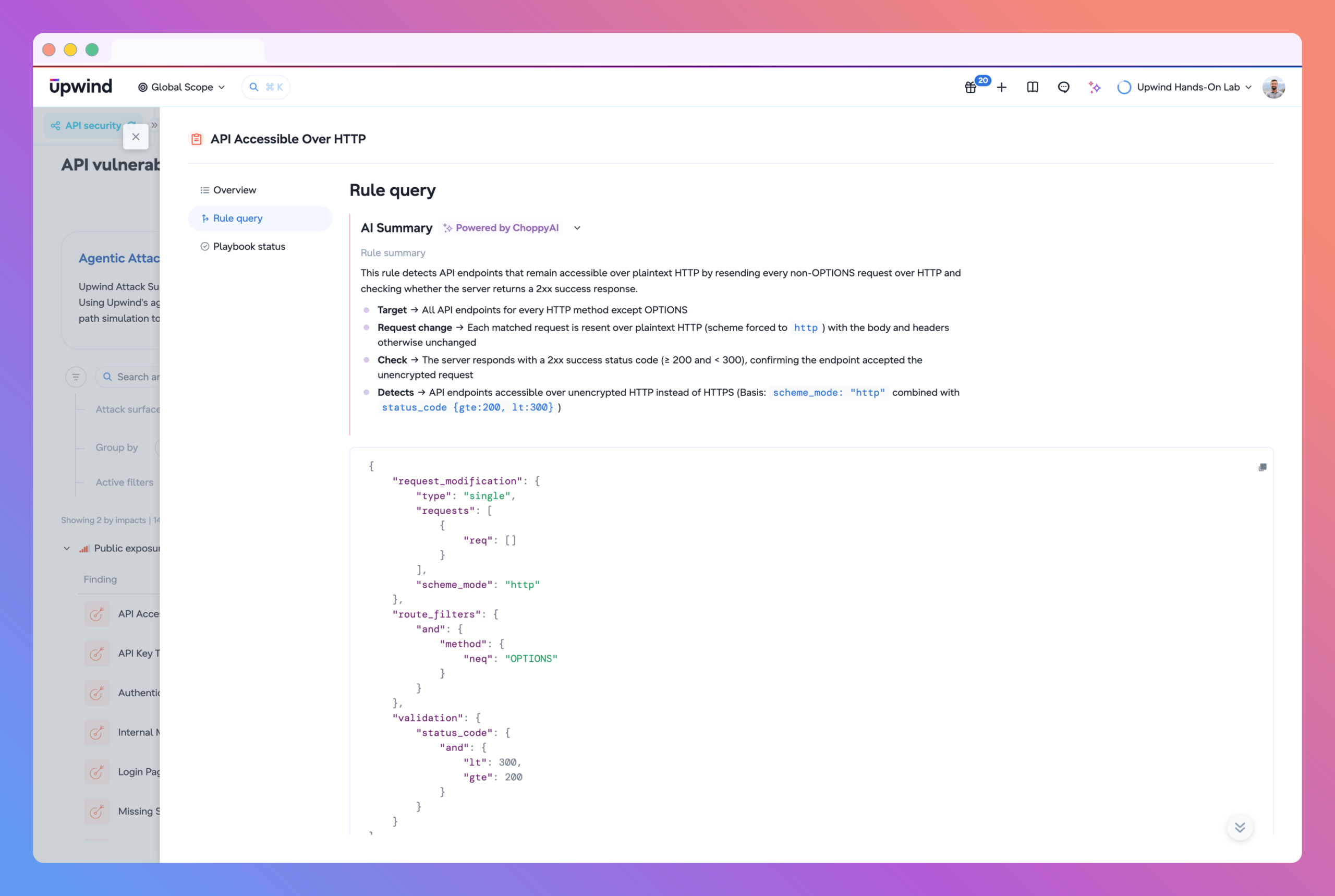
Rich investigation experience. When a finding needs a closer look, you get AI-powered summaries, the underlying rule logic, playbook execution status, and runtime relationships in one place. No piecing the story together across three different tools.

What this means for your team

Fewer tools. Less time spent context switching. Faster answers.

Security teams already drowning in cloud findings don’t need a second platform for API risk. They need to know which exposed endpoint actually connects to a workload holding sensitive data, and whether it’s worth an escalation at 2am.

Validated findings cut down the false positives clogging your queue. Unified prioritization means you’re fixing the API issue that’s genuinely reachable, not the one that just looks scary in a report.

Contents

Further Reading

gemini-svg

Metabase Instances Actively Exploited: Unauthenticated Admin Takeover via BI Layer Reset Password SQL Injection (CVE-2026-72898)

Executive Summary Upwind recently observed multiple Advanced Persistent Threat (APT) groups actively exploiting CVE-2026-72898. This vulnerability - an unauthenticated SQL injection in the Metabase password reset endpoint carrying a critical CVSS score of 10.0, was actively exploited as a zero-day before a patch became available. An unauthenticated remote attacker can craft a malicious SQL injection…
Buyers Demos

Why Buyers Remember Solving a Demo, Not Watching One

Key Takeaways I recently sat down with Upwind Solutions Architect, Evan Grace to learn more about his process. After some intros, he told me about his new hobby, hydroponics. For those who don’t know, hydroponics is a method of growing plants without soil. This was unbelievable to me but after Evan explained his deep dive…
PagerDuty-Hero

Upwind Integrates with PagerDuty for Instant Incident Response

Upwind now integrates with PagerDuty, enabling security teams to create workflows that automatically route Upwind findings and detections to the appropriate on-call team based on existing incident management workflows. This integration expands Upwind's growing library of native workflow integrations, giving security and platform teams even more ways to turn real-time detections into immediate action. What's…
Add the Upwind RSS Feed to Slack
Connect the Upwind RSS Feed to your Slack.
Follow the how-to here.
Threat RSS
Add the Upwind RSS Feed to Slack
Connect the Upwind RSS Feed to your Slack.
Follow the how-to here.
Main RSS