
As cloud environments grow more complex, runtime threats are increasingly tied to issues that originate far earlier in the software lifecycle. For example, a vulnerable open-source dependency introduced during development or misconfigured build pipelines that resulted in insecure container images. At Upwind, we believe runtime security is the foundation – but security doesn’t stop there.
That’s why today, we’re excited to announce a new integration with Cycode, a leading Application Security platform. This partnership gives Upwind customers the ability to connect the real-time risk data we surface at runtime to the developers, pipelines, and repositories responsible for introducing vulnerable container images.
This partnership helps organizations close the loop between detection and resolution quickly, without adding friction to either security or engineering teams.
From Runtime Signals to Root Cause
Upwind continuously monitors containerized workloads in runtime using our eBPF-based sensor. We detect and prioritize vulnerabilities based on what’s actively running, reachable, and exploitable – helping teams prioritize their more critical risks and resolve them faster.
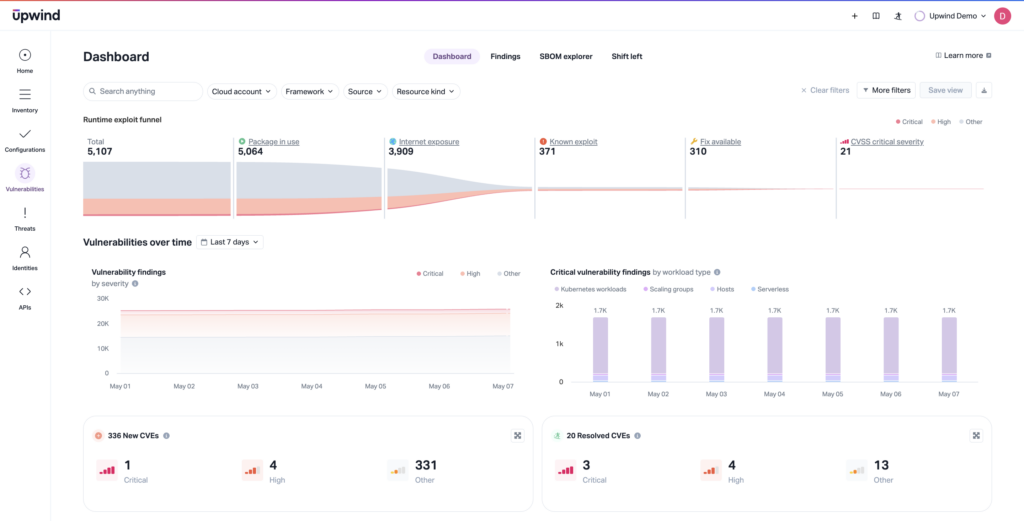
But once a container vulnerability is flagged in production, the next question becomes: where did this come from? That’s where Cycode comes in.
With this new integration, Upwind pushes container image vulnerability findings into the Cycode platform, where they are automatically enriched with SDLC metadata, such as:
- Source repository and pipeline origin
- Developer or team ownership
- Exposure windows and deployment history
Now, runtime alerts can be tracked upstream and tied back to the systems and people who can resolve them fastest. For example, identifying a high-risk container image and notifying the developer responsible before the next release.
Aligning Code and Cloud Risk
This partnership is about extending each tool’s strengths to give teams a full lifecycle view – without the overhead of maintaining two disconnected processes.
By bridging runtime and code ownership, Upwind + Cycode helps both security and engineering teams move faster and more confidently.
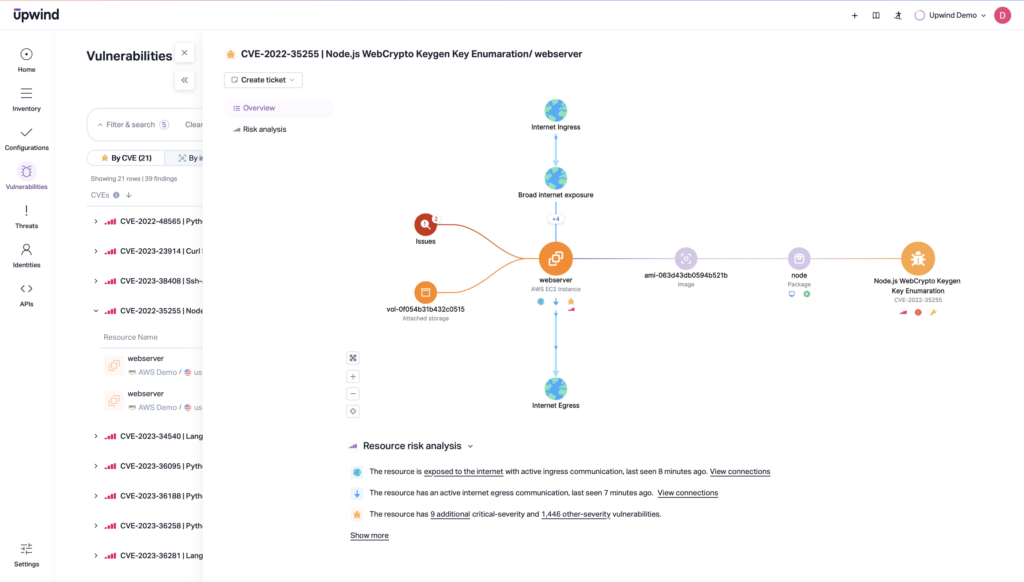
With Upwind + Cycode, security teams gain:
- A real-time view of which vulnerabilities are active in production
- Full traceability back to the code and team responsible
- Context-aware prioritization that aligns runtime risk with SDLC ownership
In addition, engineering teams get actionable alerts in tools they already use like GitHub, Jira, or Slack, with clear guidance on what needs to be fixed and why.
-Amiram Shachar, co-Founder and CEO
“At Upwind, we’ve always focused on giving teams the deep, real-time context they need to zero in on their biggest risks. Our partnership with Cycode takes that a step further—connecting runtime risks directly back to the code changes that introduced them. It’s a powerful way to bridge security and development.”
Enabling Faster, Context-Rich Remediation
This integration gives teams visibility and speed, enabling them to act on runtime risks faster and with full context. By combining Upwind’s runtime intelligence with Cycode’s Risk Intelligence Graph (RIG), organizations can eliminate the back-and-forth and guesswork between AppSec and cloud security teams.
The integration is simple: generate API credentials in your Upwind account and connect them to Cycode using their pre-built connector. Within minutes, runtime container findings from Upwind will populate in the Cycode platform – enriched with ownership and exposure context from their Risk Intelligence Graph (RIG).
We’re excited to partner with Cycode to bring more precision, speed, and accountability to cloud-native security. Request a demo today to start connecting runtime to root cause.