
With the rise of containerized environments and Kubernetes adoption, Kubernetes security posture management (KSPM) has risen to the forefront of cloud security posture initiates. KSPM generally requires the use of security tools or processes to help ensure the security of Kubernetes clusters, with most focusing on policies and configurations.
However, this focus on static configuration findings can create noise and make it difficult to prioritize which misconfigurations should be prioritized for remediation. Upwind solves this by marrying runtime risk prioritization and KSPM findings, providing advanced Kubernetes security with both real-time container protection and prioritized configuration findings based on deep environmental context.
Key Features of KSPM
KSPM is essential for cloud-native security, helping teams assess, monitor, and strengthen security configurations in Kubernetes environments. KSPM simplifies compliance and detects vulnerabilities across Kubernetes clusters and workloads, increasing visibility and enforcing policies. This includes:
- Enforcing API authentication and access control
- Detecting misconfigured network policies
- Applying Admission control and policy enforcement
- Enforcing Pod security policies
- Managing ingress and egress traffic controls
- Monitoring cluster resource security
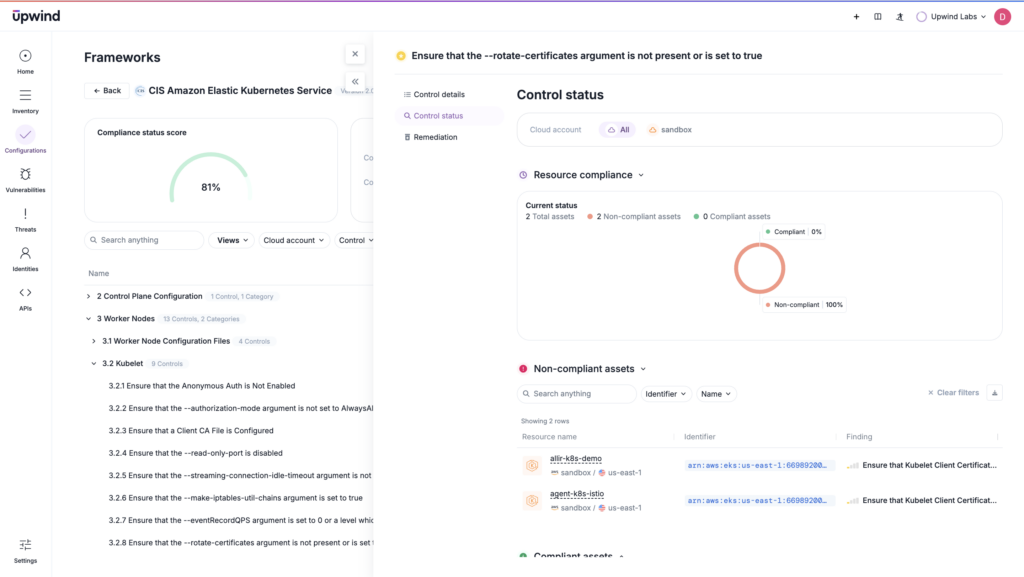
Upwind simplifies implementing and monitoring KSPM controls using industry frameworks like the Center for Internet Security (CIS) Amazon Elastic Kubernetes Service (EKS) Benchmark (CIS EKS) and the Center for Internet Security Kubernetes Benchmark (CIS Kubernetes).
Runtime-Powered KSPM
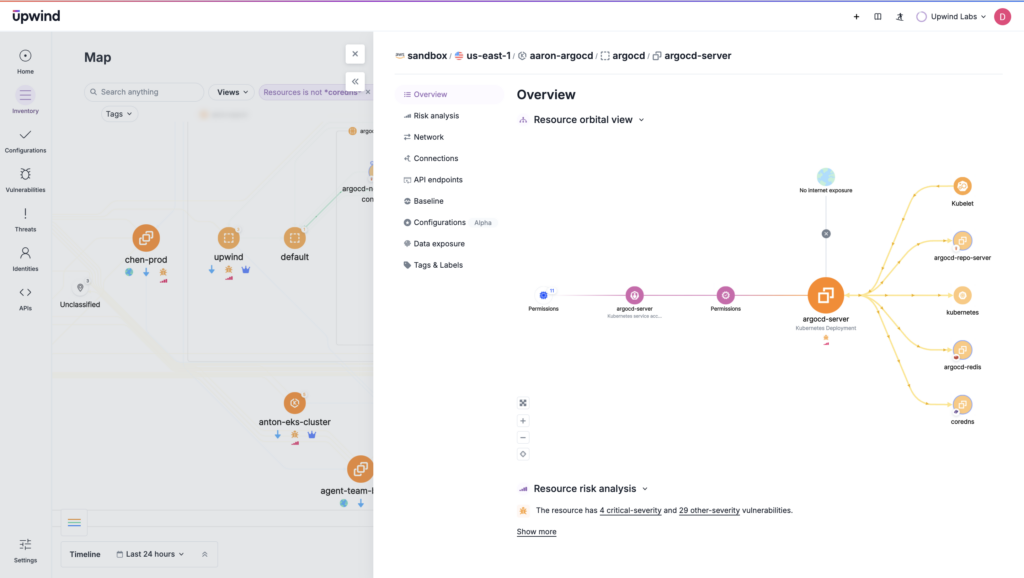
While legacy KSPM solutions can identify static configuration findings, the lack of runtime insights makes it difficult to prioritize findings. Upwind’s next-generation KSPM solves this with deep Kubernetes security context – marrying runtime context with posture findings.
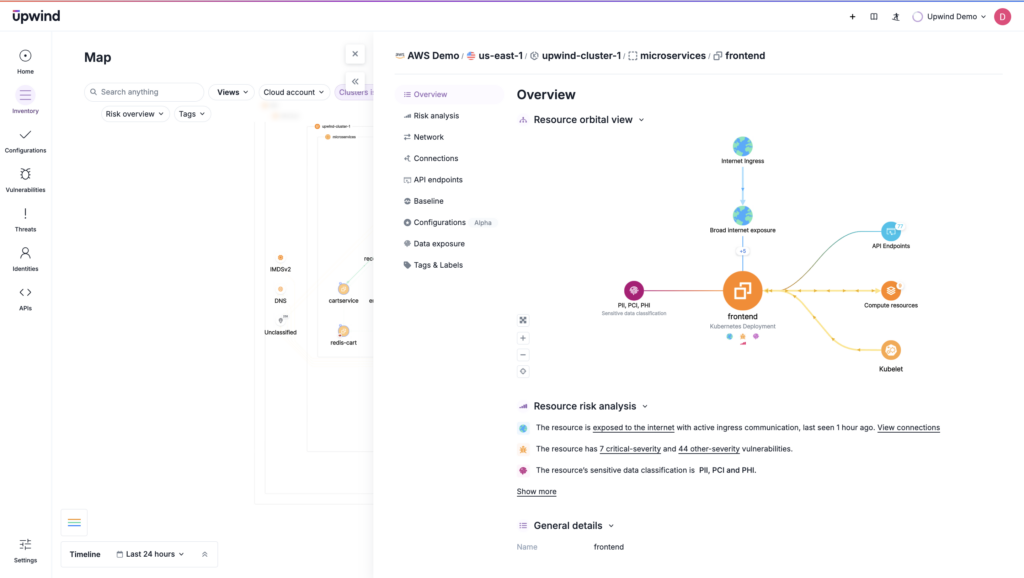
Through the use of a lightweight, high-performance eBPF sensor operating at the kernel level, Upwind is able to collect deep Kubernetes security context including:
- Awareness of Kubernetes identities and if they have privileged access to the host or system
- Real-time visibility of Kubernetes network topology
- Communication flow tracking from containerized resources within the cluster, within the account, to the Internet, and to cloud services.
With this extensive Kubernetes runtime context, Upwind streamlines risk prioritization, highlighting critical risks such as misconfigurations on a resource containing sensitive data, which also has a critical vulnerability and is communicating with the Internet.
Teams can easily leverage Upwind’s runtime-powered KSPM to go beyond static configuration findings and focus on their highest-risk KSPM findings that should be prioritized for remediation. To discover how Upwind’s runtime-powered KSPM can help you secure Kubernetes workloads more effectively, schedule a demo today.