

We are thrilled to announce a new integration with Cloudflare, bringing seamless and enhanced API security for Upwind users who leverage Cloudflare.
Why Integrate with Cloudflare
Cloudflare is an internet infrastructure and security company that helps organizations monitor and manage their API endpoints, providing additional security, monitoring and API traffic optimization. Its robust capabilities include enhanced security, comprehensive monitoring, and optimized traffic Flow. Acting as a secure API gateway, Cloudflare provides:
- API Discovery and schema validation
- Rate limiting to manage API traffic
- DDos mitigation to shield APIs from malicious attacks
Upwind’s integration with Cloudflare enhances this ecosystem by offering a seamless API security experience. With this integration, Upwind users can easily discover, manage, and protect APIs, leveraging the strength of both platforms.
How Does the Integration Work?
The Upwind integration with Cloudflare functions as a dedicated Cloudflare worker, giving Upwind users the ability to monitor their API traffic at the Cloudflare level – before it even reaches your application.
While many API security tools have integrations with Cloudflare, they often come with significant trade-offs. A common drawback is that these tools require customers to send their sensitive data outside of Cloudflare to their tool’s backend systems. This approach exposes sensitive data, leaving it vulnerable, and presenting unnecessary security risks.
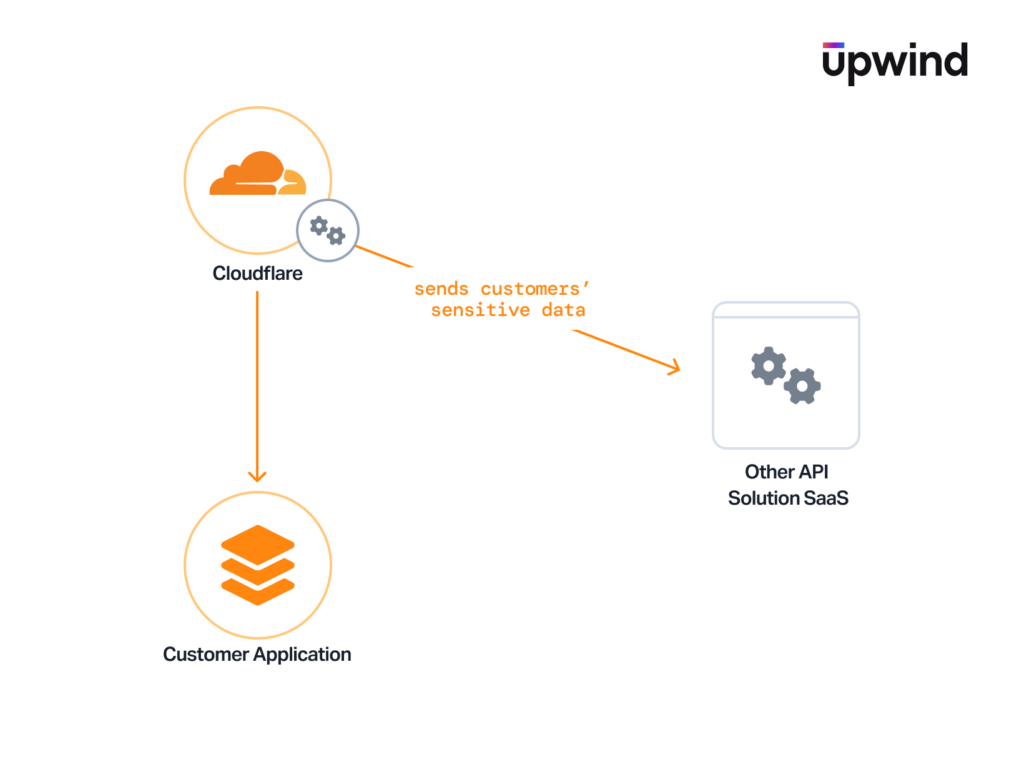
Upwind takes a unique approach to solve this challenge
- Auto-classification of sensitive data types: Using pattern recognition, Upwind identifies sensitive data types (e.g., PII, PCI, PHI) directly at the Cloudflare worker level.
- Data never leaves your environment: Unlike traditional tools, Upwind does not read or store sensitive data. Instead, only reports – such as API catalogs and sensitive data type classifications – are sent to the Upwind SaaS platform.
- Comprehensive security with zero data exposure: This design ensures you can achieve full API discovery and protection without compromising sensitive information.
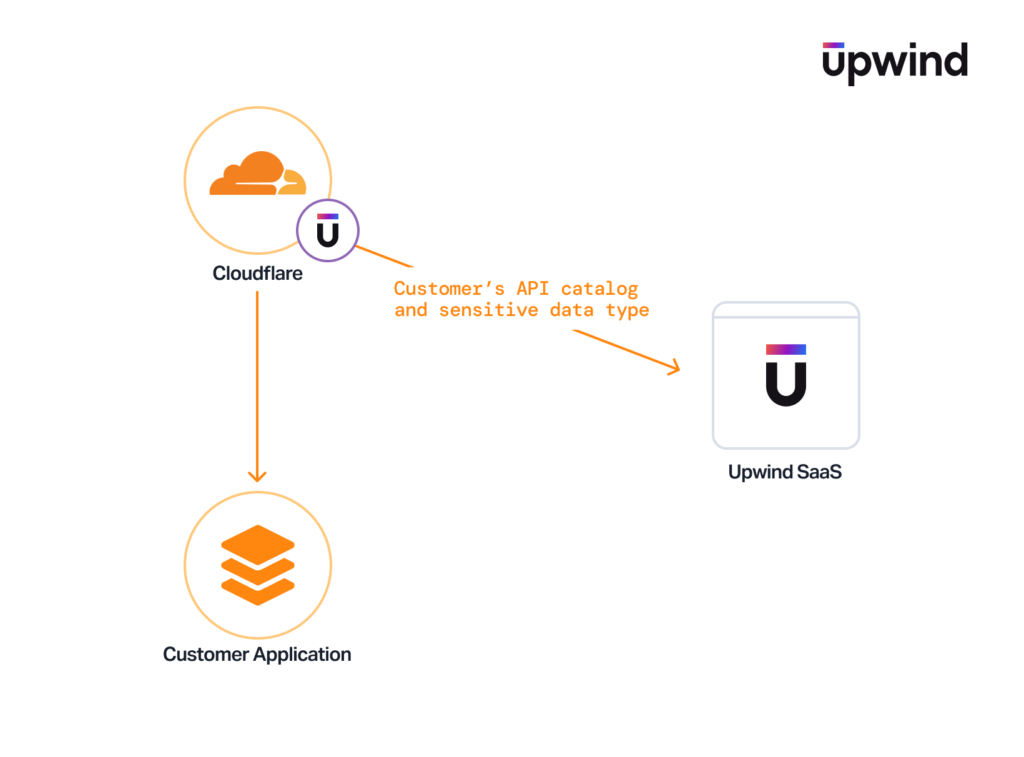
How to Start Using Upwind’s Cloudflare Integration
Integrating Cloudflare through the Upwind Platform is simple:
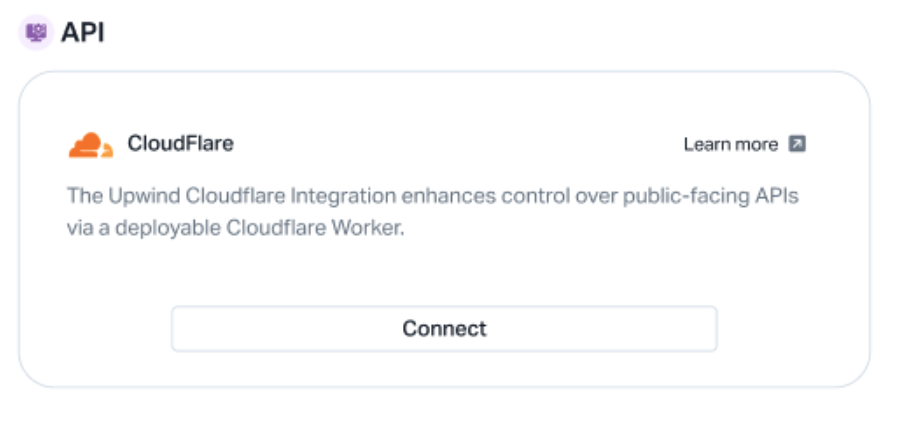
- Navigate to the Integrations page in the Upwind dashboard.
- Click “Connect” under the Cloudflare integration.
- Follow the brief implementation instructions provided.
Once set up, you’ll enjoy a seamless API security experience with unified functionality across Upwind and Cloudflare.
Experience the power of Upwind’s Cloudflare integration – streamlining proactive API discovery, management, protection and sensitive data tracking, all in one centralized location. To learn more about Upwind’s comprehensive API security offering, schedule a demo today.