

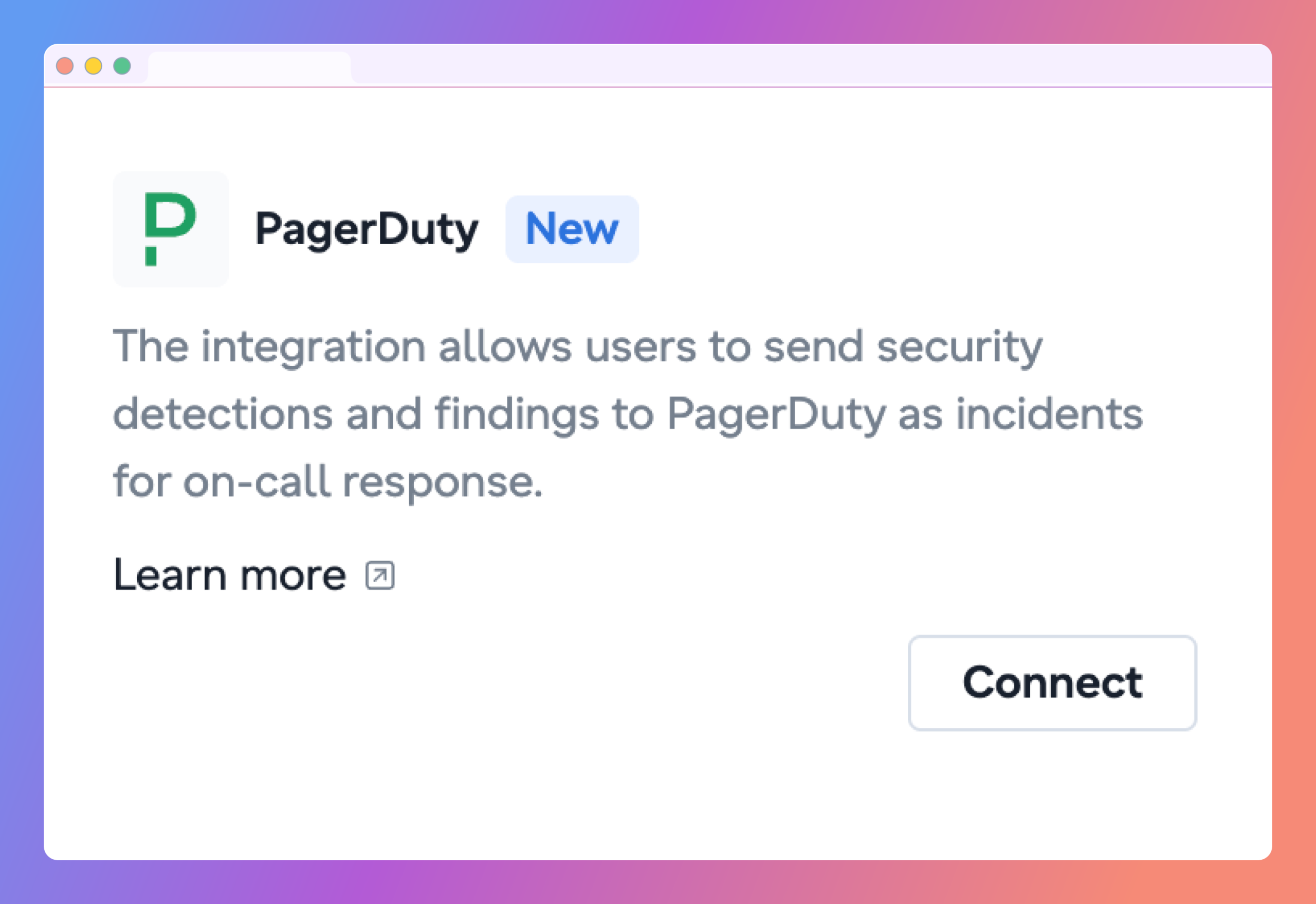
Upwind now integrates with PagerDuty, enabling security teams to create workflows that automatically route Upwind findings and detections to the appropriate on-call team based on existing incident management workflows.
This integration expands Upwind’s growing library of native workflow integrations, giving security and platform teams even more ways to turn real-time detections into immediate action.
What’s included
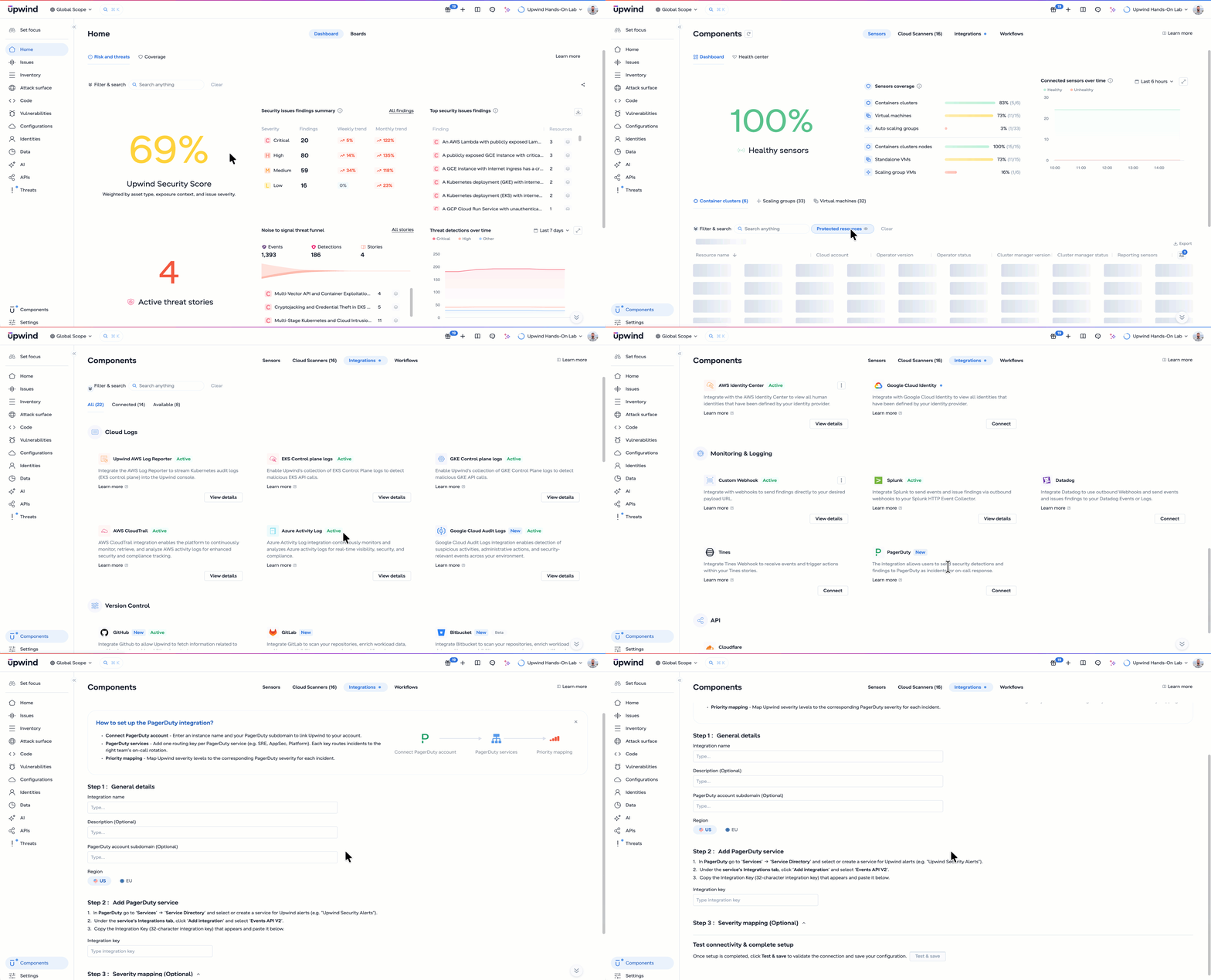
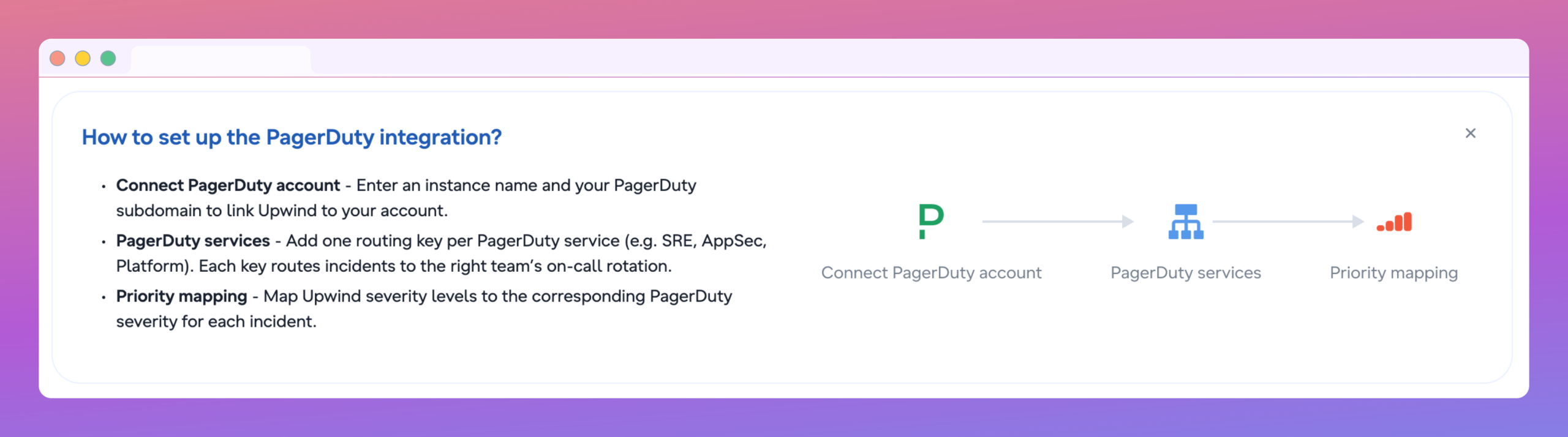
- Quick setup – Connect PagerDuty directly from the Upwind console.
- Automated workflows – Set rules so PagerDuty automatically creates an incident whenever Upwind flags a finding worth acting on.
- Routing by team – Point different types of incidents to different PagerDuty services, so the right team gets paged instead of one shared queue.
- Consistent severity – Align Upwind’s severity levels with PagerDuty’s urgency levels, so “critical” means the same thing in both places.
Benefits to PagerDuty and Upwind customers
Faster response times
Threats move fast, and they don’t wait for you to check a dashboard to see an unusual package was installed. With this integration, critical findings trigger high-urgency pages the moment Upwind detects them, instead of sitting in a queue until someone happens to look.
That immediate notification path directly reduces Mean Time to Detect (MTTD) and Mean Time to Respond (MTTR) during active security events. The faster a finding reaches the right responder, the faster it gets contained.
Context-rich alerts, not just notifications
Upwind captures granular real-time context through a hybrid approach to cloud security via agentless scanners and runtime sensors. This approach captures exact pod and container IDs, running processes, affected microservices, network connections, and more. That context now travels with the finding into the PagerDuty incident.
Responders get the full picture immediately. No jumping between the consoles to piece together what’s happening, and no delay while someone tracks down details that were already sitting in the detection.
Alerts reach the team that can actually fix it
Security teams catch the threat, but DevOps and platform engineers usually own the infrastructure and are the ones who need to fix it. Using Upwind’s service and infrastructure tags, PagerDuty can route incidents directly to the microservice owners responsible for that part of the stack, instead of dropping everything into one generic security queue.
For larger organizations running multiple on-call teams across different services and environments, this means incidents reach the team that owns the resource, not whoever happens to be watching the queue.
Noise reduction, not more noise
More integrations usually mean more alerts. This one is built to avoid that. PagerDuty’s alert deduplication, suppression rules, and AIOps can process incoming Upwind findings the same way they handle everything else in the incident stream.
Severity mapping between the two platforms enables low-severity findings and routine noise to be automatically muted or routed to non-urgent channels, while high-severity threats trigger instant pages.
For teams further along in their response maturity, Upwind’s detection signals can pair with PagerDuty Event Orchestration and automated runbooks. For urgent, high-confidence threats, that opens the door to automated containment: isolating a compromised pod, revoking temporary cloud credentials, updating security group rules before anyone logs in.
Get Started
Fast detection only matters if it turns into fast action. This integration makes sure it does.
Want to see how it fits into your environment? Schedule a demo and we’ll walk through your workflows, integrations, and where Upwind can help your team respond faster.
Learn more at upwind.io.