
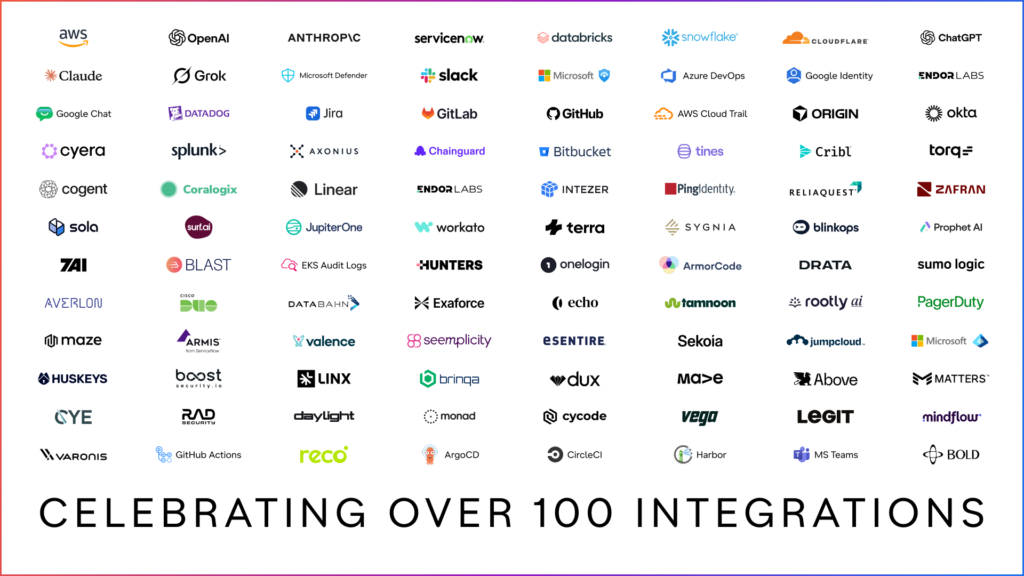
Reaching 100+ integrations with The Lineup at Upwind is a milestone I’m incredibly proud of.
But when I think about what it took to get here, the number itself isn’t the most interesting part.
The interesting part is what happens along the way.
You start by building integrations. Then customers introduce new use cases. Partners introduce other partners. Products evolve. New categories emerge. Companies that were complementary began competing in certain areas. A technical integration turns into a customer opportunity, which turns into a GTM motion, which brings another customer asking for another integration.
At some point, you realize you’re no longer building a collection of integrations.
You’re building an ecosystem.
And ecosystems behave very differently.
Here are a few things I’ve learned while building The Lineup.
1. There Is No Finish Line
Building a technology ecosystem reminds me a lot of running.
You can set milestones. 10 integrations. 50. 100.
But there isn’t really a finish line.
The road keeps unfolding in front of you.
Every integration creates new customer use cases. Every customer introduces another technology into the conversation. Every partner relationship exposes another opportunity. Meanwhile, your product changes, your partners’ products change, and the market around all of you changes.
That’s part of what makes technology alliances so interesting.
You do the work today knowing that tomorrow will introduce opportunities and challenges you couldn’t have predicted.
And as the ecosystem grows, something else starts to happen.
The flywheel begins to turn.
Partners introduce customers. Customers introduce partners. Integrations create joint use cases. Joint use cases create GTM opportunities. GTM creates more customers, and those customers bring new technologies and requirements into the ecosystem.
Eventually, the ecosystem starts to compound.
So reaching over 100 integrations doesn’t mean the ecosystem is complete.
A healthy ecosystem is never finished. It evolves with your customers.
2. Build Around Customer Reality
One of the easiest mistakes to make in technology alliances is looking at the world entirely through your own competitive landscape.
Customers don’t operate that way.
They don’t organize their environments according to our Magic Quadrants, product categories, competitive slides, or partnership strategies.
They buy technologies that solve problems.
And sometimes they buy two technologies that compete.
That brings us to one of the most important concepts in a successful ecosystem: co-opetition.
Two companies may compete fiercely in one part of the market while being highly complementary somewhere else.
If a customer owns both products, the question shouldn’t be:
“Do we compete?”
The better question is:
“How can we make the customer’s investment in both technologies more valuable?”
Maybe one platform provides context that improves the other. Maybe combining the two eliminates a manual workflow. Maybe one detects something and the other responds. Maybe together they provide visibility neither could deliver independently.
Whatever the use case, the customer should feel the amplification of the two solutions.
The center of a technology ecosystem isn’t the vendor. It’s the customer.
The best ecosystems aren’t built around competitive boundaries. They’re built around customer reality.
3. Trust Is the Real Currency
Technology is incredibly dynamic.
Your product roadmap changes. Your partner’s roadmap changes. New categories appear. Companies acquire other companies. New capabilities are launched.
A company that complements you today might compete with you tomorrow.
And very often, you’ll simultaneously compete in one area and partner deeply in another.
That’s okay.
What becomes dangerous is when one side is surprised by it.
Technology partnerships are built on trust, and maintaining that trust requires transparency.
If your roadmap creates new competitive overlap, talk about it.
If the nature of the relationship is changing, talk about it.
If something is going to affect the partner, don’t let them discover it from a press release, a salesperson, or worse, a mutual customer.
Pick up the phone.
You won’t always agree. Your commercial interests won’t always align. But a trusted relationship gives both companies the ability to navigate those moments.
Strong partnerships don’t require the absence of competition. They require the absence of surprises.
4. The Integration Is the Beginning, Not the Goal
When you’re building an ecosystem, counting integrations is an obvious metric.
And yes, reaching 100+ is something worth celebrating.
But an integration sitting on a marketplace page isn’t necessarily a successful partnership.
The more important questions come afterward.
Is a customer using it? Does it solve a meaningful problem? Are our field teams talking about it? Are mutual customers asking for more? Is it helping us win opportunities? Is it creating value for both companies?
A healthy technology partnership should progress:
Integration → Customer Adoption → Joint Use Case → GTM → Pipeline → Customer Outcome
Not every partnership will travel that entire path, and not every integration needs to.
But the goal shouldn’t simply be to ship integrations.
The integration is often where the partnership starts, not where it ends.
5. Let Your Customers Help Build the Ecosystem
Some of the best partnership opportunities don’t start in a partnership meeting.
They start with a customer saying:
“We use your product and we also use X. Can you make them work together?”
Pay attention to those conversations.
Your customers already have technology ecosystems. In many ways, an alliance program is simply learning to understand them.
Look at the technologies that repeatedly appear next to yours. Ask customers where their workflows break. Understand where context needs to move between platforms. Find the places where combining two technologies can eliminate work or create a better outcome.
And bring customers into the conversation.
Because there’s an important difference between these two situations:
A vendor asking another vendor to build an integration is interesting.
A mutual customer asking for that integration is a business case.
Customer demand is one of the strongest signals you can have when deciding where to invest ecosystem resources.
6. Ecosystems Compound
This may be the biggest lesson I’ve learned.
In the beginning, almost everything is manual.
You identify a company. Find the right person. Explain the opportunity. Build trust. Define the integration. Find the first customer. Create the story. Introduce the field teams.
Then you do it again.
And again.
But if you keep doing it well, eventually something changes.
A partner introduces you to another partner.
A joint customer creates an introduction.
An integration creates a new use case.
A successful customer deployment becomes a reference.
That reference creates a GTM opportunity.
That GTM motion brings another customer into the ecosystem.
And that customer asks for another integration.
That’s the flywheel.
And once that flywheel starts moving, ecosystems begin to compound.
The first ten relationships may have required you to push almost everything forward yourself.
At 100+, opportunities increasingly start coming toward the ecosystem.
That’s when you know you’re building something bigger than an integration catalog.
100+ Is a Milestone, Not a Finish Line
When we started building The Lineup at Upwind, the goal wasn’t to collect logos.
The goal was to make Upwind work naturally with the technologies our customers already rely on and to build relationships with the companies behind those technologies.
Today, The Lineup has grown beyond 100 integrations.
I’m incredibly proud of that milestone and grateful to the partners, customers, engineers, product teams, sellers, marketers, and Upwinders who helped us get here.
But 100 has also reinforced something for me.
There is no finish line.
The technology landscape will keep changing.
Our customers’ environments will keep changing.
Our partners will keep changing.
And so will we.
That’s exactly why the ecosystem matters.
You don’t build a technology ecosystem around your company. You build it around the reality of your customers.
Do that consistently, build trust along the way, and keep the flywheel moving.
The ecosystem will compound from there.
100+ integrations is another point on the road.
And the road is getting a lot more interesting. 🌊